

Who Benefits from Trump’s ‘Great Trade Deal’ with the Philippines?
/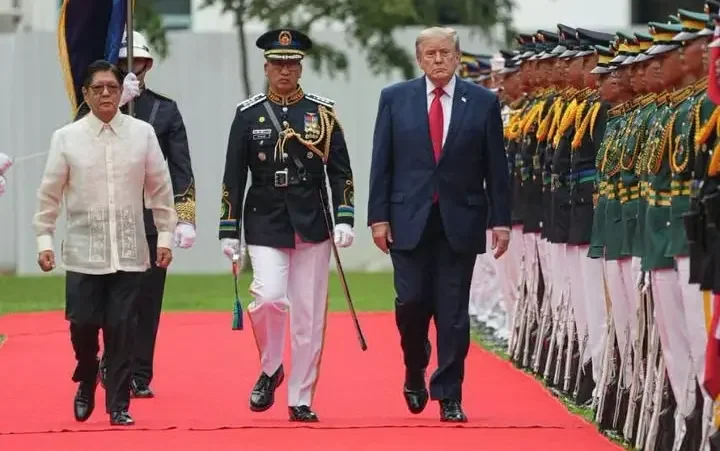
Philippine President Ferdinand R. Marcos, Jr. and U.S. President Donald J. Trump inspect the honor guard during Trump’s visit to the Philippines (Photo from PNA/Joan Bondoc)
The document, tellingly titled President Donald J. Trump Secures Historic Economic Deals for American Workers and Strengthens America’s Leadership in Asia, makes little effort to conceal whose interests are being prioritized.
Benefits to U.S. Businesses
Almost every major undertaking is presented in terms of its benefits to American businesses, industries and workers. Consider the $12-billion purchase by Philippine Airlines of up to 20 Boeing 787 aircraft, which the White House proudly says will support 47,000 American jobs.
The proposed $2-billion-plus Foreign Military Financing package for Philippine defense acquisitions is described as supporting more than 7,000 American jobs and advancing Trump’s America First Arms Transfer Strategy. Even the $400-million military financing allocation for Philippine defense capabilities is credited with supporting 1,500 American jobs.
There are also commitments involving American technology companies, satellite communications, defense cloud infrastructure and potential nuclear energy cooperation. Again, the White House emphasizes the commercial opportunities for American corporations and the employment these projects will generate in the United States.
Even the supposed military and defense benefits for the Philippines deserve closer scrutiny. While modernizing the Armed Forces of the Philippines is undoubtedly in our national interest, the arrangement appears just as much, if not more, about strengthening America’s strategic stronghold in the Indo-Pacific region and countering China’s growing influence.
Geopolitical Interests
In other words, while the Philippines gets to upgrade its military capabilities, Washington gets a stronger strategic foothold in a region critical to its own geopolitical and security interests. Are we strengthening our national defense, or are we also helping advance America’s regional ambitions?
Nothing is inherently wrong with buying American products or strengthening our strategic partnership with Washington. The Philippines needs modern defense equipment, reliable energy sources, advanced technology and foreign investments. But a bilateral economic partnership should not be measured solely by how much money American companies make or how many American workers get employed.
What about Filipino workers?
More importantly, what tangible economic opportunities does this arrangement create for Philippine industries, entrepreneurs and ordinary Filipinos?
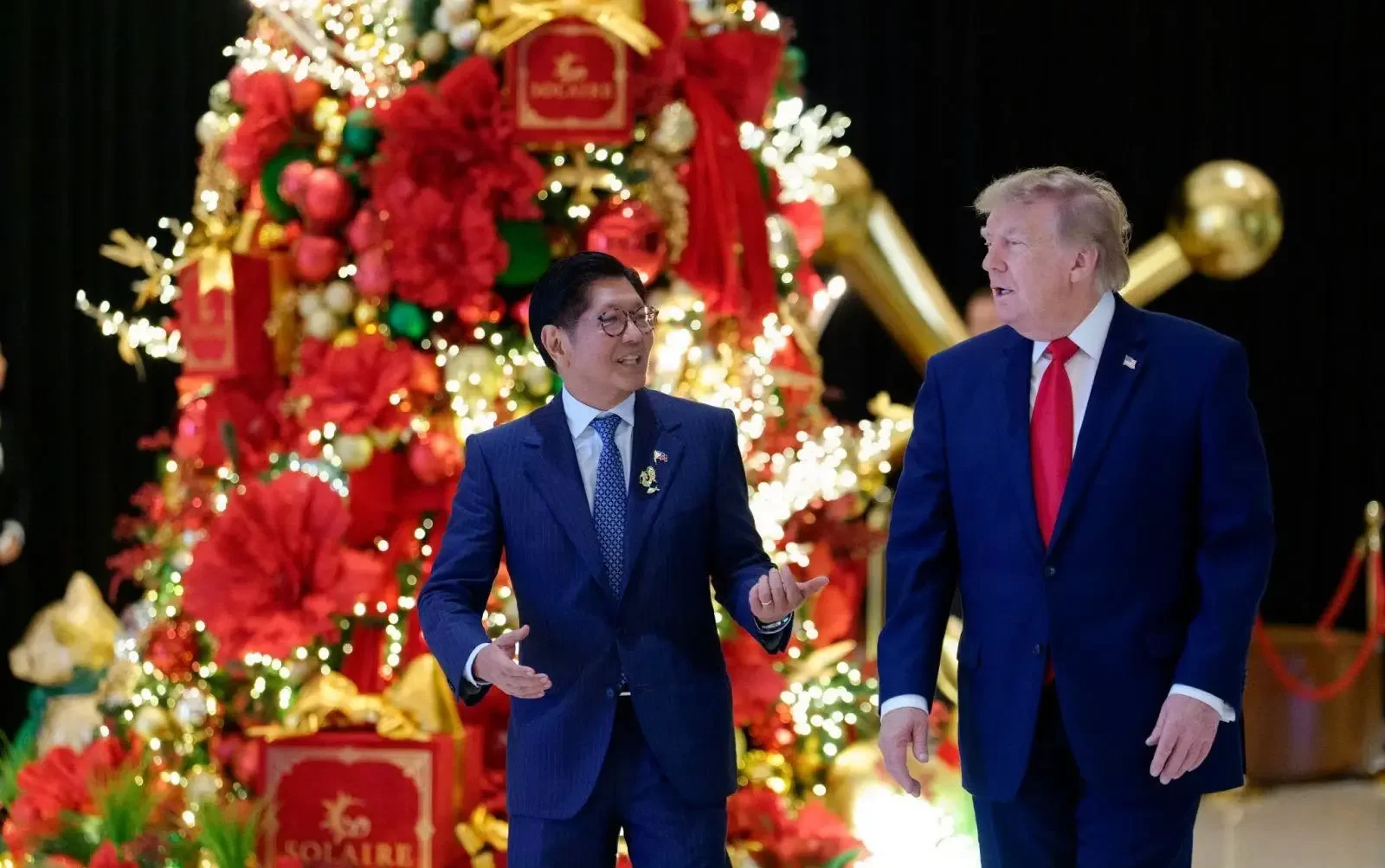
Marcos and Trump during the State Dinner (Source: PNA/ASEAN PH)
One particularly troubling commitment in the White House fact sheet is the agreement to eliminate the U.S. trade deficit with the Philippines through increased Philippine imports of American agricultural and energy products. In other words, the Philippines is expected to buy more American goods to help correct Washington’s trade imbalance.
But where does that leave our own agricultural sector?
Will Filipino farmers benefit from this arrangement, or will they find themselves competing with increased volumes of imported American agricultural products? Will our local producers receive protection and assistance to remain competitive? Will Filipino agricultural entrepreneurs have opportunities to export their products to the American market, or are we simply being positioned as a bigger customer for American farmers?
Food Dependence?
Food security should not mean replacing our dependence on imported food from one country with dependence on another. It should mean strengthening domestic agricultural production, investing in Filipino farmers, improving irrigation and farm-to-market infrastructure, and making our agricultural products competitive internationally.
The same questions apply to Filipino entrepreneurs and manufacturers. Will Philippine businesses gain meaningful access to American markets? Will local companies be encouraged to participate in the supply chains being developed under these agreements? Will the arrangements generate technology transfers, investments in Philippine manufacturing and sustainable employment here? Or will Filipino businesses merely serve as distributors and consumers of American products and services?
These are not insignificant questions. They go to the heart of what makes a trade agreement mutually beneficial.
Then there is the elephant in the room: tariffs.
Remember that during Marcos’ previous state visit to Washington, the Philippines was subjected to a 19% tariff imposed by the Trump administration. Following a U.S. Supreme Court ruling, and subsequent changes in US tariff policy, the rate was reduced to 12.5-percent tariff imposed in July 2026 (still above the 10% baseline).
Filipino exporters had every reason to expect that Marcos would make securing tariff relief a priority during his meeting with Trump. After all, the United States is one of our most important export markets. A lower tariff could make Philippine products more competitive and help protect thousands of Filipino jobs.
No Tariff Reduction
Yet, despite Trump’s grand announcement of a historic trade deal, there has been no announced reduction in that 12.5% tariff.
What exactly did Marcos negotiate in exchange for the Philippines agreeing to increase its purchases of American agricultural and energy products? Did he secure better market access for Philippine exports? Did Trump make any reciprocal concessions? Or did the Philippines simply agree to buy more American goods while our own exporters continue to shoulder an additional tariff burden?
The White House fact sheet may be an impressive catalogue of commercial opportunities for American companies. But it is hardly a convincing accounting of what the Philippines stands to gain. In fact, its repeated emphasis on American jobs, American farmers, American manufacturers and American commercial interests makes one wonder whether the two countries were negotiating a partnership or whether the Philippines was simply being presented with an American shopping list.
To be fair, some of these projects could eventually benefit the Philippines through improved infrastructure, defense capabilities, energy security and technology. But potential benefits are not the same as guaranteed economic gains. We need concrete commitments, measurable outcomes and reciprocal concessions.
Marcos owes Filipinos an explanation of what was actually negotiated, what the country has committed to, and what it will receive in return.
Explanation Owed
Marcos should not be satisfied with being able to announce that he has secured a historic agreement with Trump. He owes Filipinos an explanation of what was actually negotiated, what the country has committed to, and what it will receive in return.
A good trade deal should create opportunities for both countries, not just one. It should open markets in both directions, generate jobs on both sides, strengthen local industries and ensure that smaller businesses and ordinary workers share in its benefits.
If the White House can proudly proclaim that Trump secured a historic deal for American workers, perhaps Malacañang should produce its own fact sheet explaining what Marcos secured for Filipino workers, farmers, manufacturers and entrepreneurs.
Because, at the end of the day, America First may be Trump’s political slogan, but the Philippine president’s responsibility should be Philippines First.
And if this is indeed a fair deal, Marcos should have no difficulty showing Filipinos exactly how.

Rene Astudillo is a writer, book author and blogger and has recently retired from more than two decades of nonprofit community work in the Bay Area. He spends his time between California and the Philippines.
More articles from Rene Astudillo
