
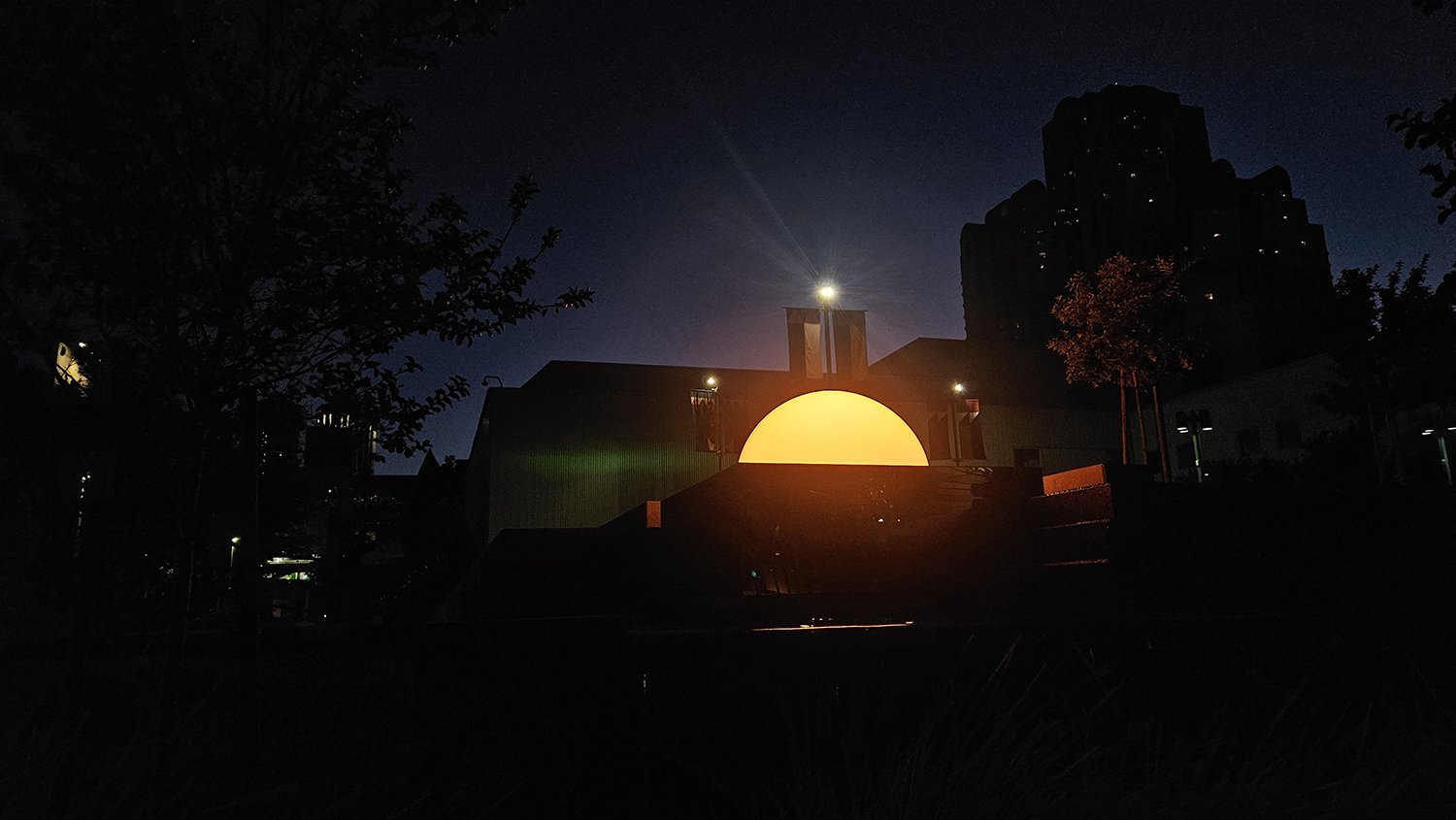
Stephanie Syjuco’s Wall of Hidden Histories
/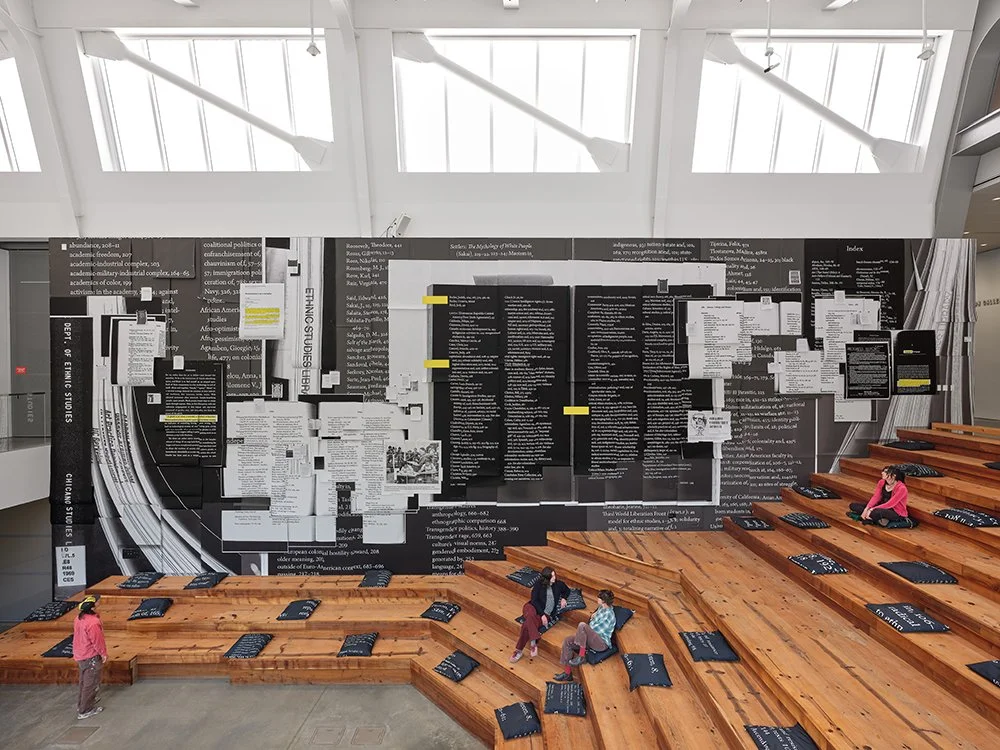
Installation view of Art Wall / Stephanie Syjuco: Present Tense (Roll Call), 2025. Courtesy of the artist, Berkeley Art Museum and Pacific Film Archive (BAMPFA), University of California, Berkeley; Catherine Clark Gallery, San Francisco; RYAN LEE, New York; and Silverlens, Manila/New York. (Photo: Chris Grunder)
Last month, a class of UC Berkeley undergraduates gathered in front of a massive art installation by Filipino American artist Stephanie Syjuco, reflecting on the hidden histories it evokes. The work had recently been installed at the Berkeley Art Museum and Pacific Film Archive (BAMPFA) by Syjuco, herself a professor in UC Berkeley’s art department.
A text-based installation that explores the present-day relevance of historical archives, Present Tense (Roll Call) unfolds as a sprawling collage of enlarged black-and-white scans drawn from the university’s libraries and collections. Together, they trace histories of radical pedagogy that have shaped how we understand race and activism in the United States.
Professor Gonzalez’s course, Contemporary Narratives on the Philippines and the United States, includes many students of Filipino ancestry. For them, the visit offered a rare opportunity to engage closely with an ambitious new work by one of the most distinguished Filipino American artists in the country.
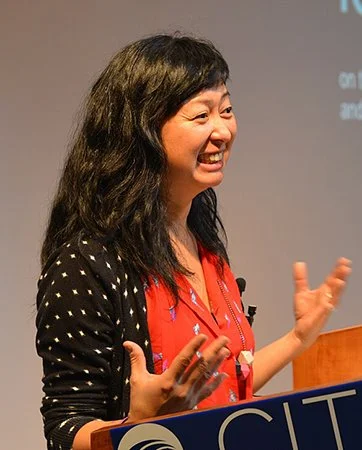
Stephanie Syjuco (Source: Wikimedia Commons)
Present Tense (Roll Call) occupies the entirety of BAMPFA’s Art Wall, a 63-by-30-foot space adjacent to the museum’s entrance. Over the course of two weeks, Syjuco filled this monumental surface with an original work that reflects her ongoing interest in teaching and learning during fraught times, as well as Berkeley’s own history of radical approaches to education—an inquiry deeply informed by her dual role as artist and educator at one of America’s most historically progressive university campuses.
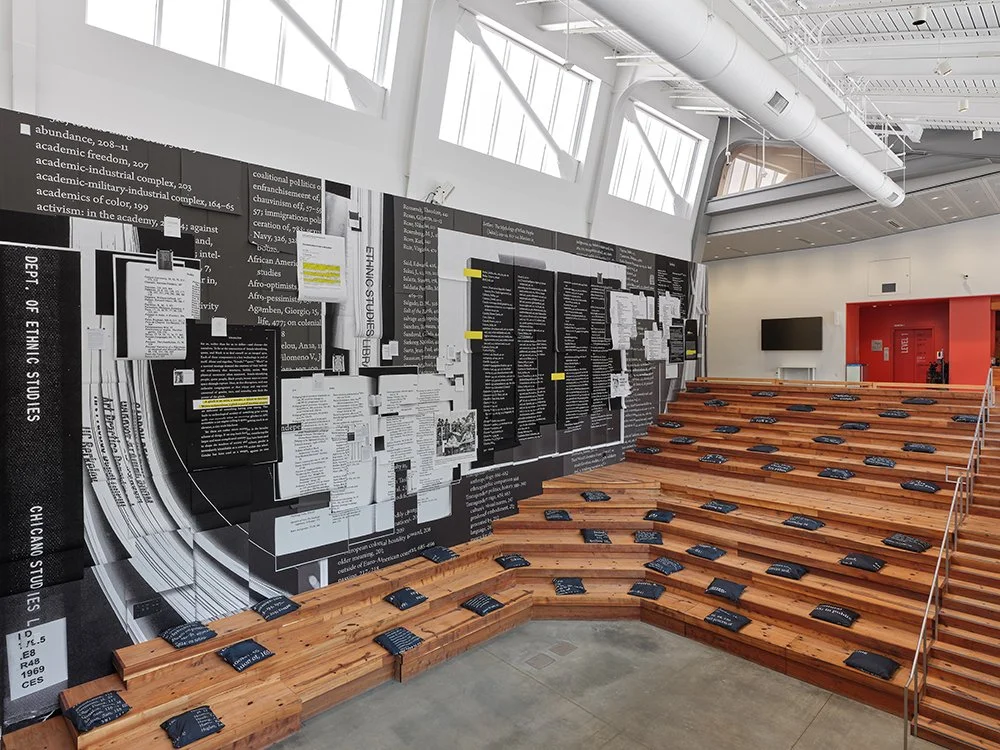
Installation view of Art Wall / Stephanie Syjuco: Present Tense (Roll Call), 2025. Courtesy of the artist, Berkeley Art Museum and Pacific Film Archive (BAMPFA), University of California, Berkeley; Catherine Clark Gallery, San Francisco; RYAN LEE, New York; and Silverlens, Manila/New York. (Photo: Chris Grunder)
“I don’t think I would have made this work anywhere else,” said Syjuco, a Guggenheim Fellow who has been widely celebrated for her multidisciplinary practice for more than two decades. “I was thinking about my colleagues in the Art Practice Department. I was thinking about the students that I teach and mentor, and the questions that we ask each other about the place of public education right now in a world that’s quickly privatizing, and the public resources that we are all attempting to steward.”
These reflections are vividly illustrated in Present Tense (Roll Call) as a collage of book spines and index pages from UC Berkeley’s library collections. In developing her initial concept, Syjuco spent time at the university’s Ethnic Studies Library and Bancroft Library, unearthing pedagogical texts and activist records from the 1960s and ’70s — a period when Berkeley was abuzz with radical social activism, ranging from the Free Speech Movement to the Third World Liberation Front. Because these movements are already so familiar to the Berkeley community, Syjuco tried to approach them with a fresh perspective.
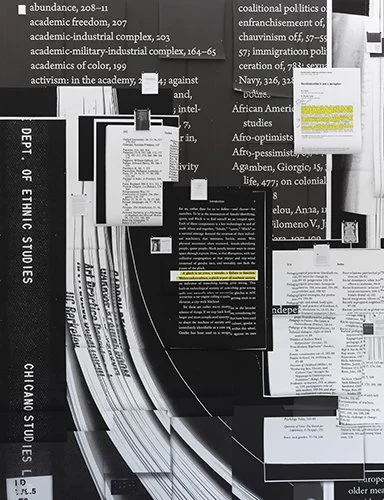
Installation view of Art Wall / Stephanie Syjuco: Present Tense (Roll Call), 2025. Courtesy of the artist, Berkeley Art Museum and Pacific Film Archive (BAMPFA), University of California, Berkeley; Catherine Clark Gallery, San Francisco; RYAN LEE, New York; and Silverlens, Manila/New York. (Photo: Chris Grunder)
“I was trying to find documents that could augment the conversation and not present images that we’re already familiar with,” said Syjuco. “Berkeley is obviously very proud of the Free Speech Movement, but it’s also been condensed into a couple iconic images, rendering it abstract to students and the general public. When I was doing research, I decided to use the Ethnic Studies Library, which holds records that are specifically different from the Bancroft Library’s collection.”
She looked at a progress report printed in 1969 during the Third World Liberation strike’s demand for cultural representation in education.
“The student organizers had just started making an impact with the university administration. There was a hopefulness in this document — a sense of promise,” said Syjuco.
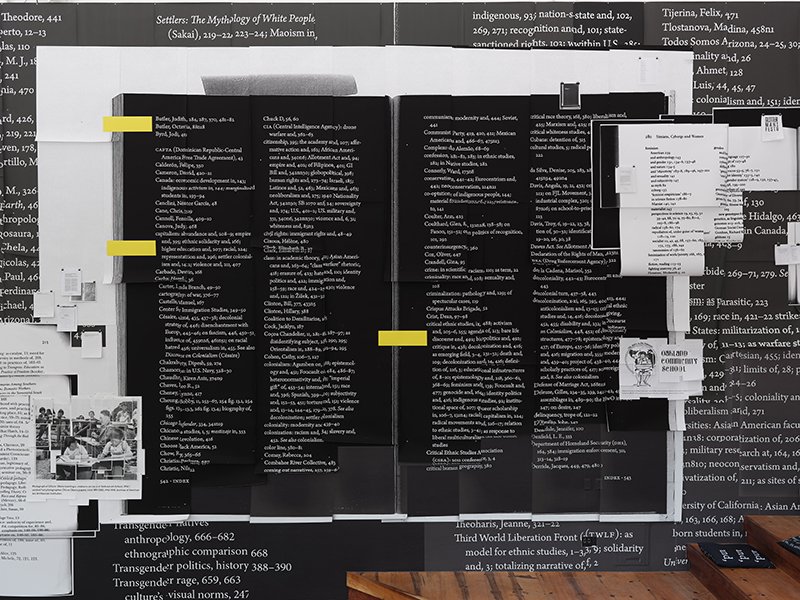
Installation view of Art Wall / Stephanie Syjuco: Present Tense (Roll Call), 2025. Courtesy of the artist, Berkeley Art Museum and Pacific Film Archive (BAMPFA), University of California, Berkeley; Catherine Clark Gallery, San Francisco; RYAN LEE, New York; and Silverlens, Manila/New York. (Photo: Chris Grunder)
“By including it in the artwork, I hope people become curious about ‘Well, what did happen to these demands?’ Some of the educational changes cited by the student organizers didn’t actually come to fruition and many compromises were made. By including that document in the artwork, I wanted to show that there are moments when possibilities open up — but whether or not they get followed through on is another matter.”
Syjuco noted that Present Tense (Roll Call) is “definitely not a comprehensive look at the history of Berkeley,” but instead a “snapshot” of issues and ideas that have influenced the university’s intellectual trajectory, as well as her own as an artist and teacher.
A key touchstone in her early research was the legacy of Chiura Obata, a Japanese American professor in Berkeley’s art practice department, who famously founded an art school inside the confines of a Japanese internment camp during World War II — an act of radical pedagogy that resonated with Syjuco’s own interests.
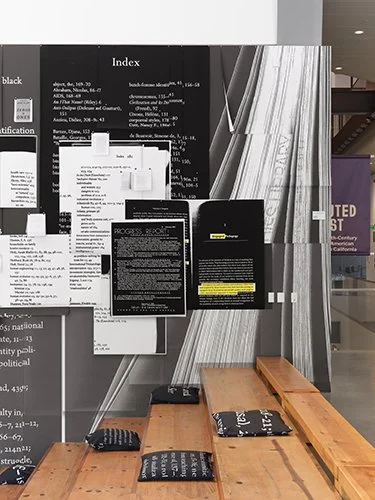
Installation view of Art Wall / Stephanie Syjuco: Present Tense (Roll Call), 2025. Courtesy of the artist, Berkeley Art Museum and Pacific Film Archive (BAMPFA), University of California, Berkeley; Catherine Clark Gallery, San Francisco; RYAN LEE, New York; and Silverlens, Manila/New York. (Photo: Chris Grunder)
“As a professor who is literally teaching in Obata’s department, as an Asian American professor, there’s a resonance I am creating across decades, even though Obata and I did not overlap at the same time,” said Syjuco, who was born in Manila. For Present Tense (Roll Call), she included an image of Obata sourced from the archives of the Smithsonian, a museum that happens to hold Syjuco’s own work in its collection as well.
While Berkeley’s history of protest culture is the nominal subject of Present Tense (Roll Call), it’s impossible to look at the work and not think about 2025, a year when the contested politics of higher education have roared back into the headlines. Amid recent attacks on ethnic studies, diversity programs and vulnerable communities, much of the text that Syjuco has chosen to feature in her mural — where words like “immigration” and “transgender” quite literally loom large — calls these struggles immediately to the viewer’s mind.
While these contemporary resonances were certainly on Syjuco’s own mind as well, she sees the piece as more of an invitation to dialogue, especially about the role of teaching and learning in artistic and civic spaces. To that end, she invited dozens of other artist-educators from around the country to nominate what they consider important teaching texts, and included these works on the Art Wall.
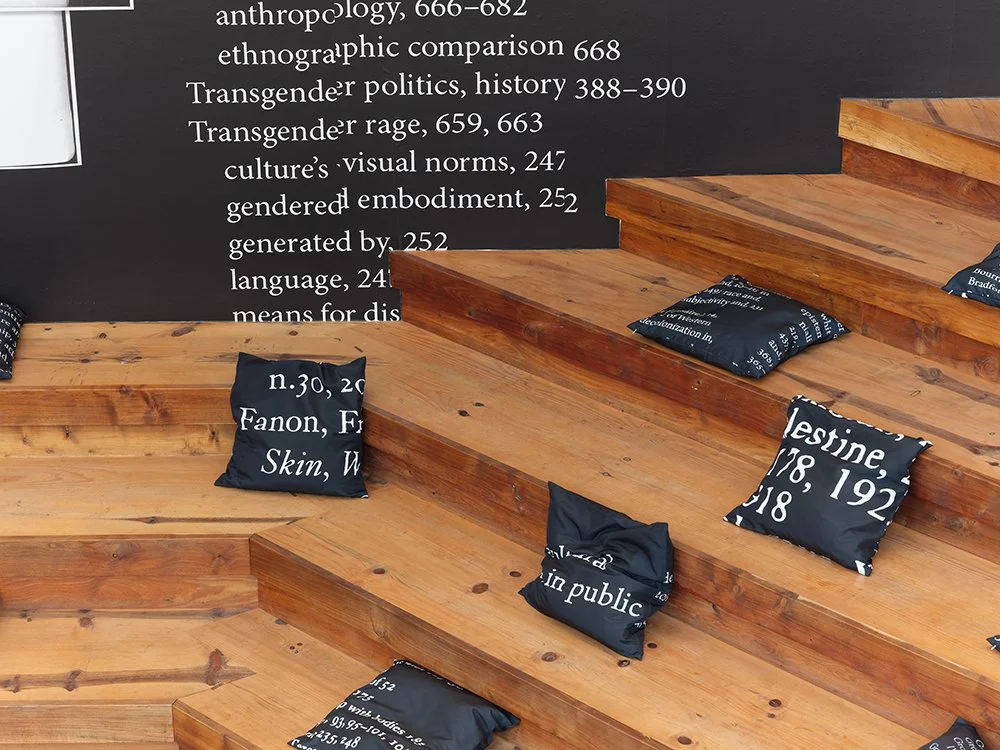
Installation view of Art Wall / Stephanie Syjuco: Present Tense (Roll Call), 2025. Courtesy of the artist, Berkeley Art Museum and Pacific Film Archive (BAMPFA), University of California, Berkeley; Catherine Clark Gallery, San Francisco; RYAN LEE, New York; and Silverlens, Manila/New York. (Photo: Chris Grunder)
“It’s a symbolic act of inclusion,” said Syjuco. “And it helps draw in not just my own views on what I think is important to teach today, but a conversation among artist-teachers around the country.”
Since its installation at BAMPFA in August, Present Tense (Roll Call) has provoked many conversations among students, teachers, and the general public, many of whom have taken in the work from the comfort of large black-and-white cushions that have been installed in BAMPFA’s amphitheater as part of the larger project.
While Berkeley’s history of protest culture is the nominal subject of Present Tense (Roll Call), it’s impossible to look at the work and not think about 2025.
Much of the early press coverage of the mural has focused on its relevance to the perilous political climate of 2025, but as more educators like Gonzalez and Syjuco herself bring their students to see and discuss the work, it has come to be understood more holistically as a piece about language, history, and the narratives that shape our understanding of identity.
“[We visited on] the first day of class, so students really had no preconceptions yet of what the class was about, and the Art Wall provided them with a common text where they could share their observations,” said Professor Gonzalez, who noted that the artwork provoked conversations among her students about “how narrativity about and by Filipinx life shapes the environment around them.”
AJ Fox is a writer, publicist, and art lover who is based in Berkeley, California. He works at the Berkeley Art Museum and Pacific Film Archive.
