
Behind the documentary ‘The Road to Sydney’
/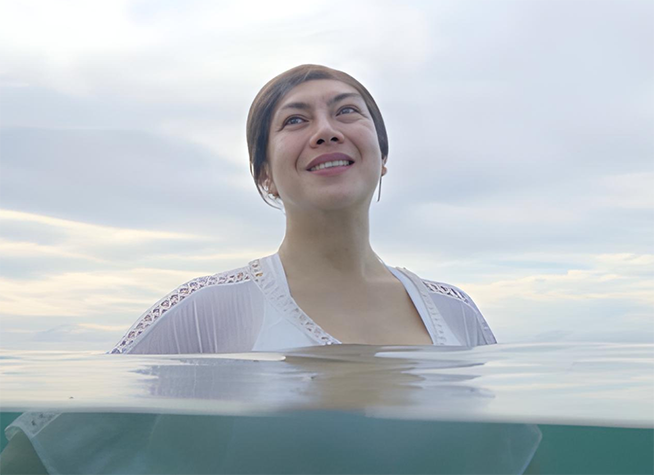
Sydney Loyola in Palawan (Photo by Ted Streete)
It had been a long, arduous, and painful transformation. But now, finally, here she was: Sydney—full-bodied, beautiful, accomplished, and fulfilled. The metamorphosis she had longed for, the unshackling from physical and emotional restraints, had at last come to pass.
“I chose the name Sydney—a name that whispers of southern waters. In the long struggle to stay afloat, I’ve been healing in God-given saltwater, letting it mend what once felt lost. Now I’m setting out toward my fullest self—a larger, truer expression that holds both man and woman within it. And this is my story: The Road to Sydney.”
Growing up in Puerto Princesa, Palawan, young Jay sensed that something was amiss—something different about himself. His physical body did not match his inner feelings. His classmates branded him mahinhin (feminine) and madamdamin (emotional). Like a jackfruit that easily sheds its sap when pricked, they said, he was too quick to feel, too easy to wound.
Confused, he asked his mother, Fe, “Why do they say that?”
To soothe him, she smiled and replied, “I craved jackfruit when I conceived you.”
Jay remembers vividly how his father, trying his best to make him more masculine, once threw him into deep waters to teach him how to swim—and how to be a man. They parted that day unhappy, both carrying disappointment in silence.
His mother, however, encouraged his love for dance. That passion led Jay to perform with the world-renowned Bayanihan Dance Company. His travels eventually brought him to the San Francisco Bay Area, where he thrived and later became known as a master choreographer of Philippine folk dance.
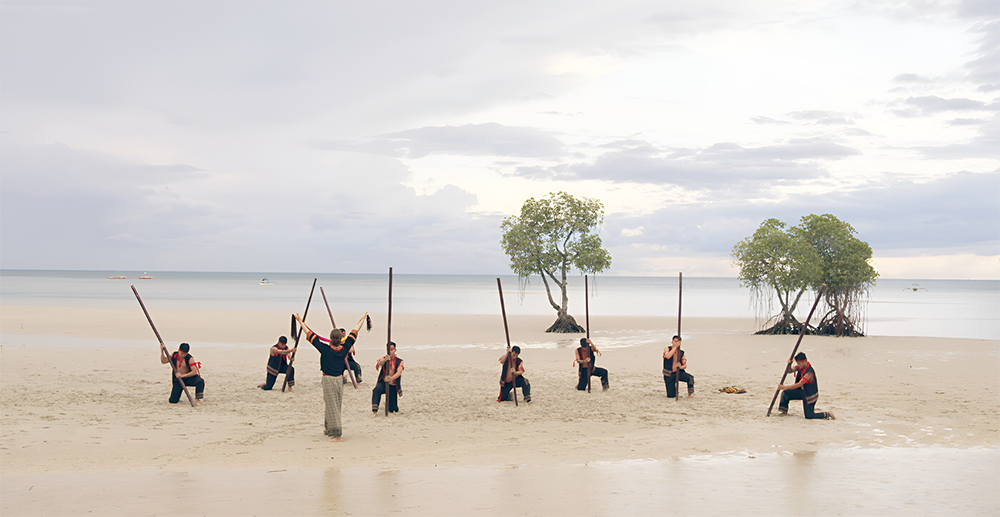
Syndey choreographing The Nature Dance (Photo by Ted Streete)
“My entire being has been shaped by dance,” Sydney shared. “And interestingly enough, it became more than a place where I could succeed or make a name for myself. It became my refuge—a safe place where I could be all that I am. The more I surrendered to the throes of dance, the freer I became. And now, years later, hundreds of performances later, with original works to my name, I have become free. Free enough. Courageous enough to take my own steps.”
The Documentary’s Start
In 2015, during a Filipino American community event, a group called Kalayaan was formed to celebrate— for the first time—Philippine Independence Day at the heart of San Francisco’s financial center, Union Square. What began as weekly meetings soon evolved into intimate gatherings where members shared their relationships and mariteses (gossip).
Finding a supportive community, Sydney expressed her desire to transition. The Kalayaan group gave their “one hundred and one percent” support and offered to document her journey toward becoming her truest self.
And so, it began in 2017. Initially intended to chronicle Sydney’s gender-affirmation journey, the film evolved over eight years. As in life, twists and turns reshaped the narrative. Unexpected events altered much of the footage, including a painful chapter in which Sydney was dismissed and evicted by the very company that had once employed her—another reminder of how deeply society still struggles to understand those who fall outside rigid notions of gender.
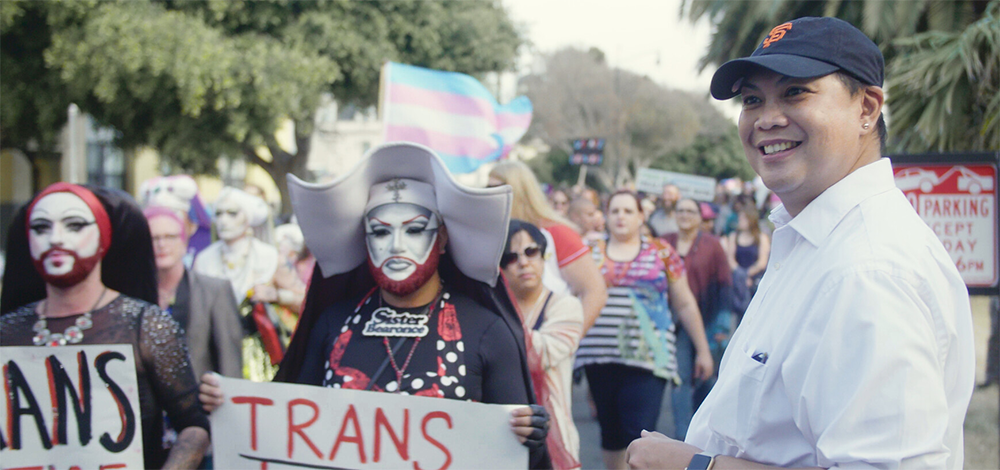
Sydney at the trans march (Photo by Ted Streete)
The film weaves together the stories of Sydney’s friends, each grappling with their own battles: discrimination, labeling, transition, physical abuse—and eventual triumph. Or not. Their stories, taken together, strengthened Sydney’s resolve to find her “core,” or in her words, her agimat.
“It’s that idea that keeps the fire in your belly roiling,” she said.
“For me, dance became the place where I could breathe without armor. On that stage, strength didn’t require pretending, and vulnerability wasn’t something to hide. Every movement was a quiet declaration: I am here. I am real. I am enough,” Sydney wrote to herself.
Growing up in Puerto Princesa, Palawan, young Jay sensed that something was amiss—something different about himself. His physical body did not match his inner feelings.
She was thankful that although opportunities growing up were scarce, opportunities opened up for her eventual transition.
“Four years passed before I finally caught my first unmistakable glimpse of Sydney. It wasn’t dramatic, but it was deeply affirming—the soft but undeniable sense that the woman inside me was no longer just an idea. Embracing your true identity—especially as a transgender woman—demands a kind of courage no one asks for, but many of us are forced to cultivate. It isn’t that we start brave. It’s that the world often gives us no alternative. Living as a transgender woman means waking up each day and recommitting to truth in a world that doesn’t always celebrate honesty. It’s frightening. But it’s also deeply sacred.” Sydney shared.
Sharing a personal journey with the public actually emboldened Sydney. She brought her fight for freedom up front as a motivation for others who are still undecided. She believes they “deserve a world less hostile, less uncertain, less heavy than the one I inherited.”
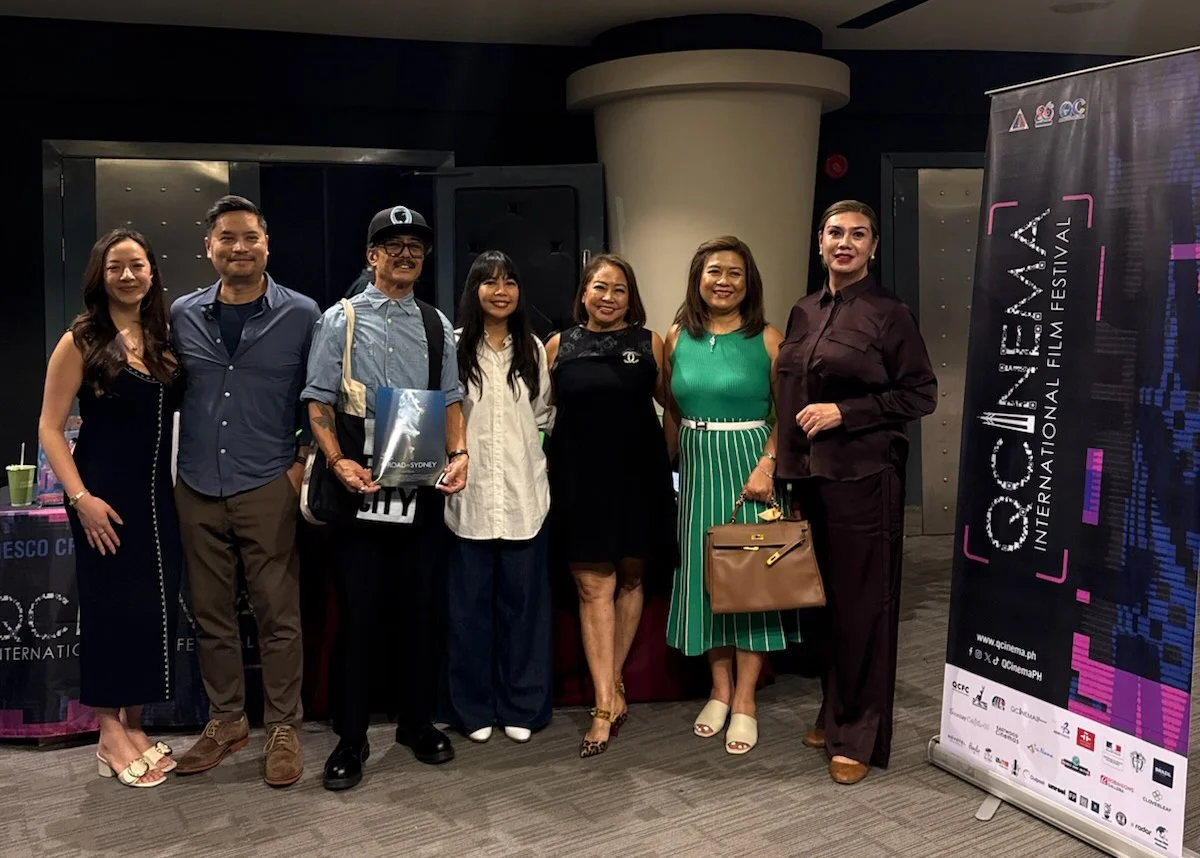
At the QCinema International Film Festival Premiere (L-R) Michiko Wagner, Radi Calalng, Benito Bautista, Emma Francisco, Sonia Delen, Wendy Pascual and Sydney Loyola
Sydney wants to stand as proof that their journey is worth taking. “If I can make even one of them feel braver, more seen, more possible, then every struggle in my own path becomes meaningful. I want to stand as proof that their journey is worth taking. That they can claim space, claim truth, and claim the fullness of who they are without apology. And no matter how turbulent the times become, living as their true selves will always be a form of power the world cannot take from them.” said Sydney Loyola.
For more information about the film, visit theroadtosydneyfilm.com and follow the journey at @theroadtosydneyfilm. TRAILER
Meet the Team
Benito Bautista — Writer / Director / Producer
Recipient of the Gawad Urian Award for Best Documentary, the Asian Network of Documentary Award at the Busan International Film Festival, and multiple Audience Awards, including honors from CAAMFest and the Hawaii International Film Festival. His works include The Gift of Barong: A Journey from Within (distributed by Stanford University’s Program for International and Cross-Cultural Education) and BOUNDARY, winner of the NETPAC Award at the Cinemalaya Independent Film Festival. Benito has also worked on two feature documentaries, serving as producer on A Long March by T.S. Botkin and co-producer on A Is for Agustin by Grace Simbulan.
Emma Francisco — Producer
Her first feature film, BOUNDARY by Benito Bautista, received the NETPAC Best Film Award at the 2011 Cinemalaya Independent Film Festival, as well as the National Commission for Culture and the Arts Award. Emma also served as co-producer on A Is for Agustin by Grace Simbulan and associate producer on A Long March by T.S. Botkin. In 2024, the short film Amazing Grace, which she produced with director Aiden Keltner, received NATAS PSW Emmy Awards for Best Arts/Entertainment Program, Best Director, and Best Performer.
Emma is the Managing Partner of Wanderlustproject Films. Together with Benito Bautista, she co-founded the non-profit organization San Diego Filipino Cinema, where she serves as Programming Director. SDFC presents the San Diego Filipino Film Festival and is home to the largest curated collection of global Filipino cinema in North America.
IMDb: https://www.imdb.com/name/nm3480671/
OneUp Film Studios —
Executive Producers:
Sonia Delen
Wendy Pascual
Conrad “Radi” Calalang
Music Composer — Michael Dadap
Director of Photography — Vuong Tran
Post Production Team in Manila
Editor- Cheryl Centeno
Asst. Editor - Kat Ignacio
Sound Design and Mastering - Mikko Quizon, John Michael Perez
Second Unit Cinematographer- Marvene Munda
Lighting Design- Jhun Mirador
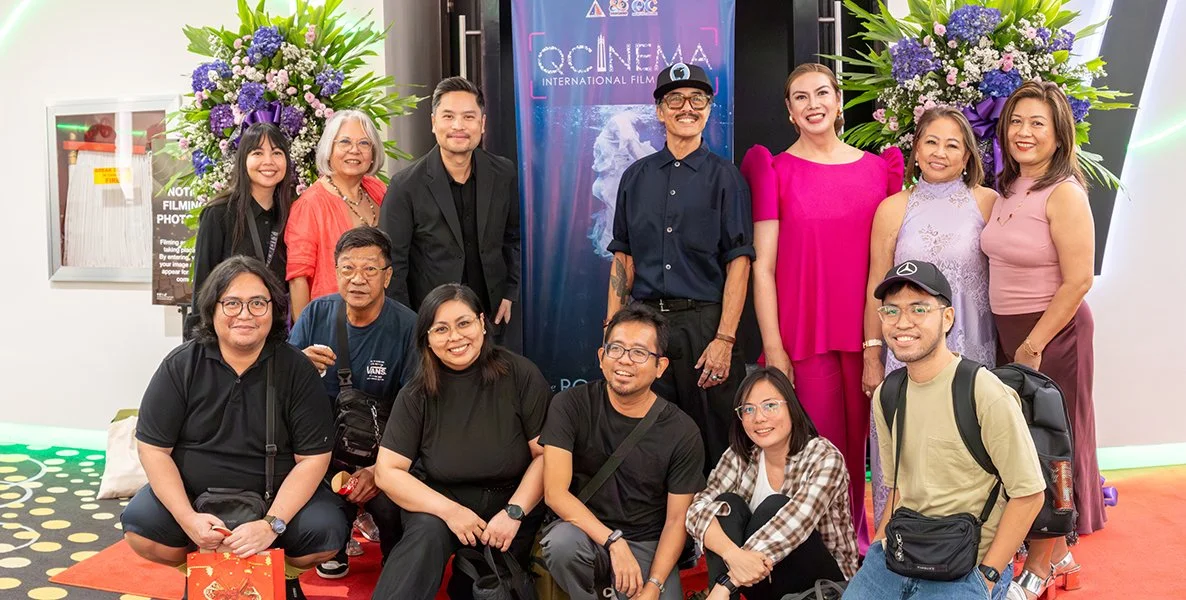
The Production team in Manila (Photo by Ted Streete)
Esther Misa Chavez is Chair of the Plaridel Awards of the Philippine American Press Club USA, and Publisher, Easterworks Media. Until recently she was Vice President for Sales and Marketing of INQUIRER.net U.S.A., the online version of the Philippine Daily Inquirer.
More from Esther M. Chavez
