

Losing Lillibeth Twice
/Mama Lina had applied this same disciplined decision-making 68 years before, when she reorganized her career plans to prioritize then five-month-old Lillibeth's recovery from polio. Marshalling the family resources for Lillibeth’s care and education, this young mother determined that her daughter would not live a life less full than her able-bodied siblings even if wheelchair bound.
The wheelchair would not contain her Lillibeth’s spirit. If there was a fun activity, that wheelchair was sure to be in the center of it. She drew people in with her raucous laughter and storytelling. She excelled in school and chose social service as her professional path. An adventurer at heart, she conjured boisterous events and travel. Amid these activities, you would find her huddled with a quiet soul, drawing them out with her unhurried conversation, curiosity and genuine interest.
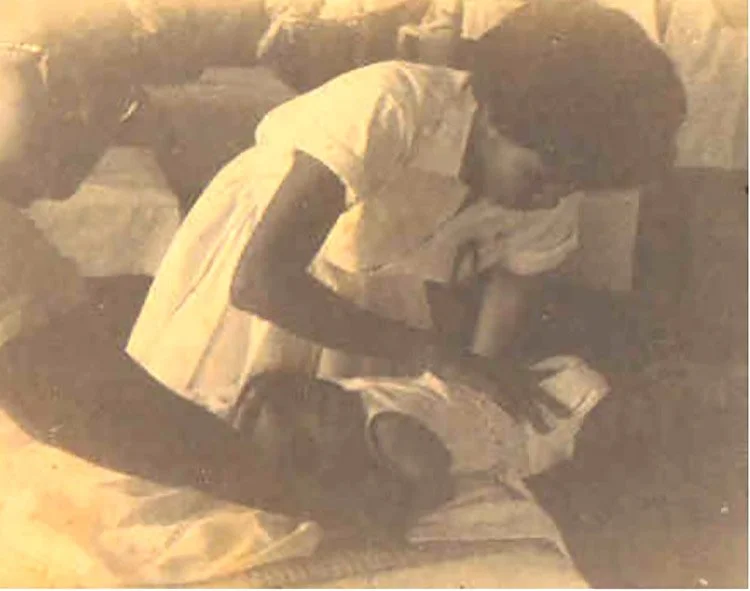
Lillibeth is pictured undergoing rehabilitation at the National Orthopedic Hospital. Mama Lina would bring her first born for rehabilitation in the morning and attend college classes in the afternoon.
Early Advocacy
Personality was the raw material and home the laboratory that developed Lillibeth’s skills at commanding and organizing. Media transported Lillibeth to a world she could not physically inhabit as a child. She wheedled, cajoled and occasionally harangued her siblings who, on Mama Lina’s instructions, had to attend to her needs. She applied the skills learned in childhood to her first advocacy efforts for the disabled in the Department of Social Services in the small town of Tarlac in the Philippines.
Lillibeth believed that disabled people should have the freedom, resources, choices, and power to direct their own lives. But not everyone had Mama Lina as a champion and the challenges families faced to support the needs of their disabled children in a small town were very real.
Community programs and services for the disabled in the small town needed visibility and resources and Lillibeth conceived of “Bahay Buhay,” a living center where individuals with disabilities could congregate and provide peer support. Through her advocacy and work the center was realized and became a haven for fellowship, service referrals, and a center for education and rights advocacy.
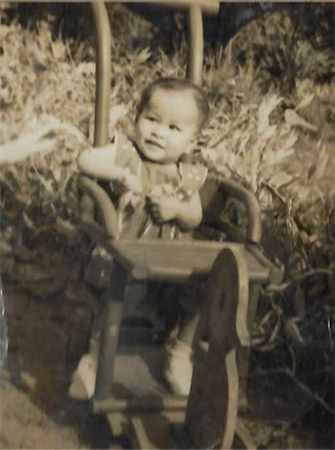
Lillibeth later regained sufficient use of her arms and torso muscles to enable her to sit upright.
Translating Skills to a New Frontier
While Lillibeth arrived in California with nascent skills and a toolkit for advocacy and organizing, training in broadcast communication at the University of Southern California and Urban Planning at UCLA added to her arsenal for effective leadership in the heady exciting disability movement of the 80s.
Building on the model she developed in Tarlac, she founded the nonprofit Communities Actively Living Independent & Free (CALIF) (https://calif-ilc.org/board/lillibeth-navarro/) and was an active partner of the group that advocated for the passage of the landmark legislation Americans with Disabilities Act that lobbied for accessible transportation, personal assistance services, housing and community living, and the civil rights of people with disabilities.
However, the mature advocate realized that personal persuasion in the community needed to be matched with operational excellence to achieve concrete progress. Bridging gaps between the disabled community, service providers, and governing bodies allowed the movement to move beyond adversarial activism toward genuine collaborative partnerships.
Effective partnership enabled structured program delivery in service and advocacy for housing and benefits (social services, Medi-Cal, Medicare and Social Security), assistive technology and medical equipment resources, training for independent living skills, employment and education, transportation, systems-change and disability-rights.
This was the work for which Lillibeth received the highest accolades from her beloved California and expanded delivery to 55 zip codes in the state. In 2010 President Benigno Aquino III of the Philippines recognized Lillibeth as an outstanding Overseas Filipino for excellence in disability advocacy.

In 2010, Lillibeth Navarro receiving the Pamana ng Pilipino Award for Filipino individuals overseas from the Philippine President Benigno S. Aquino III.
We Are Lillibeth, the brightly colored children’s picture book, reflects Lilibeth’s joyful personality and is intended to inspire families that support the less able among us.
Post-Polio Sequelae & Liver Failure
Lillibeth first attributed her tiredness to a punishing work schedule, but rest provided no relief. Decades after the initial infection, new muscle weakness from post-polio syndrome set in and daily self-care felt like running a marathon. Post polio syndrome also accelerated degenerative arthritis and pain with movement. Even breathing was difficult, robbing Lillibeth of restorative, restful sleep.
Nutritional intervention and adequate pain treatment could have improved Lillibeth’s quality of life. But nutritional advice takes skill, time and real expertise to translate into daily meals, especially because Lillibeth had developed diabetes, a serious metabolic disease. Since she had atrophied muscles from polio, exercise was near-impossible. Pain medications can cause harm if taken in excessive doses. Having survived polio in childhood only to surrender to its sequelae in adulthood, Lillibeth was too driven to pay attention to the details of her care and Mama Lina was unaware that Lillibeth was aging faster than her age in years.
While people with post-polio syndrome could live a normal lifespan, those with diabetes and fatty liver disease do not. Patients with scarred livers may not survive beyond a few years; a sobering reality for Lillibeth. After fighting to reclaim Lillibeth’s potential after early childhood polio and raising her to full maturity and independence, Mama Lina lost her daughter in adulthood to the twin diagnoses of post-polio syndrome and liver failure. The same crew of loyal siblings that supported her in childhood kept vigil in Lilibeth’s last hours, tending to her physical, medical, legal, and financial affairs.
In 2010 President Benigno Aquino III of the Philippines recognized Lillibeth as an outstanding Overseas Filipino for excellence in disability advocacy.
September 2026: Continuing Lillibeth’s Legacy
Lillibeth’s work on disability rights and systems change spanned two countries, with transformative impact on individual lives. Her life story illustrates the unique needs of aging adults with childhood-onset disabilities. Honoring the full life Lillibeth lived and the lives she transformed despite her premature loss, Mama Lina and Lillibeth’s siblings released her biography, We are Lillibeth.
The brightly colored children’s picture book (available on Amazon) reflects Lilibeth’s joyful personality and is intended to inspire families that support the less able among us. Moreover, the book also highlights the toll on aged caregiving parents. Degenerative disorders from aging brings its own disability and sums up why ”We are ALL Lillibeth”.
The book’s release is timed to celebrate CALIF’s 25th year and support CALIF’s fundraising campaign. Before Lillibeth passed away, CALIF director, Keith Miller made a commitment to Lillibeth and her family to continue CALIF’s work of helping the disabled navigate real world barriers and achieve independence, access, opportunity, and the right to live in the community. Funding for critical disability services is uncertain presently.
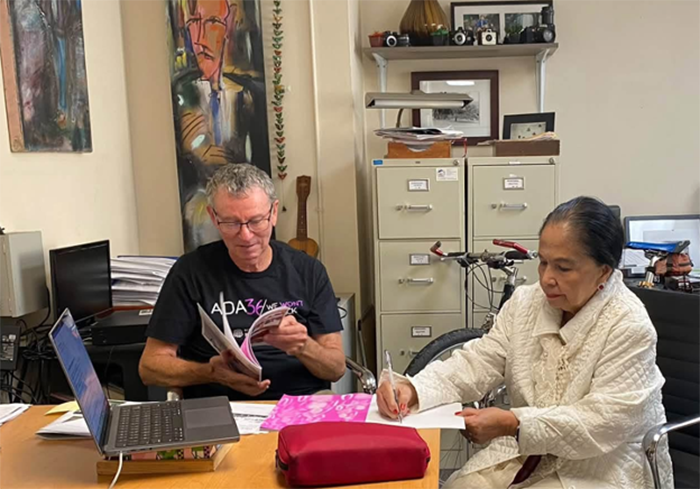
Lillibeth’s work began in a small town in the Philippines that took care of its own. That community has grown to 55 zip codes in California. Join our virtual community and receive a copy of “We are Lillibeth” by supporting CALIF-ILC (https://givebutter.com/calif25).
Eileen Navarro Almario, Lillibeth’s younger sister, is a physician who advocates for vaccine preventable infections and liver disease.