
Baguio’s Horror Festival Sparks Clash Over Art, Faith, City’s Identity
/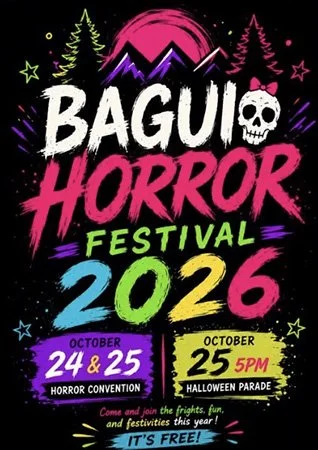
The controversy centers on the Baguio Horror Festival, whose signature Halloween parade in late October happens along Session Road, followed by activities at People’s Park. The festival and its Zombie Walk trace their beginnings to 2011 and have attracted cosplayers, students, tourists, artists and spectators.
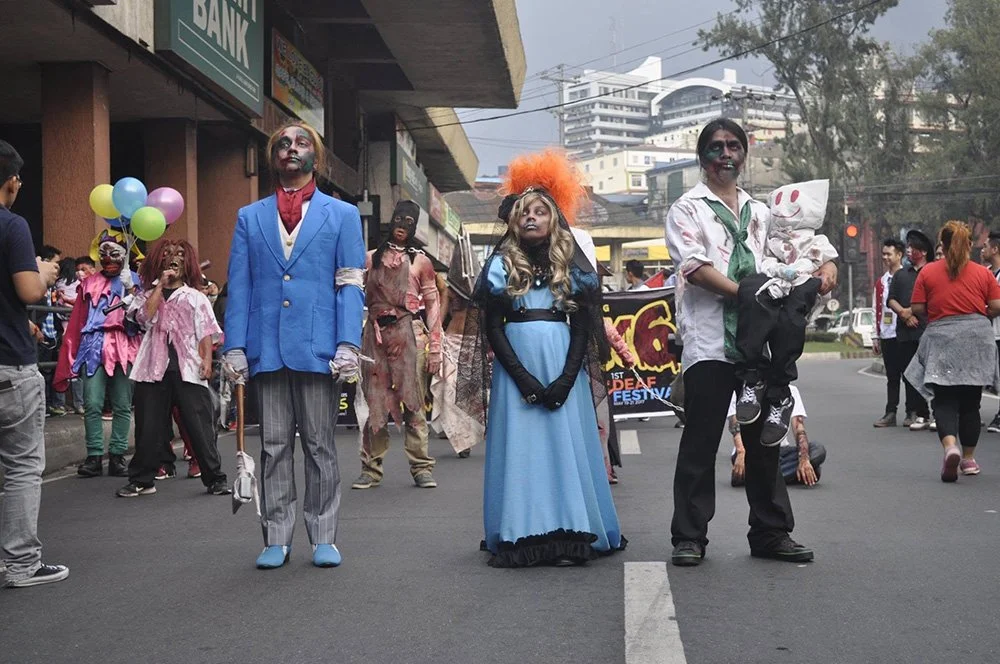
The Zombie Walk in 2016 (Source: SpookyconPH/Facebook)
The controversy erupted after a Christian group led by Gerard Ericson Pangilinan of Endtime Harvest Christian Ministries International asked the Baguio City Council to review the festival’s permits. The petitioners objected to themes involving death, horror, the macabre and occultism and questioned whether a public event built around such imagery is compatible with Baguio’s status as a “Character City” under Ordinance 39-2023.
The petition does not seek to criminalize private Halloween celebrations. It calls for a review of the festival’s permits and measures to ensure that public events conform to the city’s character-building policies. Some opponents, however, have gone further in discussions, calling for the event to be stopped altogether, while others have proposed modifying it.
Festival organizer Carl Paolo Corpuz has offered a different perspective. He says “horror” is being used as an artistic genre encompassing films, literature, photography, costumes and visual arts. He has rejected the suggestion that the festival promotes Satanism or blasphemy and has described the Halloween parade as family oriented.
Willing to Compromise
The organizers have nevertheless shown willingness to compromise. They have indicated that excessively graphic or bloody imagery could be toned down and that the phrase “turn Baguio into a horror capital,” which appeared in promotional material, be withdrawn altogether. Corpuz explained that the expression was marketing language rather than a formal proposal to redefine Baguio.
That willingness became significant during a September 14 preliminary dialogue facilitated by Councilor Yuri Weygan, and a City Council forum on September 21. Representatives of the festival, religious groups, the academe and other concerned citizens discussed possible ways forward.
The dialogue revealed that the opposing side itself is not monolithic. Some participants wanted the event banned, while others favored modifications that would address concerns about children and graphic imagery while allowing the celebration to continue. Alternative concepts mentioned included a festival of light, lantern parade, or character-and-creativity festival.
There is also a legitimate public-policy question here. Unlike a private Halloween party, the proposed parade occupies public space and involves government permitting and support. Critics therefore argue that the city has a legitimate interest in determining what kind of public activities are consistent with its policies and appropriate for children.
But there is an equally important question concerning artistic and cultural expression.
Popular Culture Genre
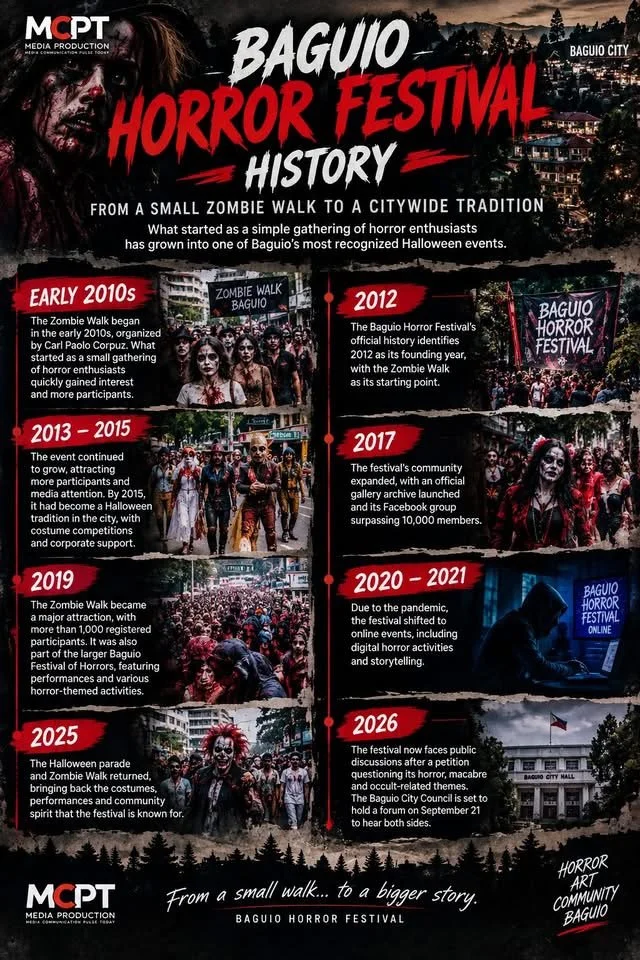
(Graphics courtesy of MCPT Media Production)
Horror is a recognized genre of popular culture. Zombies, ghosts, vampires, monsters and fictional demons appear in movies, books, theater, television, cosplay and visual art. Portraying such a character does not automatically mean embracing the beliefs or behavior represented by that character.
Baguio itself has a long association with ghost stories and allegedly haunted places. Halloween and cosplay have also become part of the city’s contemporary cultural landscape. The question, therefore, is not simply whether Baguio should have Halloween, but where the city draws the line between artistic expression and what it considers inappropriate public imagery.
Councilor Weygan has emphasized that the issue should not become a battle between the religious and creative sectors. Former councilor Isabelo “Poppo” Cosalan, who authored the Character City Ordinance, has likewise encouraged the parties to work toward conditions acceptable to those involved.
Fantasy Festival as Alternative
After weeks of debate involving religious groups, artists, organizers, educators and the Baguio City Council, the organizers announced during the council meeting that they are dropping the Horror Parade as a public event.
But fear not, Halloween fans. The monsters are apparently not being banished from Baguio altogether. They are simply being asked to change costumes.
But fear not, Halloween fans. The monsters are apparently not being banished from Baguio altogether. They are simply being asked to change costumes.
In place of the Horror Parade, organizers have proposed a “Fantasy Festival,” featuring characters and themes drawn from different literary and popular genres, including mythology, folklore, movies and films.
In other words, the zombies may have been sent home, but the dragons, gods, witches, superheroes, elves, ghosts and assorted creatures of the imagination may still have a reservation.

Rene Astudillo is a writer, book author and blogger and has recently retired from more than two decades of nonprofit community work in the Bay Area. He spends his time between California and the Philippines.
More articles from Rene Astudillo
