
Growing Up Tough in Sta. Ana, Manila
/I was born the youngest of nine children. Two siblings came before me, but they passed away before my birth. Mom later adopted two of her younger brother’s children.
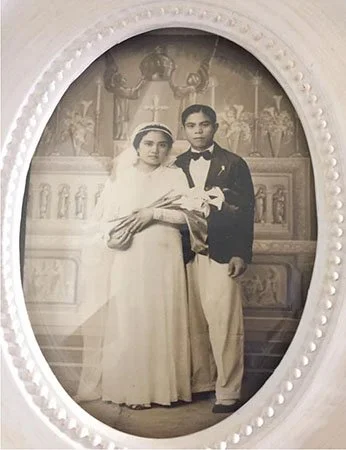
My parents: Alejandro and Florentina Gaetos (Photo courtesy of Ben Gaetos)
Both my parents were from the province of La Union. I was born and raised in Sta. Ana, Manila. Dad was a delivery driver for Dangwa Tranco, which operated from Manila to Baguio City and the mountain provinces. He picked up and delivered transited packages from the bus terminal.
My mom was a housewife and seamstress. She made dresses and wedding gowns. Her claim to fame was making dresses for the famous actress—and across‑the‑street neighbor—Miss Rita Gomez in the ’60s.
As I looked out from the roof deck of our house, I began to ponder my childhood memories. Most of the houses have been rebuilt into multilevel structures, including ours. Distant high‑rise condominiums can now be seen from our deck. Holy Family Chapel remains and is undergoing renovations.
Our family had limited resources. We did not own a television set or luxury items. On Friday nights, I watched Combat and Saturday morning cartoons through a neighbor’s window. It took years before we owned a television. My eldest sister, Tessa, shipped one from the U.S. She was a nurse anesthetist in Canada and the U.S. All my brothers and sisters went to public schools. I was fortunate to study at Paco Catholic School.
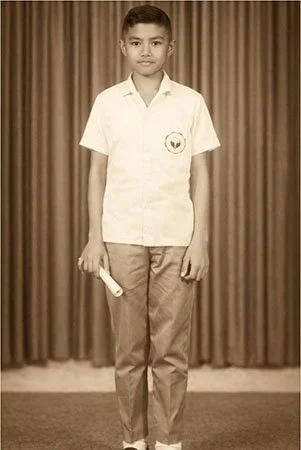
My sixth-grade graduation at Paco Catholic School (Photo courtesy of Ben Gaetos)
Our street has grown more densely populated, resulting in heavier traffic and increased noise. Hearing karaoke late at night has become commonplace.
In the past, our street transformed into a playground with traditional Philippine games such as tumbang preso (players knock down a tin can with one of their slippers and avoid being tagged by the “it” person); patintero (a team tries to cross lines drawn on the ground or pavement and avoid being tagged by the opposing team); and taguan (hide-and-seek).
I also played other street games such as piko (hopscotch), sipa (“kick”), jolens (marbles), teks/pitik (snapping cards or rubber bands with fingers), giyerahan (war games using wood rattler guns or sticks), trumpo (spinning top), and even invented our own, such as boat racing on street gutters. My late eldest brother, Guillermo, made me a wooden scooter so I could race with the other kids.
To earn a little money, I recycled newspapers and glass bottles. I secretly tried peddling rice cakes and egg rolls. That was short‑lived because my mother disapproved. I really enjoyed calling out “bi‑bing‑ka,” “u‑beh,” or “lum‑piaa” while ringing a bell in the looban (interior alley). I earned two pesos per tray sold in the late ’60s to buy myself toys. Mom eventually decided to make and sell ice candy at home.
My dream of becoming a runner developed from watching track and field. I would race my friends for about two blocks. However, running drew little interest, as basketball—then and now—remains the premier sport. Every open space had a basketball court. Our house was also next to a billiard parlor. I learned how to hustle money on the wooden pool table. In addition, my dad and brother Guillermo always took me to the racetrack. I knew horseracing at an early age. If I did not take an afternoon nap or was playing outside, my older brother, Alex, took me to the movies. My other brother, Sen, and sisters Lydia and Remedios looked after me every time. True, I had fun, but I never neglected my studies. There were no electronic gadgets, cell phones, or computers then. Learning to take care of myself, I stood my ground against bullying kids.
During summer, Mom and I visited Apong Iling (Grandma Aquilina) in San Gabriel, La Union. Mom and her siblings owned a small farmland. Before sunset, I would pick up the carabao from the field and take it to the nearby waterfall. My cousin Rene and I also checked his quail traps. We walked a little farther to the now‑popular Tangadan Falls. Apong loved me so much. One time, she asked my Uncle Felipe to slaughter one of the hogs just for me. She passed away at 100 years old.
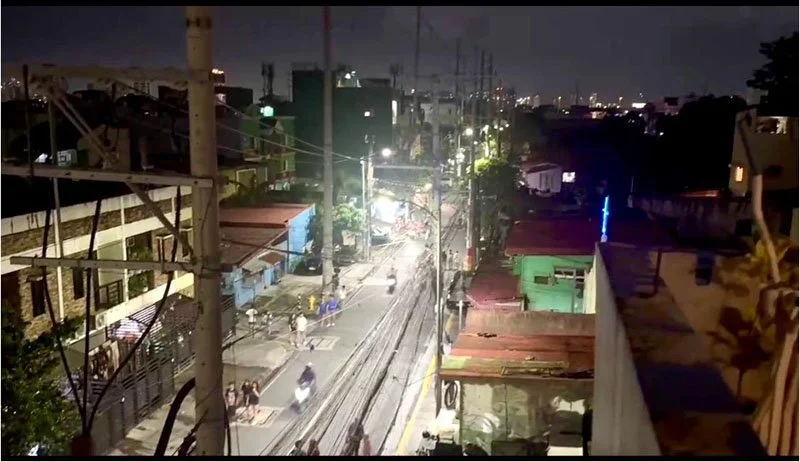
This is what our street in Sta. Ana looks like at night now (Photo courtesy of Ben Gaetos)
One of my childhood best friends and sidekicks was Ramon, aka “Pi‑pe.” He was deaf and about my age. Somehow, we communicated with improvised sign language. He waited for me when I got off from school and carried my bag. He also assisted me in scrubbing our wooden floor and accompanied me when I did errands. His family later moved away.
Only a handful of my childhood friends still live in the neighborhood. Some achieved success while others did not.
My dad succumbed to heart failure when I was in junior high school. My mother opened a clothing store at Sta. Ana Public Market. I opened and closed the store on school days off. I was starstruck when the superstar actress Amalia Fuentes bought a blouse from me. Mom arrived at the store after morning Masses or after shopping for merchandise. Before going home in the morning, I would buy palabok noodles at the market. We sold our store when we immigrated to the United States. Whenever I visit Manila, I order palabok from the same place.
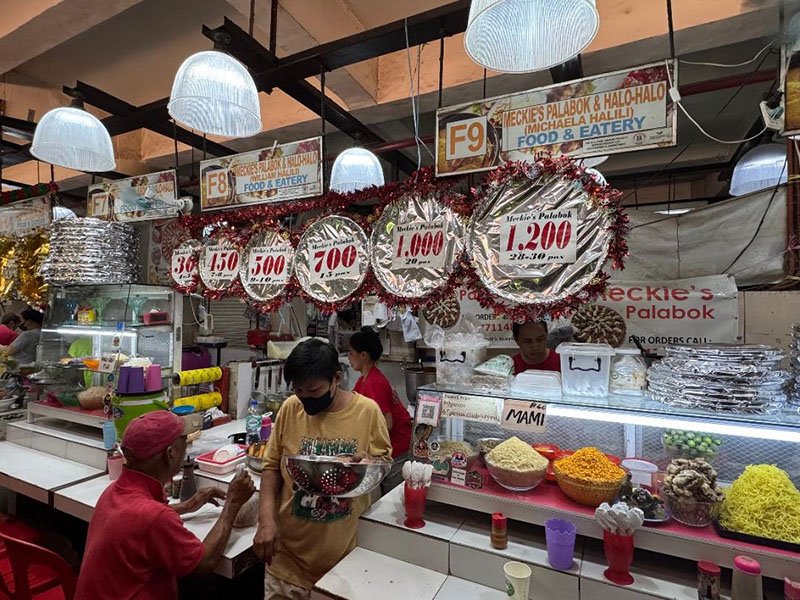
I still visit the same palabok joint from my childhood (Photo courtesy of Ben Gaetos)
Only a handful of my childhood friends still live in the neighborhood. Some achieved success while others did not. I remain in contact with my close friends and classmates. The street kid in me helped me manage demanding situations later in life. It made me tough as a brick. Times change, but the memory remains.
The author extends gratitude to Dexjordi Lyle Sison for his assistance with the photos.
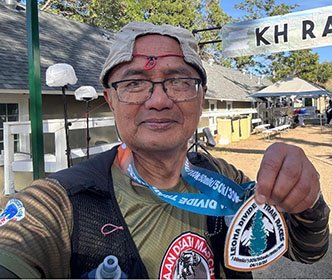
Ben Gaetos traded blueprints for finish lines. A proud University of Santo Tomas architecture graduate and former project‑managing architect for Los Angeles Recreation and Parks, he surprised even himself by outrunning his own dreams. He became the first Filipino to conquer the notorious Badwater 135 — Death Valley’s blistering, soul‑melting ultramarathon. And because epic feats deserve epic storytelling, he penned two books about the journey: I Dreamed, I Ran, I Conquered and Dream, Great Things Are Coming Again.
More from Ben Gaetos
