
Growing Up Filipino in San Francisco’s South of Market
/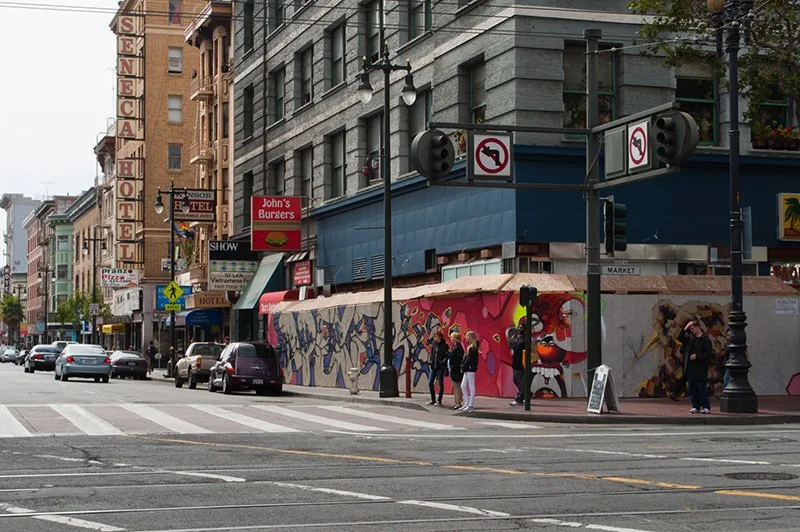
San Francisco’s South of Market (SOMA) at Sixth and Mission (Source: WiKiMedia Commons)
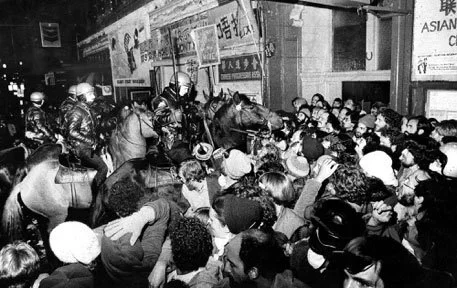
1977 International Hotel Eviction – Protesters blocking San Francisco police officers from evicting elderly tenants (Photo courtesy of Manilatown Heritage Foundation).
Gran Oriente Filipino, founded by Filipino merchant mariners, began using 106 South Park Street in 1935 and became an anchor for men whose lives were often unsettled by work. A sailor might disappear aboard a ship for months, while a farmworker might leave for the asparagus harvest in the Delta or another crop farther south. Gran Oriente gave them a familiar place to return to. Men could receive mail, store belongings, hear about jobs, find a bed and exchange news from the Philippines.
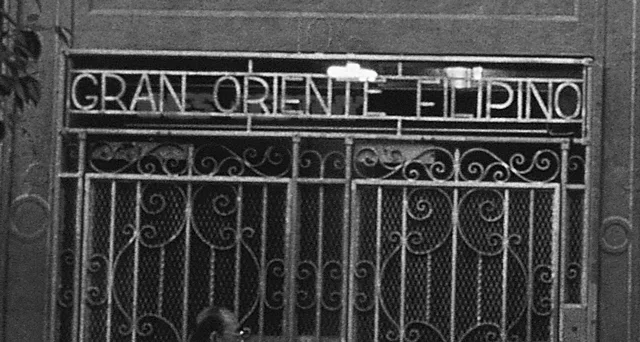
Gran Oriente Filipino (Photo by Aileen Lainez)
Families gradually transformed that male labor settlement into a neighborhood. Filipino households appeared along Natoma, Tehama, Minna, Russ, Harriet, and the small streets and alleys running through South of Market. Rudy Delphino remembered his family moving from North Beach because other Filipino families they knew were already living there. One family found an apartment, another moved nearby, a cousin learned that a room was available, and children discovered one another on the sidewalk.
By the 1940s and 1950s, SOMA was becoming different from the bachelor-oriented Filipino world associated with Kearny Street. Married couples lived with children, grandparents, boarders and recently arrived relatives. Filipino parishioners became familiar faces at St. Patrick’s and St. Joseph’s. Neighbors exchanged rides, food, child care, job information and news. None of this appeared in a city directory, but it was how Filipino SOMA worked.
The closeness of the neighborhood also shaped family memory. Children knew which apartment belonged to an auntie who was not really an aunt; which household served the best food after church and which adult could be counted on when a parent was working late. Family relationships extended beyond blood. In a working-class immigrant district, neighbors often became part of the practical family network because survival depended on people being available for one another.
Post-WWII Transformation
World War II accelerated the transformation. Filipino men served in the U.S. Navy, Philippine Scouts, Commonwealth forces, guerrilla units, and the First and Second Filipino Infantry Regiments. After the war, veterans married, returned with wives, or sponsored spouses and children. The overwhelmingly male Filipino population of the prewar years slowly became a more permanent community of families.
The women who entered these households should not be reduced to the convenient label “war brides.” They raised children, maintained households, joined churches and community associations, and worked in hotels, restaurants, hospitals, offices, domestic service and garment factories. Their children grew up in an America different from the one the manong generation had first encountered. They attended San Francisco schools, played American sports, listened to American music, and learned to move between Filipino family life and the wider city.
Military service did not eliminate racial prejudice. Dr. Gregorio P. Chua recalled in a 1992 oral-history interview with Professor Dan P. Gonzales that after the war he left the Presidio officers’ club still wearing his Army uniform. His wife, who was part Filipino and part white, was with him. Chua remembered being attacked by white officers who saw the couple together. His recollection illustrates how military rank, a medical degree, and wartime service could still fail to erase racial boundaries.
Half a century later, another generation of veterans entered SOMA. Beginning in 1990, changes in federal law allowed thousands of elderly Filipino World War II veterans to immigrate and become American citizens. Some believed citizenship would finally correct the injustice created by the 1946 Rescission Acts. Instead, many found themselves continuing an old fight for benefits and recognition.
Older Veterans
Some veterans came without wives or adult children. They were not young immigrants beginning new lives but elderly men crossing the Pacific near the end of theirs. The Delta Hotel at Sixth and Mission became closely associated with them. Dr. Mario Borja, a Filipino physician who had immigrated during the 1950s, purchased the hotel in 1976, and by the 1990s elderly Filipino veterans and other low-income residents were living there.
After a 1997 fire displaced more than two hundred tenants, Borja worked with the Tenants and Owners Development Corporation (TODCO) in efforts that eventually produced replacement affordable housing and community space. Bayanihan House and the Bayanihan Community Center continued the Filipino presence at Sixth and Mission. The intersection became a place where housing, veterans advocacy, immigrant services, and neighborhood life came together.
Around these residents grew a network of organizations that made immigrant life more manageable. West Bay Pilipino Multi-Service Corporation, the Filipino-American Development Foundation, veterans organizations, churches, senior programs, and legal and employment services helped families deal with housing, schools, health care, citizenship, benefits, and work.
Their most useful services were often the least dramatic. Someone sat beside an elderly veteran and explained a government letter. Someone telephoned an agency for a newly arrived family, helped complete a form, or accompanied an immigrant to an appointment. Filipino doctors, nurses, lawyers, teachers, accountants, and social workers often became translators of American institutions as much as practitioners of their professions.
Most families still survived through work that received little public attention. Filipinos cleaned hotel rooms and office buildings, cooked restaurant meals, washed dishes, worked in hospitals, maintained buildings, drove vehicles, staffed government offices and sat at sewing machines. Garment manufacturing was particularly important to immigrant women.
Carlota Arcia came from the Philippines in 1978 and found work at San Francisco Sewing Company at 510 Third Street. By 1996 she had spent 16 years sewing pockets and belt loops. A garment passed through many hands—one worker sewing a seam, another attaching a pocket, another making a belt loop. The faster they worked, the more the factory produced.
Arcia preferred sewing to hotel housekeeping, but neither offered much security. By the 1990s, garment production was moving overseas to countries where wages were much lower. At 510 Third Street, the changing San Francisco economy could almost be seen floor by floor. Sewing machines continued operating while multimedia and technology companies occupied other parts of the same building.
Another Social World
Restaurants, groceries, remittance businesses, barber shops and small stores created another economy and another social world. The Mint Mall at 953–957 Mission Street, associated with the Nocon family, became an important Filipino commercial center. New Filipinas, later JT’s Restaurant, operated there along with other businesses and organizations.
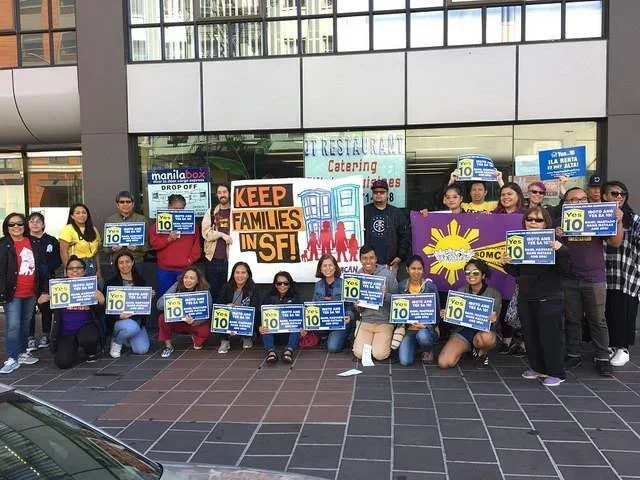
SOuth of Market Community Action Network (SOMCAN) rally in front of JT Restuarant at Mint Mall in San Francisco (Photo by SOMCAN)
A Filipino restaurant was never merely somewhere to eat. Somebody knew which hotel was hiring, while someone else had heard about an apartment. Veterans compared experiences with benefits offices, parents talked about schools, and customers argued about Philippine politics, boxing, basketball, and Manila. News of marriages, funerals, money problems, illnesses, and family disagreements moved from table to table.
The barber shop had a special place in this neighborhood economy. A haircut could take 20 minutes, but the conversation might cover a week’s worth of community news. Men talked about jobs, politics, military service, marriages, funerals and which families had moved to Daly City or returned from the Philippines. In an immigrant neighborhood, a barber did more than cut hair; he often knew who had arrived, who was leaving, who needed help, and who had found work.
Children knew a different SOMA. Bessie Carmichael School and the Filipino Education Center became increasingly important as immigration expanded. Newly arrived children had to learn more than English. They learned from American teachers, about cafeteria food, playground rules, buses, slang, racial categories, and the expectations of classmates whose families had been in the United States much longer.
Sometimes the child became the household translator, explaining a school notice or telephone call to a parent. Sports were easier. Filipino children played baseball, basketball, football, volleyball, softball, and track with Black, Latino, Chinese, white, Samoan, and other youngsters. Recreation centers and school teams became meeting places for children growing up in an increasingly diverse San Francisco.
Geographical Dispersal
By the 1980s and 1990s, Filipino students were spread through Balboa, Mission, Burton, Galileo, Washington, Lincoln, John O’Connell, and other San Francisco high schools. Balboa in particular developed a large Filipino student presence. Families were already moving beyond SOMA into the Excelsior, Daly City, and South San Francisco but school friendships kept young people tied to a broader Filipino San Francisco. The neighborhood was becoming less geographically concentrated even as Filipino youth networks became larger.
Victoria Manalo Draves had already demonstrated what could emerge from this environment. The daughter of a Filipino father and an English mother, she grew up south of Market and became an elite diver. At the 1948 London Olympics she won gold medals in both springboard and platform diving. Her success showed that Filipino family life and athletic ambition had deep roots in the neighborhood.
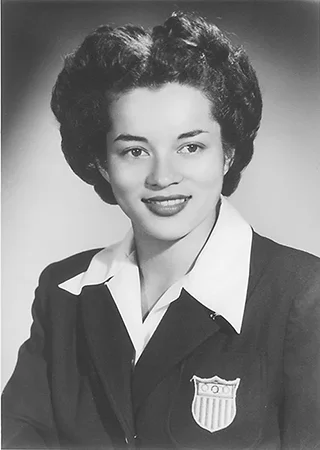
Vicki Manalo Draves (Source: A Journey of Faith)
Later generations found another connection through Filipino martial arts. Elrik “Franz” Jundis remembered watching Filipino martial arts at Cannon Kip Community House in 1976. Ben Largusa, Angel Cabales, and Rene Latosa were among the figures who helped make eskrima, arnis, and kali visible in Northern California. To young Filipino Americans, these were more than fighting systems; they were pieces of a heritage rarely taught in school.
SOMA also reached onto the San Francisco State campus. Filipino students formed the Philippine American Collegiate Endeavor (PACE) and participated in the 1968–1969 Third World Liberation Front strike that helped establish the College of Ethnic Studies. Daniel Phil Gonzales had been born at 31 Harriet Street in 1948 and later became involved in PACE, the strike, community organizing, music, curriculum development, and Asian American Studies.
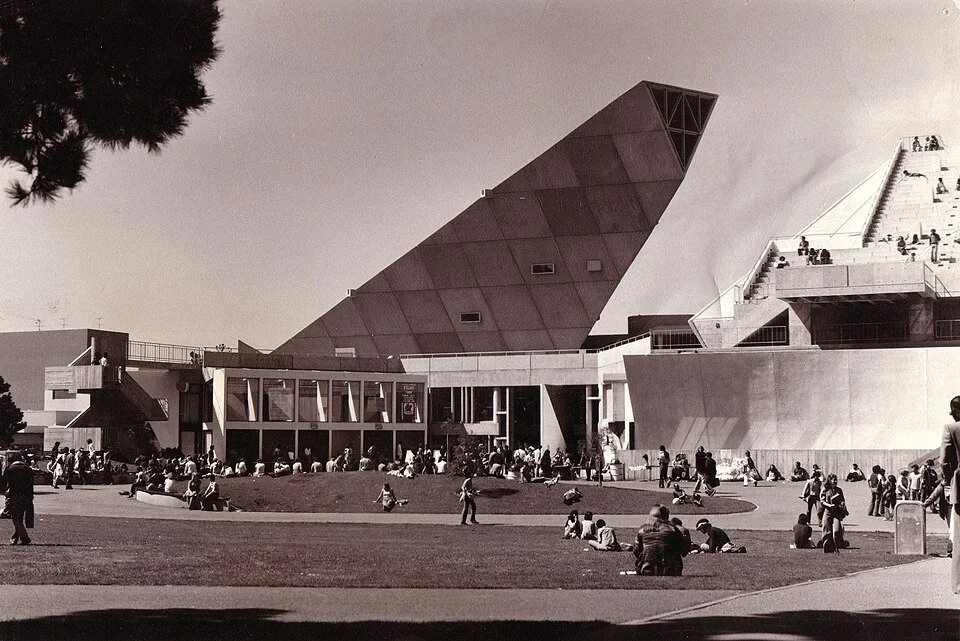
San Francisco State University (Source: WIkimedia Commons)
Patrick Salaver was another important Filipino student leader. PACE students went into Central City, as SOMA was then commonly called, tutoring Filipino youngsters and encouraging them to think about college. Salaver later refused induction into the military during the Vietnam War, was sentenced to federal prison, and was paroled in 1972. The contrast between generations was striking: many older Filipino men had sought recognition through military service, while part of the next generation challenged American policy by refusing to fight.
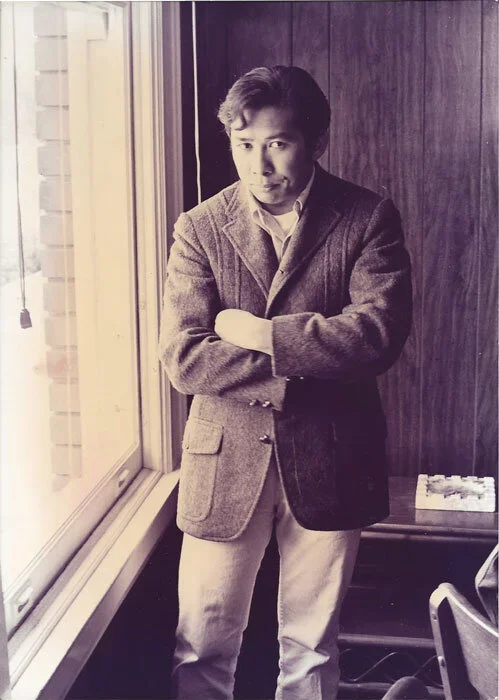
Patrick Salaver (Photo courtesy of Tim Salaver)
Fil-Am Music Scene
Music offered another way of becoming Filipino American. In the early 1970s, Filipino musicians participated in a Bay Area sound shaped by Latin rock, funk, soul, Santana, and Malo. Dakila became the best-known Filipino American group from that scene, signing with Epic Records and releasing an album in 1972 that incorporated Filipino identity and Tagalog into Bay Area rock. Maharlika and Mundo were also part of that musical world.
By the late 1970s and 1980s, teenagers created something different: the mobile disc jockey (DJ) crew. Sound Explosion, Ultimate Creations, Unlimited Sounds, Images, Inc., Spintronix, Non-Stop Boogie, Disco Tech Limited, Universal Sounds, and Sounds of Success hauled turntables, mixers, amplifiers, speakers, lights, and records into school gyms, weddings, garages, birthdays, and community halls.
The crews competed with one another, but together they created a Filipino youth network extending across the Bay Area. What began as teenagers competing over sound systems and music helped create an environment from which Filipino American turntablists such as DJ Qbert, Mix Master Mike, and Shortkut later emerged.
There was a harder side to youth life. Filipino gangs existed in San Francisco, including Bahala Na Gang, Luzon, Visayas, Mindanao (LVM), and the Frisco Boys. They were real, but they were never representative of Filipino youth generally. Most Filipino teenagers belonged to no gang and found belonging through families, sports teams, churches, martial-arts schools, student groups, DJ crews, or car clubs.
By the 1990s, Rudy Corpuz Jr., associated with Howard Street and SOMA street life, became a visible example of turning street experience toward community work. United Playaz developed programs involving education, mentoring, employment, sports, and conflict mediation. People who understood why the street could attract a teenager were sometimes the people best able to persuade that teenager to leave it. Crime was part of SOMA, but crime was never SOMA.
South of Market was not simply where Filipinos went after Manilatown. It was where generations learned how toSouth of Market was not simply where Filipinos went after Manilatown. It was where generations learned how to stay. stay.
Displacement By Redevelopment
The greater threat to the neighborhood was often the changing value of the ground beneath it. Yerba Buena redevelopment displaced low-income residents beginning in the 1960s as San Francisco pursued convention facilities, hotels, cultural institutions, and commercial development. Later the dot-com boom made warehouses, factories, inexpensive restaurants, and industrial buildings suddenly desirable to technology companies and investors.
Filipinos fought for replacement housing, community space, and cultural visibility. Streets acquired names such as Rizal, Mabini, Bonifacio, Lapu-Lapu, and Tandang Sora. Kularts, Teatro ng Tanan, Bindlestiff Studio, Pistahan, and other cultural efforts gave Filipino history a public presence even as many families moved toward the Excelsior, Daly City, South San Francisco, and elsewhere.
Preservation therefore meant more than saving a famous building. A restaurant, bookstore, grocery, barbershop, theater, or meeting room could hold decades of neighborhood memory. Arkipelago Books, Filipino restaurants, community centers, and cultural spaces mattered because they kept a visible Filipino presence in an area where rising rents could otherwise erase it. Losing one storefront might seem minor; losing many could make an entire community disappear from the street.
People could leave SOMA without entirely leaving the community. They returned for restaurants, churches, festivals, veterans services, performances, organizations, and old friends. Filipino San Francisco was becoming more regional, but SOMA retained its symbolic importance.
That outward movement did not mean the community had failed. In many cases it reflected families gaining access to larger homes, suburban schools, or better-paying jobs. What changed was the geography of Filipino life. SOMA increasingly became a place people returned to rather than a place where every generation continued to live, linking older neighborhood institutions to a Filipino population now spread across San Francisco, Daly City, the Peninsula, and the East Bay.
For older residents, returning also meant seeing familiar streets transformed while still recognizing fragments of the community they had known. Memory became another way of holding the neighborhood together.
In 2016, San Francisco formally established the SOMA Pilipinas Filipino Cultural Heritage District. The designation did not create Filipino SOMA. It placed an official name on something merchant seamen, laborers, families, veterans, garment workers, teachers, students, musicians, artists, professionals, and community organizers had already spent generations creating.
South Park had provided an early anchor. Natoma, Tehama, Minna, Russ, Harriet, and the surrounding streets became family spaces. Sixth and Mission later became a center for veterans, housing, businesses, and community organizations. Women sat at sewing machines, parents watched children play ball, students carried neighborhood concerns onto the San Francisco State campus, musicians formed bands, teenagers filled garages with speakers, martial artists taught eskrima, and community workers helped another immigrant through another government form.
That is why South of Market belongs beside Kearny Street in Filipino American history. Kearny Street tells much of the story of a largely male migrant generation that built community around hotels, cafés, pool halls, barbershops, restaurants, and labor networks. SOMA tells what happened when Filipino America became a community of families and generations.
South of Market was not simply where Filipinos went after Manilatown. It was where generations learned how to stay.
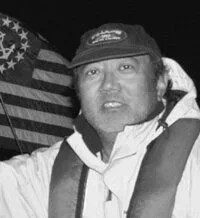
Alex S. Fabros, Jr. is a retired Philippine American Military History professor.
More articles from Alex Fabros, Jr.
