
PinoyPals: Sharing Concerns Across the Ocean
/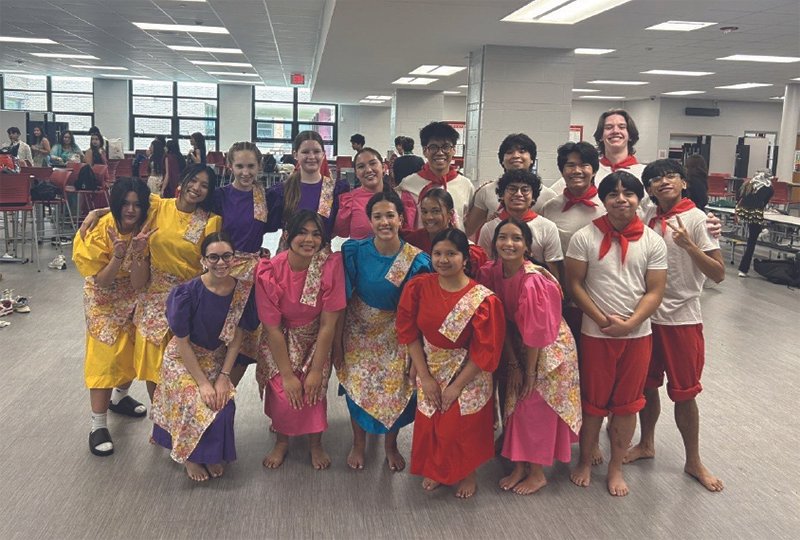
Featured here is FIA’s Tinikling Team for Hinsdale Central’s 2026 Cultural Fair; within this group are the 11 PinoyPals participants, including Founder/President Scarlet Tabuena (red dress, front).
While I was fortunate enough to learn about my heritage through my mother’s direct history and have an immensely supportive local community, I wondered if Filipino Americans isolated across the Midwest could foster the same cultural connections with their ancestral ties.
Utilizing my civic experiences from local youth advisory councils, I knew I wanted to connect youths across the two nations by gathering real testimonials rather than offering vague, distant support. I founded PinoyPals in January 2026 to bridge the gap between high-level international policy and Filipino youths’ community realities.
By digitally pairing high school students from Chicagoland with peers in Metro Manila, the initiative translates abstract global diplomacy into active, civic dialogue centered on the United Nations Sustainable Development Goals (SDGs).
The 2026 Inaugural Program featured 22 total participants from Hinsdale Central High School’s Fil-Am population partnering one on one with Assumption College San Lorenzo’s Filipina students for a structured ten-week exchange.
Comparative Findings & Key Insights
For Week 1, grounded in SDG 10 (Reduced Inequalities) and 16 (Strong Institutions), participants evaluated their preconceived notions and stereotypes about their partners’ lives. Many were hyper-aware of the stereotypes directed towards their own communities, and wary in identifying the prompt’s alternative, particularly because of recognizing their limited lens.
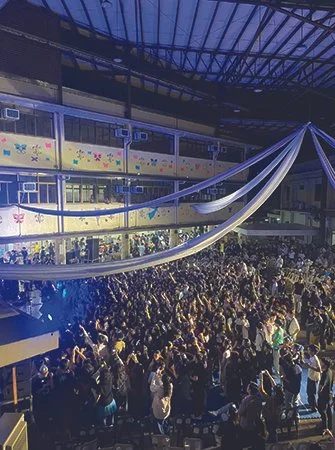
A publicly open school fundraiser fair at Assumption Women’s College San Lorenzo, Makati PH taken by PinoyPals Head of Collaborations and Inaugural cohort participant Andrea De La Peña.
American students acknowledged their perceptions were based on immigrant struggle stories and a filtered First World lens.
“My Grandparents on both sides moved here around the 1950s-1960s. My family moved here for the purpose of making a living, which they did because all my family members are doctors except for my Lolo on my mom’s side who was a nuclear engineer." (Pair 1, USA Pal)
Philippine students mainly commented on how their economic and social realities domestically contrasted with the “American Dream”.
“We mainly get stereotyped a lot for our hospitality and kindness, but honestly, we sort of do get taken [advantage] of because of it. If we can be kind to people outside of our own country, why can’t we with our own kin?”
“Opportunity and wealth are really huge political topics here, as with our failing government and lack of accessibility to proper sources of income, which is why outside cities there are underprivileged communities and slums, a stark contrast to our society.” (Pair 1, PH Pal)
The first common denominator between the two sides was simply a mutual lack of exposure to each other’s day-to-day environments.
"I myself haven’t been to the Philippines as I’ve lived in the same house in the suburban Chicago Area for my whole life.” (Pair 1, USA Pal)
“I haven’t been abroad that much either, because I mostly travel within the country only.” (Pair 1, PH Pal)
Jumping forward to the program’s late stages of Week 9, participants evaluated their community’s environmental health in the context of human actions, connecting environmental treatment to human conditions through the lens of SDG 11 (Sustainable Cities) and SDG 13 (Climate Action). Their tones shifted to being open to their pen pals, with a willingness to speak passionately about related issues.
American participants linked their immediate surroundings to broader issues of environmental values, particularly in ecological and physical health related concerns. Deeper anxieties for future generations and lifestyles were expressed when referring to ongoing national actions.
“Witnessing people losing their only sources of food and drinking water, which is INSANE to think of knowing how rich some people/institutions are makes me so worried for the future of US intervention in nature, mainly Trump’s plans for Arctic drilling, deforestation, and use of unsustainable energy sources.” (Pair 9, USA Pal)
Philippine participants similarly held deep disappointment in the consequences of human activity on the Philippine environment. Dense urban populations of stray animals were found to be in direct contrast to natural biodiversity, exuding disappointment in the present Philippine environmental status.
"The Philippines is home to over 52,000 species of animals and which we still strive to protect as I know that we are recognized as a country with a very rich ecosystem and which I can enjoy, usually not in the city since it’s so cramped in here due to massive buildings everywhere and the pollution people face every day." (Pair 9, PH Pal)
Unexpectedly, a common ground was found in the specific shared struggle of pollutant-based health consequences in localized environments.
“I know my Philippine born uncle and mother both have respiratory and temperature regulation issues, which are both hereditary and environmental in cause.” (Pair 9, USA Pal)
“I used to have lung asthma as a kid but don’t feel its effects anymore, but I have skin asthma instead.” (Pair 9, PH Pal)
Directly following the 10-week cohort, participants completed an anonymized program evaluation:
• 100% reported a deeper understanding of how UN SDGs apply to their local communities.
• 91% expressed higher confidence in discussing international policy and diaspora issues.
• 95% stated they plan to pursue civic leadership or policy-related initiatives in their upcoming years.
Concluding Vision
PinoyPals’ resounding successes should not be limited to those directly involved in our Inaugural Cohort. Through weekly digital exchanges, Filipino youths were emboldened to form long-lasting relationships and global empathy beyond national borders and familial histories.
I knew I wanted to connect youths across the two nations by gathering real testimonials rather than offering vague, distant support.
It is imperative that the current and future generations are given forums for their voices to be heard, as well as opportunities to foster deeper connections. Reconnecting with Filipino cultural heritage is more than looking to history; rather, it is about forging paths for the future.
Additional Resources
Visit us at: pinoypals.com
Read our full program report: PinoyPals Executive Report
Check out our Instagram: PinoyPals Instagram @pinoy.pals
Scarlet Tabuena is a senior at Hinsdale Central High School (Hinsdale IL) for the Class of 2027. Tabuena is also the Founder and President of PinoyPals International Pen Pals, a global youth organization recognized in the United Nations Digital Cooperation Portal focused on connecting Filipino and Fil-Am students through letter exchanges structured around identifying community realities.