

You Can Go Home Again–the Blairs Did
/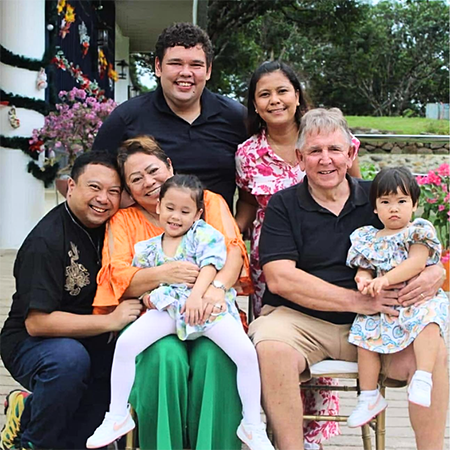
A family affair: Les and Grace Blair with son Kline (front), Angus (back), Angus's wife Lezamie (back), and grandchildren Elizabeth (4) and Catherine (2) (Photo courtesy of the Blair family)
Grace, a native of Iloilo, was one of a group of nurses who went to Libya in 1984, hired through the newly-formed Philippine Overseas Employment Administration. In Libya she met Les, a Scotsman who was working in the oil and gas industry. Sparks flew, and they married in 1988.
Les’ work took them to Vietnam after Libya, then India, Nigeria, Dubai, and Kurdistan, then back to Nigeria. Grace worked as an on-call nurse escort for Asia Emergency Assistance and the Orderly Departure Program of the U.S. government, accompanying Vietnamese refugees being resettled in the United States.
They could have chosen to stay permanently in any number of places, especially in Nigeria where Les had founded his own oil exploration company and floated it on the London Stock Exchange, but Grace always knew that one day, she would come home again. She was so sure of this, and over decades of expatriate living she never relinquished her Filipino nationality and passport.
“I never had any doubt that I would come home,” says Grace, as we sit chatting on the balcony of her home in Guimaras, a sprawling two-level house painted Mediterranean blue and white that can accommodate two families. “When I agreed to marry Les I told him that all I really wanted was a house in the Philippines that I could go back home to. And now we have this home, and it is where members of my family who live abroad also come home to.”
Les did not protest. A tall and affable man with a long track record of running companies and setting up operations, he indulged Grace’s wish and, on retirement, approached the return to the Philippines like the seasoned manager that he is. The result was not just a home for Grace but a dynamic business venture that has contributed significantly to the local economy of the province.
The Blairs’ first house was nothing more than a hut, built when they first acquired 12 hectares of land in Guimaras, an island that was then part of Iloilo Province, with little infrastructure to speak of and few concrete roads. They would visit twice a year from wherever they were based overseas. A brother-in-law, Nonong Tenerife, managed the property in their absence. The opportunity then came up in the next few years to purchase adjoining pieces of land. Having no business plan or specific goals for the property and trusting only their instincts, Grace and Les took the plunge, acquiring a total of 34 hectares of what was then idle land.
It would not be idle for long. Working by themselves, helped by workers from the community, they planted a total of 1,200 mango trees over a six-year period, starting in 1992. This was the quiet and unremarkable beginning of Kokomojo Mango Farm, its name derived from the Blairs’ son’s first words as a child.
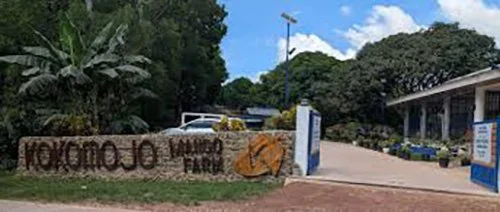
Entrance to Kokomojo Mango Farm
When they started, they had no idea where that slow, steady planting of trees would take them. Then came retirement for Grace, and then COVID. Stricken while working in Nigeria, a gravely ill Les came back to the Philippines and was nursed back to health by Grace. With a new lease on life came new dreams and plans.
Today, the trees stand tall and proud, their branches heavy with fruit. Paper bags protect each fruit from pests and ensure even ripening and a smooth skin. They are the backbone of a business enterprise that has grown to include mango-based products and a restaurant with a menu that showcases the golden fruit that is the pride of Guimaras and is the source of livelihood for many on the island.
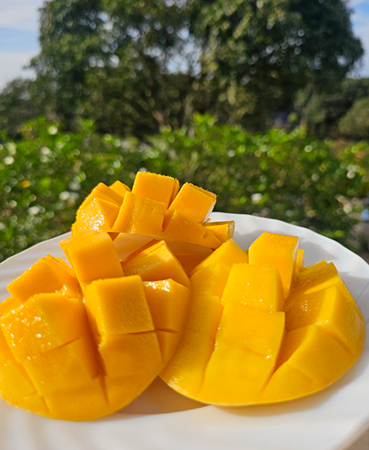
The sweetest mango in the world
Kokomojo plans to process about 100 tons of mangoes each season, selling locally and in Manila where the mangoes sell for a premium price. Demand for Kokomojo products is such that the Blairs have tapped other local farmers and act as a consolidator for other growers. The farm is one of only three mango processors in the region approved by the Philippine Food and Drug Administration. The others are McNester Food Products and Guimaras Wonder Farm. Kokomojo was also the first farm in Guimaras to receive the Philippine Good Agricultural Practices certification from the Department of Agriculture, testifying to good practices in food safety, environmental management, worker welfare and produce quality.
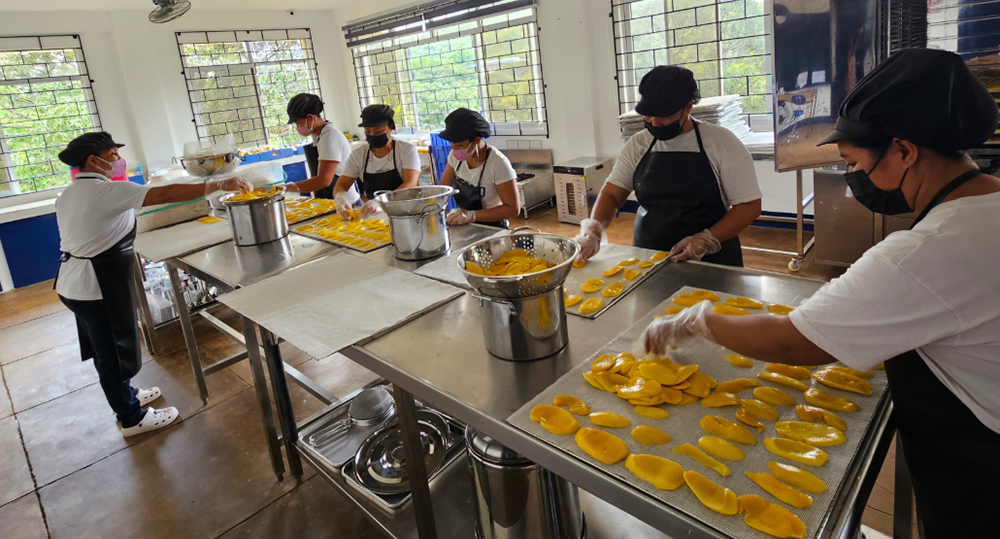
In the Kokomojo processing plant
About 30 workers make the farm and restaurant run. Some have been there since the farm first started, and now their children have joined them. Grace and Les themselves are now assisted by their children. Son Angus is training to take over the business, and son Kline has started a beekeeping operation that has a lot of potential.
In 2024, the Blairs opened the restaurant on the property that they named “Uma,” the Ilonggo term for “farm.” The restaurant serves mango-based specialties, including a smooth and naturally sweet mango shake, mango salsa pizzas, mango chicken pasta and the classic ibus (a sticky rice cake) with mango. A mango coffee is even available, with a shot of espresso poured over a mango and milk mixture served over ice! “Uma” is the cousin of “Troi Oi,” a Vietnamese restaurant Grace opened in Iloilo City in 2016, inspired by the years they spent in Vietnam.
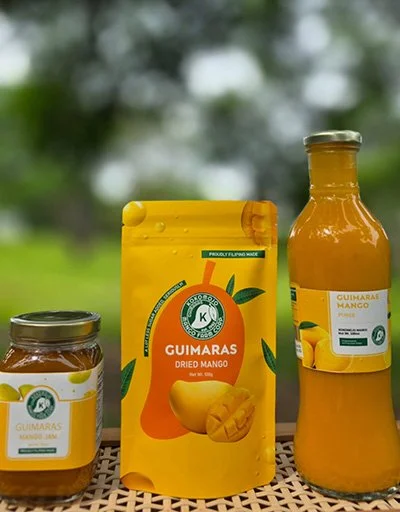
Kokomojo Farm products
A short walk up the hill from the restaurant is a building that houses the mango processing plant, also begun in 2024. In spotlessly clean rooms are sorting tables, sanitizing tanks, heavy machinery for drying and packaging, and other equipment needed for processing packaged dried mango, mango puree and a mango jam, samples of which are generously offered to the visitor. The plant will soon also be producing individually quick frozen (IQF) mango to be sold in chunks in 500 gram pouches. The Blairs encourage tours of their farm and facilities so the public are better educated in various aspects of mango growing and production. They plan to start exporting their Guimaras processed products this year too.
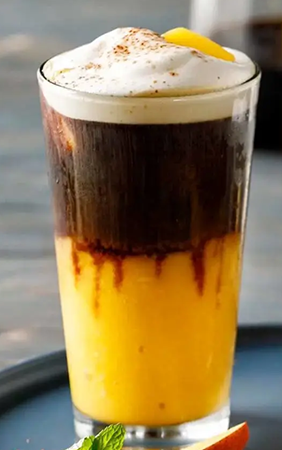
Mango Coffee
Did Les and Grace study mango production? Les laughingly says: “Yes from YouTube.” More seriously, he says he has had a lot of help from the companies who have supplied the plant equipment. Apart from that, it seems the enterprise has grown and thrived simply because of the couple’s drive, hard work, and faith that everything will work out!
“When I agreed to marry Les I told him that all I really wanted was a house in the Philippines that I could go back home to.
Recently, Grace hosted the 50th reunion of her nursing class of 1976 of the Central Philippine University. Around a hundred class members and their spouses came to enjoy the food offerings at Uma and toured the facilities of Kokomojo. Seeing Grace and Les’s setup, several who are now based in the U.S. wistfully expressed that perhaps they too, may think of coming back to Iloilo to live. If two expatriates who spent decades working and living abroad are able to come back home and not just make do in retirement, but also have resounding success, then perhaps they too, can come home again!
Kokomojo Farm and Uma Restaurant are in Sitio Mangkalawag, Barangay Millan, Sibunag, Guimaras. Visitors from Iloilo City may take a fibre boat from Parola to Jordan, or take the Roro from Lapuz Wharf if traveling by car. Kokomojo Farm is 20-25 minutes from Jordan wharf on good roads. Les Blair may be reached at kokomojomango@gmail.com.

Meyen Quigley is a writer based in Victoria, British Columbia. Originally from Iloilo, she lived and worked in Sudan, Pakistan, Turkey, and New York before settling down in Canada with her husband Kevin and children Gabriel and Megan.
More articles from Meyen Quigley
