
‘Subsaharan Mindanao’ to the World
/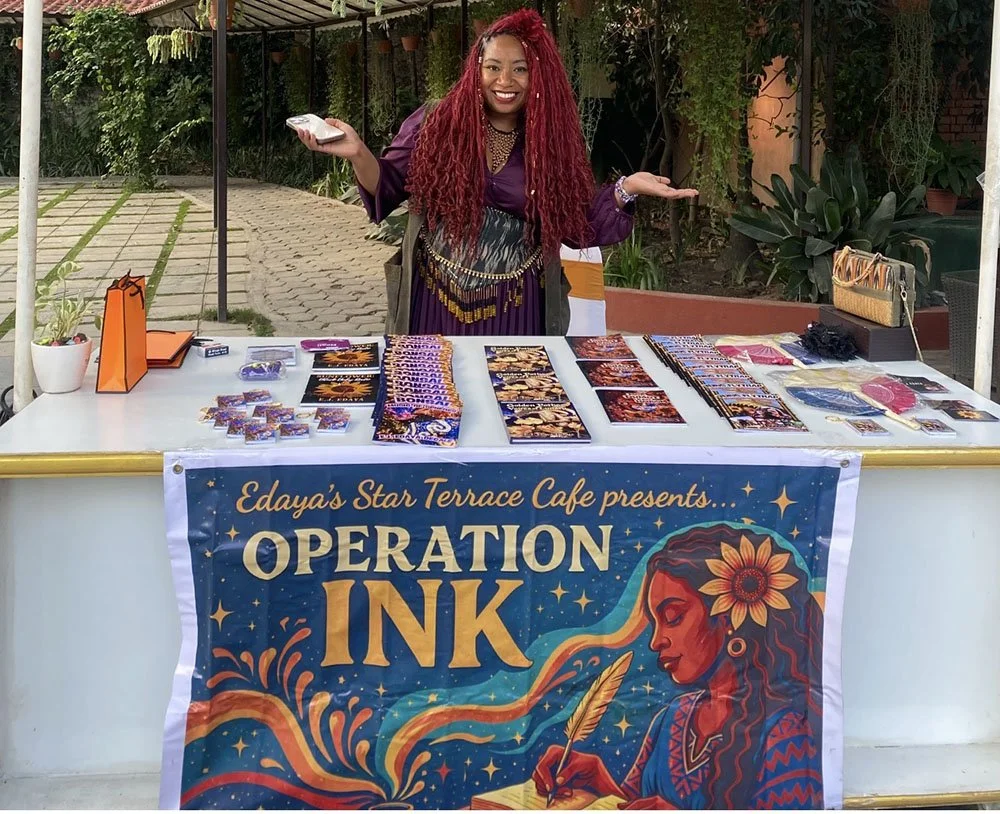
Elaine Joy Edaya Degale, founder of Operation Ink Publishing House, presents her independently published zines at the Himalayan Literature Festival in Kathmandu, Nepal. Through her work, the Afro-Filipina writer continues to bring stories from Subsaharan Mindanao to an international literary audience.
I was among those who chose a different path: reclamation.
On Philippine Independence Day, only a week before Juneteenth and three months after the term "Subsaharan Mindanao" was deployed as an insult on international airwaves, I opened the first literary café in my small hometown in Mindanao: Edaya's Star Terrace Café.
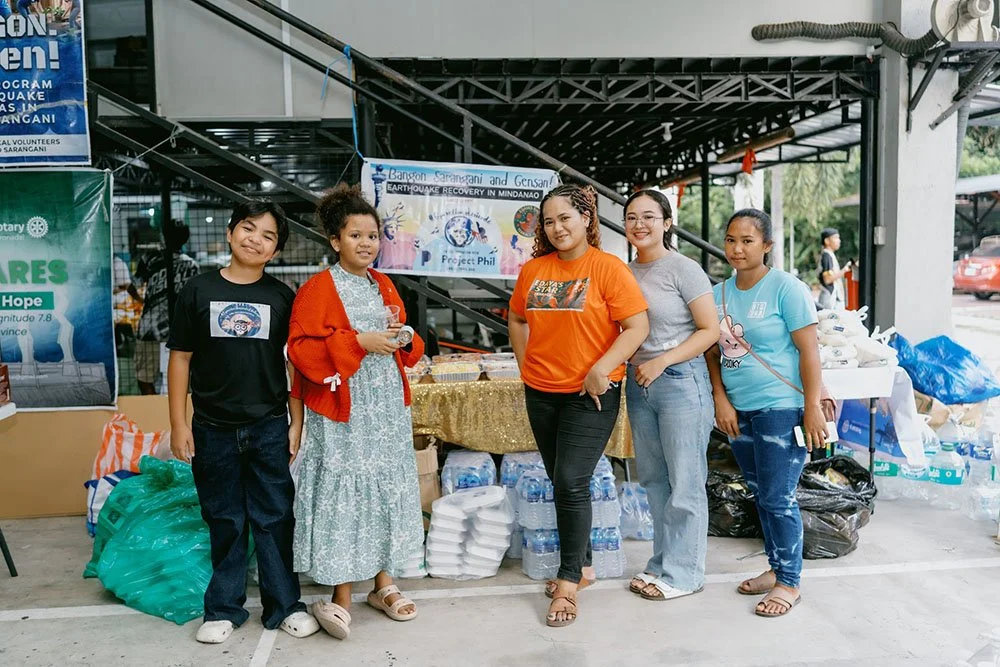
Members of Edaya's Star Terrace Team and Operation Merienda participate in a collaborative earthquake relief mission with Project PHIL and the Rotary Club of Koronadal, South Cotabato. (The cute nine-year old in a green dress is my daughter Stella.)
My outrage manifested itself in a literary haven for the so-called “Subsaharan Mindanao” creatives and intellectuals. My humble café carries the tagline, "A Library Café Where Subsaharan Mindanao Creatives Gather." It was both an invitation and a declaration. By embracing a phrase that had been intended to diminish Mindanao, I hoped to transform it into a space of imagination, possibility, and cultural pride.
My goal was to make Mindanao a site of global conversation.
Furthermore, the reclamation was deeply personal to me. I am a writer descended from both Liberian and Hiligaynon traditions. On one side of my family history stands Liberia, the first modern African republic founded by formerly enslaved people who transformed the experience of displacement and bondage into a project of nation-building and self-determination. On the other side of my identity stand the Hiligaynon people, whose own history demonstrates the power of creativity as resistance.
When Edaya’s Star Terrace Café was born, it represented the culmination of both ancestral lineages converging to announce the future of “Subsaharan Mindanao.”
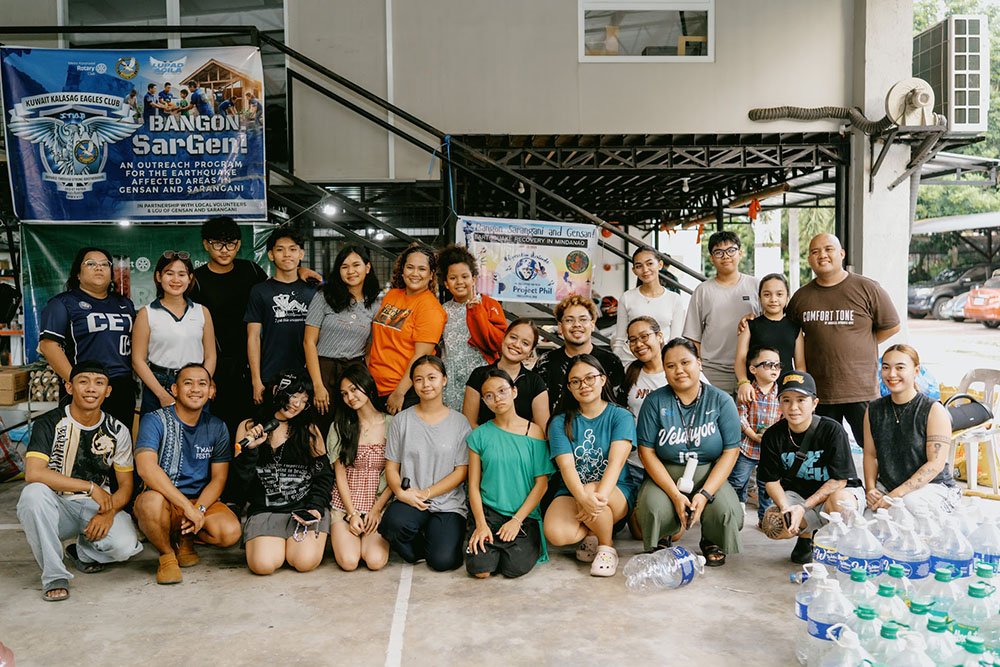
Representatives of Edaya's Star Terrace Team and Operation Merienda stand alongside volunteers during a humanitarian relief mission conducted in partnership with Project Phil and the Rotary Club of Koronadal, delivering emergency aid to communities affected by the Mindanao earthquake.
History of Creative Resistance
On November 7, 1898, during the Negros Revolution, Hiligaynon-speaking revolutionaries of the Common Negrenses famously painted nipa stalks to resemble rifles and fashioned bamboo to look like cannons. Through ingenuity and performance as much as force, they convinced Spanish Governor Isidro de Castro that they possessed a formidable army, leading to his surrender. In its wake, the Republic of Negros was established. One of the lasting historical anecdotes attributed to my people remains one of the most remarkable examples of creative resistance in Philippine history.
I often think about that legacy when I reflect on how I am leveraging the concept of Subsaharan Mindanao on the international stage. Imagine the labor involved in transforming a phrase that was intended to suggest poverty, backwardness, and a lack of intelligence. Yet both the Liberian and Hiligaynon ancestral histories that shaped me teach a different lesson: communities are capable of transforming what others perceive as weakness into strength, and what others dismiss as insignificant into something worthy of international pride.
Incantata: A Subsaharan Mindanao Artifact
The Himalayan Literature Festival was the first time I publicly performed poetry that moved between Ilonggo and English.
In my recent zine release, I included the poems Ginhigugma Ko Ikaw (I Loved You) and Orasyon Orasyon Para Sa Manuglaon (A Spell for the Unwanted Woman). My poems are a lyrical dance, a call-and-response between the two languages.
When I performed my incantata in Kathmandu, I realized I was attempting to give shape to something I had been carrying for much of my life. Every performance felt like an expression of what W.E.B. Du Bois called "double consciousness," the experience of navigating multiple worlds at once.
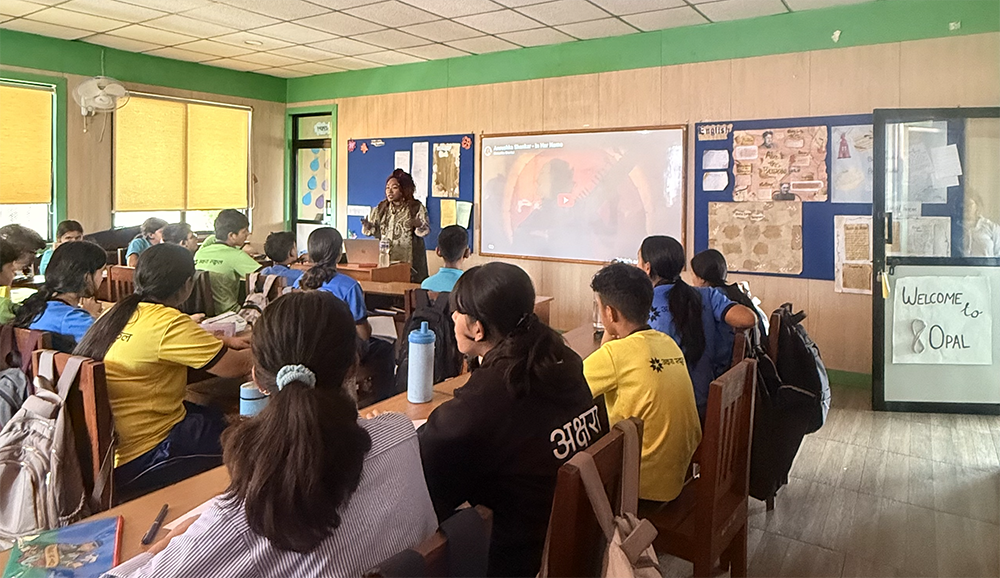
Author and publisher Elaine Joy Edaya Degale teaching a poetry workshop through feminist lens in Aksharaa School in Kathmandu, Nepal
As children of the diaspora, we think, dream, grieve, remember, and love across more than one language.
And so I have decided to give a name to this English-Ilonggo dialogic style of poetry: the Incantata. This name emerged from happy literary happenstance. One of the festival's featured poets was Paul Muldoon, whose celebrated poem Incantata helped me think more deeply about language, memory, and musicality. The word itself evokes the Latin incantare, which means to enchant through song or chant.
By my definition, an incantata is poetry in which English and Ilonggo dance through interpretation. Sometimes one language echoes the other. Sometimes it expands, questions, or transforms what came before. The poem is completed not by either language alone, but by the movement between them.
Perhaps this is also what the Subsaharan Mindanao movement seeks to explore: the spaces where African and Filipino histories, identities, and diasporas intersect, collide, and bloom within the double-conscious imagination first articulated by W. E. B. Du Bois, the father of Pan-Africanism. These are spaces of tension, certainly, but also of reflexive creativity, transformation, and possibility.
The conversation also raises a larger question about how we define Philippine literature. Too often, works produced in Manila are treated as "national," while works written in Hiligaynon and other Philippine languages south of the capital are relegated to the category of "regional," as if geography determines literary value.
Edaya Family Legacy
The movement from Subsaharan Mindanao to the world has never been purely theoretical for me. It has always been rooted in practice. Stewardship and generosity were the foundations instilled in me by my mother, Jocelyn Edaya Degale.
Through Operation Merienda, we fed frontline workers across twenty clinics and hospitals in Region XII during the COVID-19 pandemic. Through Edaya's Star Terrace Café, we established the first literary third space in my hometown of Sto. Niño, South Cotabato, a community that previously had little public access to books and literary programming. Through Operation Ink, we have worked toward building a public library, establishing an independent publishing house, and creating opportunities for writers whose voices are often overlooked by traditional centers of cultural power.
In April 2026, Operation Ink launched its first collection of zines at Diwang Mindanao at Xavier University-Ateneo de Cagayan. A month later, those same zines traveled to Kathmandu for the Himalayan Literature Festival and Writers Workshop. The journey felt symbolic. What began in a small agricultural town in Mindanao crossed oceans and entered an international literary conversation.
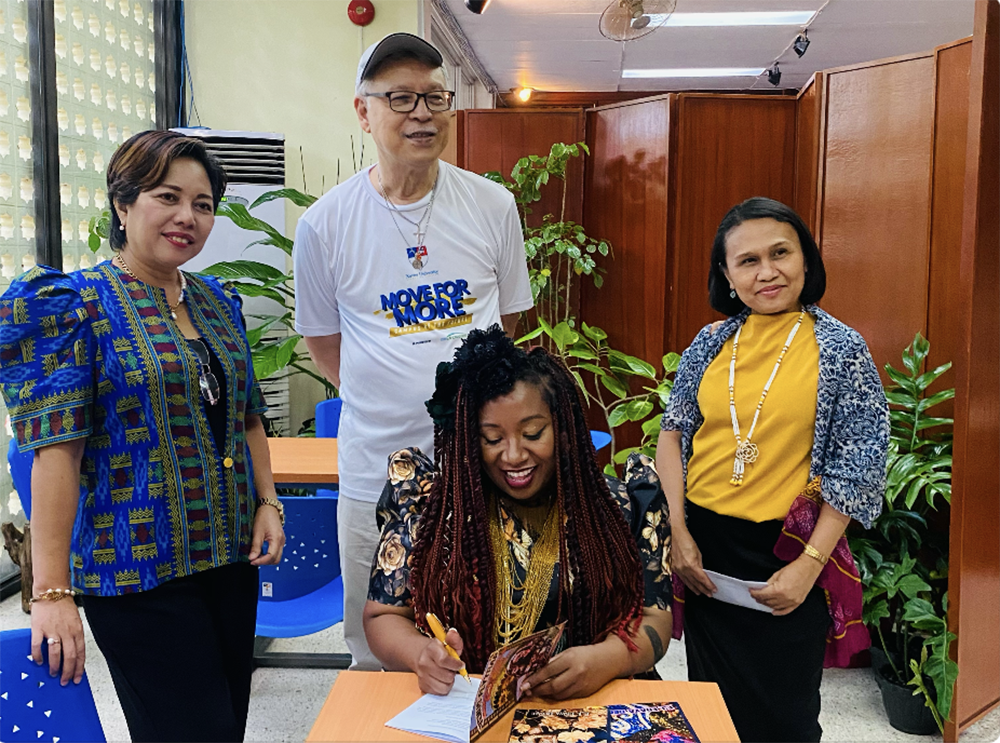
Author and publisher Elaine Joy Edaya Degale in Xavier University, Ateneo de Cagayan, signing her inaugural collection of literary zines under Operation Ink Publishing House. She is joined by Associate Professor Dr. Cathy Adajar, Xavier University Press Director Dr. Arlene Yandug, and Mindanao Daily journalist Mike Baños
Too often, works produced in Manila are treated as "national," while works written in Hiligaynon and other Philippine languages south of the capital are relegated to the category of "regional.”
The same commitment guides my work in film. My screenplay The Dreamweaver, which incorporates Hiligaynon language and Indigenous folklore, received Best Screenwriting honors at the Asian American Film Lab's 72-Hour Shootout. Another film I directed in Hiligaynon, English, and Filipino received an Honorable Mention at the International Film Festival Manhattan and was screened in New York. These projects are part of a larger effort to demonstrate that Hiligaynon stories are not confined to a single province, island, or audience.
For generations, literature written in Philippine languages outside the capital has been described as regional. Yet the moment a poem written in Hiligaynon is read in Kathmandu, a film containing Ilonggo dialogue is screened in New York, or a zine produced in Mindanao enters an international literary festival, the limits of that designation begin to collapse.
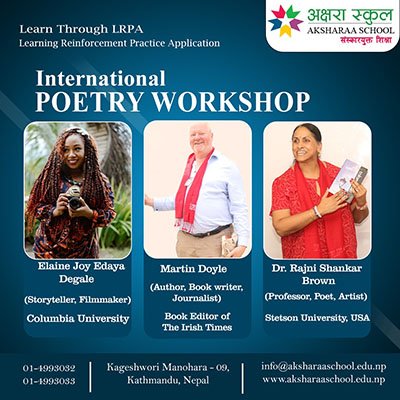
Elaine Joy Edaya Degale was invited to serve as a facilitator at Aksharaa School's International Poetry Workshop in Kathmandu, Nepal, where she joined an international panel of writers and educators representing Ireland, India, the United States, and the Philippines.
The question is no longer whether Hiligaynon belongs in the world.
From Mindanao to Nepal, from literary festivals to global publications, I have brought Hiligaynon stories, zines, and perspectives into conversations far beyond the Philippines. In doing so, I hope to challenge the notion that Hiligaynon literature is merely regional. A language spoken by millions and carried across continents is not regional. It is global. If Subsaharan Mindanao is my literary geography, then Hiligaynon is one of the languages through which I invite the world to enter it.

Elaine Joy Edaya Degale is a Black-Filipina writer and lecturer at community colleges within the City University of New York (CUNY), and has an Ed.M. and M.A. from Teachers College, Columbia University.
She graduated cum laude from Mount Holyoke College where she studied International Relations and Development, and continues to support literacy and food programming efforts in indigenous communities through her Community-Based organization, OperationMerienda.org.
More articles from Elaine Joy Edaya Degale
