
Siargao Locals Wearying of Growing Israeli Presence
/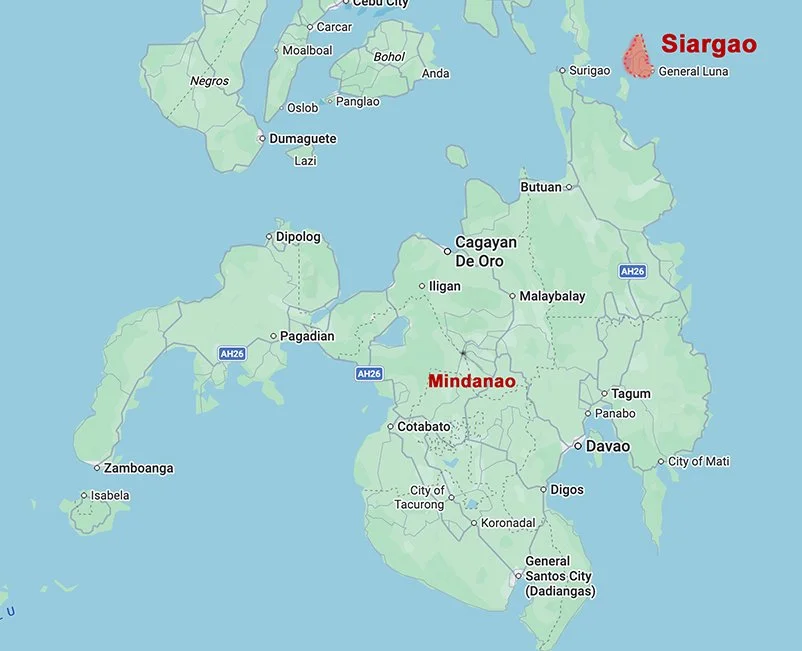
Siargao Island (SOurce: Google Maps)
In recent months, conversations—both online and on the ground—have increasingly centered on the perception that Israelis are “colonizing” the island. The term is loaded, emotional, and not entirely precise, but it reflects a growing unease among locals and some Filipino visitors about the pace and character of change in Siargao.
Before all this, Siargao was known first and foremost for its waves—particularly the world-famous Cloud 9, a surfing break that has drawn enthusiasts from across the globe. Beyond surfing, the island’s appeal lies in its mangrove forests, tidal pools like Magpupungko, island-hopping destinations such as Naked, Daku, and Guyam Islands, and a culture rooted in simplicity and community. Life moves slower in Siargao, or at least it used to. That sense of ease, paired with raw natural beauty, is precisely what transformed it into one of the Philippines’ most sought-after destinations.
To be clear, Israelis are not the first or the only foreign group to fall in love with Siargao. For years, surfers, digital nomads, and entrepreneurs from Europe, Australia, and North America have settled or spent extended periods on the island. What makes the current discourse different is the visibility and concentration of Israeli tourists and semi-permanent residents in certain areas, particularly General Luna. Restaurants serving Middle Eastern cuisine, Hebrew signages, and tightly knit social circles have made their presence more pronounced.

Cloud 9 in Siargao, Philippines (photo courtesy of surfertoday.com)
Appealing Refuge
For many Israelis, Siargao offers an appealing refuge. It is affordable compared with Western destinations, naturally stunning, and culturally welcoming. Some arrive after mandatory military service, seeking a place to decompress. Others come as remote workers or small-business owners. Their reasons are not unusual; they mirror the motivations of countless travelers who have transformed Southeast Asian destinations over the past two decades.
Yet perception matters. For some locals, the clustering of one nationality—any nationality—can feel exclusionary. Stories have circulated of businesses catering almost exclusively to Israeli clientele, or of social dynamics that unintentionally sideline Filipinos. Whether these accounts are widespread or anecdotal, they contribute to a narrative that Siargao is no longer as inclusive or “Filipino” as it once was.
One recent flashpoint has been community concern over the reported establishment of a Chabad House on the island—a Jewish community center typically serving as a place of worship, cultural gathering, and support for travelers. While such centers exist in many global destinations and primarily serve religious and social needs, some Siargao residents worry that it could further entrench a single foreign community’s footprint. For critics, it symbolizes not just cultural presence, but permanence. For others, however, it is simply an expression of religious freedom and community support, no different from churches or other faith-based spaces that dot the island.

Chabad House (Photo courtesy of Siargao-Chabad.ph)
Complaints of Harassment
Compounding local unease are reports—shared both online and through word of mouth—of instances where Filipinos claim to have experienced harassment or disrespectful behavior from some Israeli visitors. While such incidents have not been universally documented and should not be taken as representative of an entire group, they have nonetheless amplified tensions and shaped public perception.
Amid these tensions, even Israel’s own diplomatic mission has underscored the importance of accountability. Ambassador Dana Kursh has publicly stated that Israeli tourists who misbehave should not expect protection from their embassy and must face the full force of Philippine law. Her message was unambiguous: consular assistance is for citizens in genuine distress, not for those violating local rules. The statement has resonated with many Filipinos, reinforcing the idea that respect for local laws and customs should be non-negotiable, regardless of nationality.
The use of the word “colonization” deserves scrutiny. Historically, colonization involves political control, displacement, and systemic domination. What is happening in Siargao does not fit that definition. There is no foreign government asserting authority or a formal takeover of land. However, the term is being used metaphorically to describe cultural and economic displacement—when locals feel that their own spaces are being reshaped primarily for outsiders.
Over-Tourism Issue
This raises a broader issue: over-tourism and uneven development. Siargao’s rapid rise has brought economic opportunities—jobs, investments, and infrastructure improvements. But it has also led to rising land prices, environmental strain, and a shift in local culture. These are not problems unique to Israelis; they are structural challenges seen in Bali, Phuket, and even parts of Europe.
Blaming a single nationality risks oversimplifying the situation and fueling xenophobia. It diverts attention from more pressing questions: Are local regulations strong enough to manage foreign business ownership? Are environmental protections being enforced? Are communities meaningfully involved in decisions about development? These are the levers that shape outcomes far more than the identity of visitors.
Before all this, Siargao was known first and foremost for its waves—particularly the world-famous Cloud 9, a surfing break that has drawn enthusiasts from across the globe.
At the same time, dismissing local concerns outright would be equally misguided. Feelings of displacement, whether cultural or economic, are real and deserve attention. Sustainable tourism is not just about limiting numbers; it is about ensuring that growth benefits local communities and preserves the character of a place.
Siargao stands at a crossroads. It can continue down a path where market forces alone dictate its future, or it can adopt a more deliberate approach—one that balances openness with protection, and tourism with local identity. Foreign visitors, including Israelis, are part of the island’s story, but they should not define it.
Ultimately, the challenge is not who is coming, but how the island chooses to evolve. The goal should not be to exclude, but to integrate—ensuring that Siargao remains not just a destination, but a home.

Rene Astudillo is a writer, book author and blogger and has recently retired from more than two decades of nonprofit community work in the Bay Area. He spends his time between California and the Philippines.
More articles from Rene Astudillo
