
Pledge of PH Independence Act Turned Filipino U.S. Nationals Into Aliens
/Reposted with permission from AsAmNews, August 11, 2026 (link below)
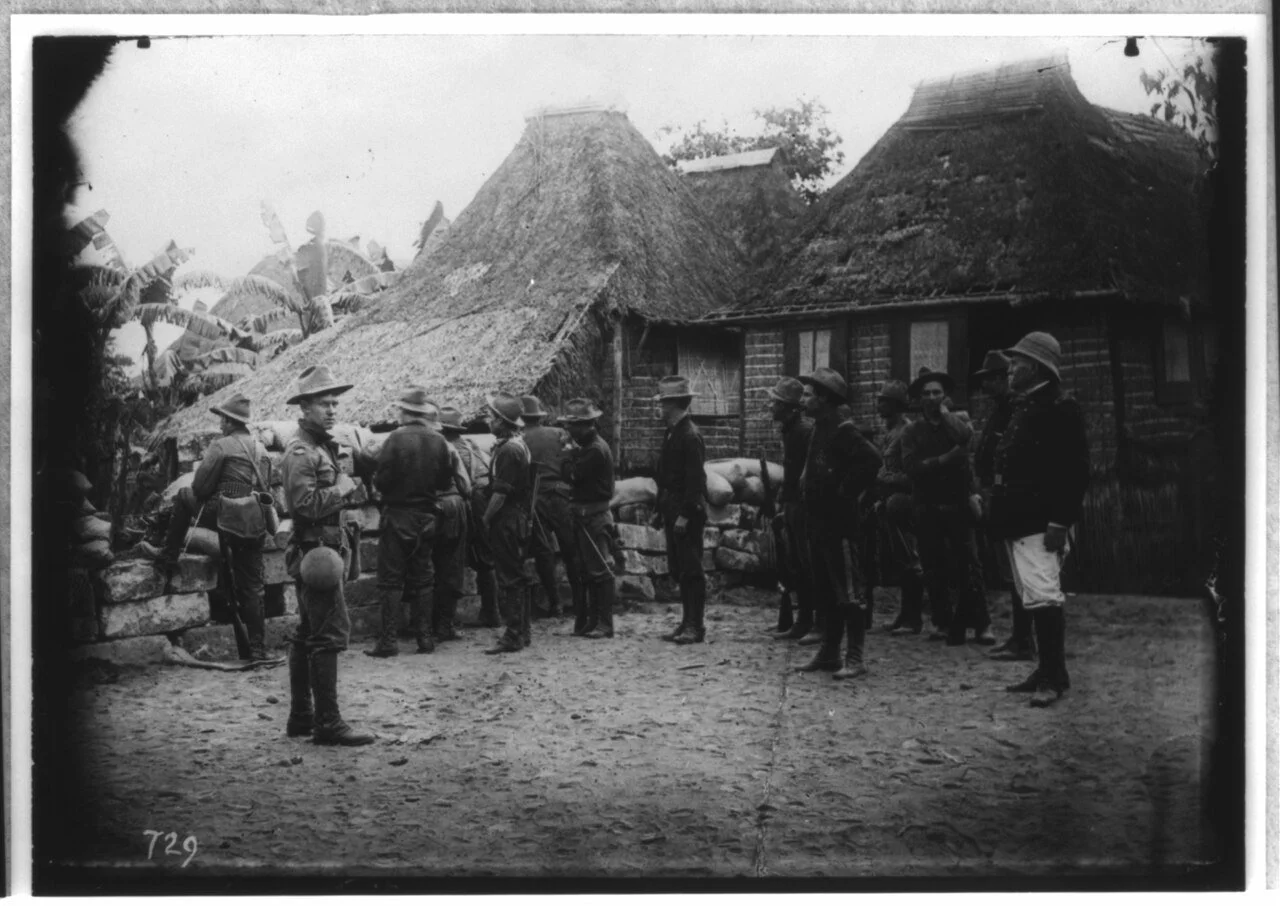
The Philippine insurrection, 1899 (Source: Library of Congress)
Filipino workers faced a fierce racial backlash. The Manongs, the pioneering generation of mostly male Filipino laborers, were hired in farms, canneries, kitchens, hotels and service jobs, in the American West, but rejected as neighbors, husbands, citizens and equals.
The Tydings–McDuffie Act imposed exclusion through the language of independence. The 1934 federal law reclassified Filipinos as aliens for immigration purposes and limited immigration from the Philippines to only 50 people per year. The exclusionary structure began to loosen after World War II, but the deeper transformation did not arrive until 1965.
American Empire Opened the Passage
The Filipino American story does not begin with ordinary immigration.
It begins with empire.
In December 1898, Spain ceded the Philippines to the United States under the Treaty of Paris, which ended the Spanish-American War. The United States agreed to pay Spain $20 million for the islands.
Filipino revolutionaries, who had fought Spain and expected independence, were not treated as equal participants in the transaction. Instead of liberation, they received a new colonial ruler, the United States.
The Philippine-American War soon followed between the United States and the First Philippine Republic. Filipino soldiers and guerrillas fought the American Army, not to exchange one empire for another, but to establish an independent nation, from 1899 to 1902, until their defeat.
American colonial rule nevertheless continued for nearly half a century until 1946. The United States reshaped Philippine schools, government, commerce and military institutions. English-language instruction expanded, and generations of Filipinos grew up learning about American democracy while living under American authority.
That relationship created a profound contradiction.
Because the Philippines belonged to the United States, Filipinos were classified as U.S. nationals rather than foreign aliens. They could travel to the mainland without facing the same immigration barriers already imposed on Chinese and other Asian migrants.
But U.S. nationality did not mean citizenship.
Filipinos could enter the country, work within its economy and serve American interests. They could not automatically claim full political equality or naturalized citizenship.
They were inside the American empire, but outside the boundaries of American belonging.
Anti-Filipino Sentiment in the American West
Filipinos began arriving in growing numbers during the early decades of the 20th century.
They worked on Hawaiian sugar plantations, in Alaska salmon canneries and throughout the agricultural valleys of California and the Pacific Northwest. In cities, they found employment as cooks, bellhops, dishwashers, houseboys, elevator operators and hotel workers.
American employers valued them as mobile and inexpensive labor.
White workers and political organizations increasingly treated them as a racial threat.
Labor leaders accused Filipinos of depressing wages and taking jobs. Newspapers portrayed them as unassimilable outsiders. Politicians discovered that hostility toward Filipino migration could be converted into public support.
The backlash concerned labor, but it was never only about labor.
It also centered on masculinity, marriage and racial boundaries.
Filipino migration was overwhelmingly male. Many young men arrived without wives or families. Migration conditions and the relatively small number of Filipino women made marriage and household formation difficult.
Dance halls became important social spaces. Filipino men entered them wearing pressed shirts and carefully tailored suits. They danced with White, Mexican and other women. After long weeks in fields or canneries, the dance floor offered companionship, dignity and momentary freedom.
Their visibility produced racial panic.
Filipino men were portrayed as sexual rivals who threatened White womanhood. Legislators and courts attempted to fit Filipinos into racial classifications that could be used to prevent interracial marriage. California later expanded its marriage restrictions to include members of the so-called “Malay race,” a category intended to encompass Filipinos.
The question was no longer simply whether Filipinos could labor in America.
It was whether they could love, marry, establish homes and become part of America.
In January 1930, anti-Filipino hostility erupted into several days of violence in Watsonville, California. White mobs terrorized Filipino farmworkers and attacked their residences. Fermin Tobera, a laborer was shot and killed when a mob fired into a bunkhouse.
Watsonville became the most notorious example of anti-Filipino violence, but it was not an isolated event. It reflected a wider movement to control Filipino labor, mobility and intimacy.
America had brought Filipinos beneath its flag.
Now parts of the American West demanded that they be pushed back across the Pacific.
The Manongs Who Made Lives from Movement
The pioneering Filipino workers became known as the Manong generation, elder brothers whose lives connected the Philippines to the farms, canneries and working-class districts of the American West.
They had come young.
Some were teenagers. Others were barely into adulthood. Many were Ilocano, Visayan, Pangasinan or Tagalog speakers who had grown up under American colonial rule and heard promises of opportunity across the Pacific.
Their labor followed the seasons.
They cut asparagus, lettuce, celery, grapes and other crops in California. They cleaned salmon in Alaska, harvested sugar in Hawaii and moved between hotels, kitchens, railroad towns and port cities.
They slept in bunkhouses, boardinghouses, labor camps and inexpensive residential hotels. They sent money home. They carried letters and photographs of parents, siblings and sweethearts they might not see again for years or ever.
America wanted their labor.
It did not want the permanent lives that might grow from it.
Yet the Manongs created community wherever work deposited them. They built Little Manila districts, churches, lodges, newspapers, restaurants, pool halls and labor organizations. They turned rented rooms and agricultural camps into places of memory.
Many endured bachelorhood not as a chosen freedom, but as a condition imposed by racial law, unequal migration and exclusion.
Their sharp suits and dance-hall evenings were not signs of frivolity. They were declarations of humanity within a society that reduced them to laboring bodies.
Filipino Exclusion Through ‘Independence’
Congress faced a legal obstacle to excluding Filipinos.
Because they were U.S. nationals, they could not be restricted as easily as immigrants arriving from independent Asian countries. The United States had claimed the Philippines, governed its people and opened the migration route.
Exclusionists needed to change the Filipinos’ legal status.
Congress found its answer in the Tydings–McDuffie Act of 1934, officially known as the Philippine Independence Act.
The federal law established a process intended to lead to Philippine independence after a 10-year transitional commonwealth period. National independence was a legitimate and long-sought Filipino aspiration.
But Congress attached an immigration weapon to that aspiration.
For the purposes of American immigration law, Filipinos were reclassified as aliens. The Philippines was assigned an annual immigration quota of only 50 people.
That number did not represent a meaningful immigration channel.
It represented exclusion.
Roy Recio of the Tobera Project emphasized that the central 1934 immigration law affecting Filipinos was the Tydings–McDuffie Act.
“The only 1934 act pertaining to Filipinos and immigration was the Tydings–McDuffie Act, which restricted the number of Filipinos coming to America,” Recio said. “It had nothing to do with education and more to do with fear and discrimination.”
Recio’s distinction goes to the heart of the law.
Tydings–McDuffie Act did not measure Filipino education, ability or willingness to contribute. It responded to racial anxiety and political pressure to reduce Filipino migration and prevent Filipino communities from taking permanent root.
The United States had recruited Filipino labor when it needed workers. When Filipino presence provoked White opposition, Congress altered their status.
U.S. nationals became aliens.
People from territory claimed by America became foreigners at America’s door.
Independence was the language.
Exclusion was the result.
Manongs at the Gate
Empire’s tide bore young men west,
Harvest moons watched letters fade.
Fifty names could cross each year —
One strike shook the guarded gate.
© 2026 Raymond Douglas Chong
Exclusion did not End in 1934
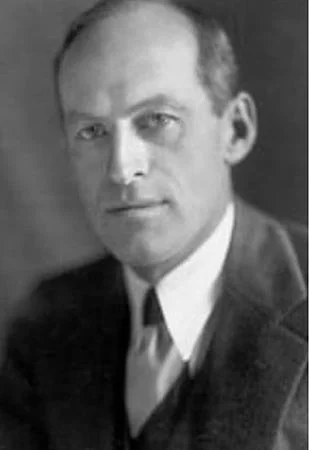
Millard Tydings (Source: Library of Congress)
A man who returned to the Philippines could find himself unable to reenter the country where he had worked for years. Wives, children, siblings and prospective spouses remained across the ocean. Communities could not grow naturally when the annual quota for an entire country was 50.
The law intensified the loneliness of the Manong generation.
Some men grew old in labor camps and residential hotels, carrying photographs, letters and remittances as substitutes for the domestic lives they had been denied.
In 1935, Congress passed the Filipino Repatriation Act. It offered federally funded one-way transportation to Filipinos who agreed to leave the continental United States for the Philippines.
Officials presented the program as voluntary assistance. But under the new quota, a person who accepted passage might never be permitted to return.
Repatriation could become permanent exile.
Fewer than 2,200 Filipinos accepted the offer. The limited response revealed something exclusionists had failed to understand despite discrimination; many Filipinos had already made lives in the United States.
They had worked its fields, paid its rents, established friendships and built institutions. America might classify them as temporary labor, but their years and sacrifices have made the country part of their home.
The federal law wanted to make Filipino life temporary.
But the Manongs stayed.
They built belongings in churches, union halls, restaurants, fraternal lodges, pool rooms, newspapers and Little Manila neighborhoods. They endured exclusion by creating community where the law refused to recognize it.
World War II Service and a Narrow Opening
World War II again exposed the contradiction between Filipino service and Filipino exclusion.
Filipinos fought under American command in the Philippines and across the Pacific. They endured invasion, occupation, Bataan, Corregidor, imprisonment, guerrilla warfare and enormous civilian loss. Filipino Americans from the mainland also entered the U.S. armed forces.
Their service sharpened the moral case for citizenship.
How could Filipinos be treated as permanent aliens when they had fought and died beneath the American flag? How could a country demand their military loyalty while refusing their political belonging?
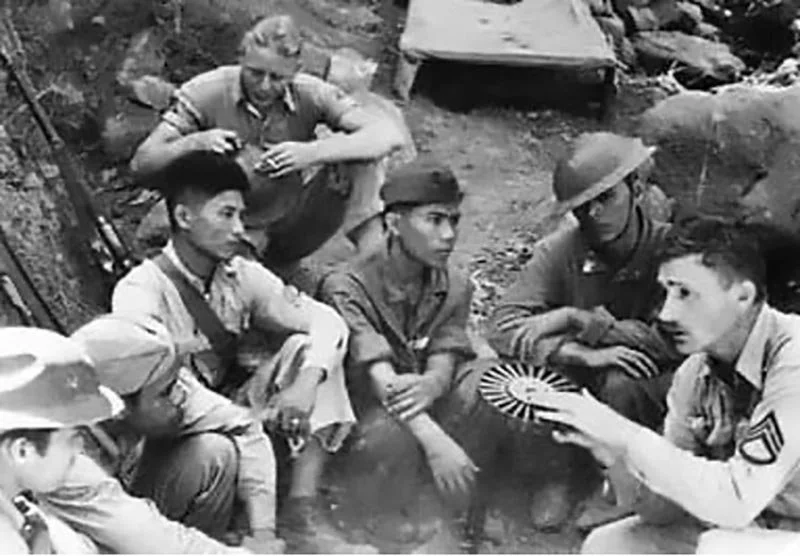
(Photo by WWolny/Wikimedia Commons)
In 1946, the United States formally recognized Philippine independence. That same year, the Luce–Celler Act permitted Filipinos and Indians to become naturalized U.S. citizens and granted each country an immigration quota of 100 people per year.
It was a meaningful opening, but still a narrow one.
A quota of 100 could not repair decades of separation. It could not return youth to aging Manongs or recreate families that exclusion had prevented.
The Immigration and Nationality Act of 1952 removed racial restrictions on naturalization but retained the national-origins quota system. Legal inclusion advanced in increments while the older architecture of unequal immigration endured.
From Exclusion Toward Inclusion
The deeper transformation arrived in 1965 through two struggles that unfolded in the same year.
One occurred at the fields in California.
On September 8, 1965, Filipino members of the Agricultural Workers Organizing Committee walked out of Delano-area grape vineyards. Led by Larry Itliong, Ben Gines and other veteran organizers, they demanded higher wages and better working conditions.
The strike did not begin as a footnote to someone else’s movement.
Filipino farmworkers initiated it.
The Manongs understood agricultural exploitation because they had lived through decades of seasonal migration, poverty wages, racial violence and exclusion from labor protections.
By 1965, they carried not only workplace demands but also the memory of being treated as disposable.
Their walkout helped ignite the Delano grape strike and the multiracial farmworker movement that followed. It eventually brought Filipino organizers into an alliance with Cesar Chavez, Dolores Huerta and the National Farm Workers Association.
The Manongs’ strike was about pay.
It was about dignity after decades of exclusion.
The second transformation came through immigration law.
The Immigration and Nationality Act of 1965 replaced the national-origins quota structure with a preference system emphasizing family relationships and occupational skills.
For Filipinos, its consequences were profound.
(Photo by KavBear/Wikimedia Commons)
Families separated by decades of restriction could begin to reunite. Nurses, physicians, engineers, students, military relatives and other immigrants entered through new pathways. Filipino American communities expanded beyond their earlier centers in Hawaii and the West Coast.
The law did not erase racism or repair every historic wrong. But it dismantled the immigration structure that had once reduced entry from the Philippines to 50 people per year.
The door finally began to yield.
Remember the Manongs
The Filipino American experience from 1898 to 1965 is not simply a story of immigration.
It is a story of the American empire — and of people who survived its contradictions.
The United States claimed the Philippines, recruited Filipino labor and demanded Filipino military service. Yet it resisted the possibility that Filipinos might become equal members of the nation.
That is why the Manongs must remain at the center of this history.
They were America’s colonial subjects, farmworkers, cannery hands, hotel employees, soldiers and labor organizers. They were young men who grew old in residential hotels and agricultural towns, carrying letters from homes across the Pacific.
They were inside the American empire, but outside the boundaries of American belonging.
They were treated as temporary workers but built permanent communities.
They were denied ordinary family lives but created extended families in union halls, churches, restaurants, pool rooms and Little Manila neighborhoods.
They made America with their hands before America made room for their families.
By 1965, Filipino farmworkers had helped launch a movement for dignity in the fields, and immigration reform had begun to reunite families divided by exclusion.
But the Manongs had already changed the country long before the law acknowledged them.
They endured the empire, the mob, the courtroom, the bunkhouse, the cannery, the harvest and the long wait outside the gate.
Before America fully recognized Filipino Americans, the Manongs had already proven that they belonged.
Reposted with permission from AsAmNews: https://asamnews.com/2026/08/11/filipino-immigration-labor-manongs-bachelor-society/?utm_source=mailpoet&utm_medium=email&utm_source_platform=mailpoet&utm_campaign=sitetitle-newsletterposttitle-3
