
On Cesar Chavez: We Need The Truth More Than We Need Heroes
/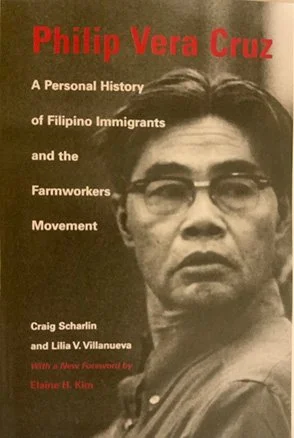
PHILIP VERA CRUZ: A Personal History of Filipino Immigrants and the Farmworkers Movement (University of Washington Press), by Craig Scharlin and Lilia V. Villanueva
Who was Philip Vera Cruz? He was the UFW’s 2nd Vice President, third in line of command after Chavez and Huerta in the UFW council. Philip was the highest-ranking Filipino who served as an officer in the UFW. Prior to the formation of the UFW, Philip, along with Larry Itliong, leaders of the all-Filipino Union AWOC, led Filipino farm workers in the first successful strike in Delano California against the grape growing corporations in California. The Filipinos began the strike despite Chavez’s initial decision not to join. Six months into the strike, the Mexican farmworkers pressured Chavez to join the Filipino-led strike. He finally joined the strike and organized the March from Delano to Sacramento that gained national attention to the plight of the farm workers. The strike lasted five years, and another year passed before AWOC and NFWA merged to form the UFW.
In our hundreds of hours of interview with Philip, half were devoted to his work and commitment to supporting workers’ rights, not only of farm workers but all laborers in the U.S. and internationally. It was always in the context of Chavez’s leadership and decisions that Philip shared his analysis of Chavez the man.
Philip recalled many conflicts he had with Chavez and Huerta, especially over issues involving Agbayani Village, the retirement residence for farmworkers, the majority of which were Filipinos. Philip felt the local needs of farm workers were being overlooked and underfunded as the Union’s priorities shifted along with the growing fame of Chavez as a personality. He recalled several attempts to warn Chavez on the pitfalls of intense media coverage and was almost always rebuffed, rudely at times. At one meeting of the leadership council, Philip called for more support for Agbayani Village residents, citing the Council’s lack of empathy towards the needs of retired farm workers by denying them simple pleasures such as keeping fighting roosters within the compound as a traditional hobby among Filipino men. Philip often defended residents when accused of violating Village policy by inviting female visitors into their quarters, a policy that Huerta vigorously enforced with penalty. Philip said Dolores Huerta was particularly unsympathetic to the plight of retired Filipino farm workers. Philip cannot recall Huerta supporting any of Philip’s initiatives for Agbayani Village when it came to a vote.
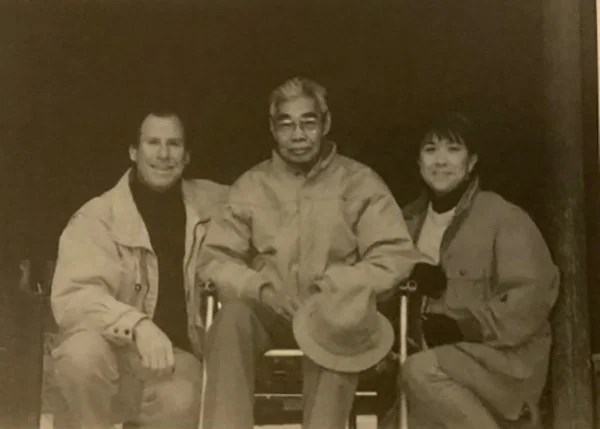
Authors Craig Scharlin (left) and Lilia Villanueva with Philip Vera Cruz in Agbayani Village, Delano, California, 1993
We learn in the book that Philip’s disappointment with the UFW stems primarily from the leadership of Chavez whom he observed became more erratic and inconsistent as his fame grew. Chavez became more dismissive of opposing views and even openly mocked those who challenged his decisions. This behavior was offensive to Philip but voiced his opposition only in board meetings. He was aware that if word got out of a rift among council leaders it would create a negative impact on the UFW as a whole. However, he was vocal about reminding everyone in council meetings that the goal of the Union was to support and fight for the rights of all workers and to not let fame or popularity get to anyone’s head. His constant reminder made Chavez refer to him as “the conscience of the Union.”
In the end, Chavez chose not to follow his conscience. When offered financial support by Philippine dictator Ferdinand Marcos and an all-expenses paid invitation to go to the Philippines in recognition of his work for Filipino farmworkers in the U.S., Philip adamantly opposed this invitation, citing that the dictator was a foe of labor unions in the Philippines. Chavez ignored Philip’s advice. Philip pointed out the hypocrisy of the evening when Chavez gave a speech in Malacañang Palace praising the dictator’s support for workers’ rights while not far away prominent Filipino labor leaders were sitting in prison having been arrested by Marcos. When Chavez returned to California he invited Marcos’s Secretary of Labor Blas Ople to be a featured speaker at a UFW convention. Again, Philip opposed this billing and when he lost the vote again, he asked that he be allowed to speak after Mr. Ople’s speech. Chavez said no, seconded by Huerta. At the convention, Philip tried to speak after Ople anyway but was refrained from getting up to speak. Soon, thereafter, Philip resigned from the UFW, citing censorship as a reason. “We need the truth more than we need heroes,” was Philip’s response when asked why he tried to defy Chavez’s attempt to silence him.
Chavez became more dismissive of opposing views and even openly mocked those who challenged his decisions.
What did Philip know about Cesar Chavez the man? In print, only that Chavez was a man who fell prey to fame and adulation, who lost his moral compass when making decisions as leader of the UFW. As for Chavez’s lifestyle and personal actions, let them speak for themselves, Philip would have said.
As for Dolores Huerta— second-in-command to Chavez from beginning of the movement until his death in 1994, known as a fierce feminist and women’s rights activist—just recently admitting to being an unreported victim of rape and sexual assault by Chavez all those years ago, raises questions about what kind of leadership was fostered within the inner circle of UFW that could not, or would not, support victims of sexual assault. Staunch supporters of workers’ rights should not flinch at sexual scandals among their leadership council but should be ready to hold up truth to power. As Philip would remind us: We need the truth more than we need heroes.
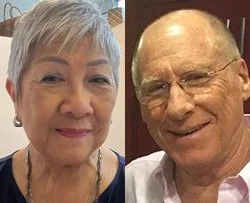
Lilia V. Villanueva and her husband Craig Scharlin have been living in the Philippines for over ten years, dividing their time between Bacolod and Baguio.
