

Jo Koy: The Joke’s on Marginalization
/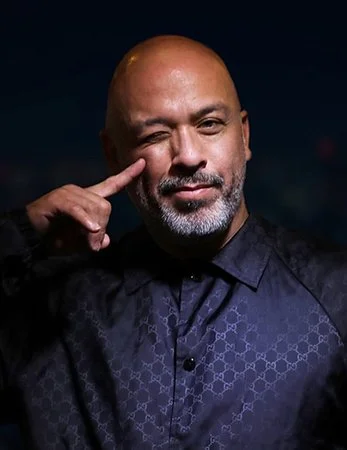
Jo Koy (Source: Facebook)
So, on August 15, my wife, my son and I went to see Jo Koy perform at Casino Rama in Orillia, Ontario. I had been a fan of the Filipino American comedian for years and expected a good number of Filipinos in the audience. What surprised me was that only a minority appeared to be Filipino.
That realization stayed with me throughout the sold-out show. Here was a comedian whose material has long drawn on Filipino mothers, families, food, habits, accents and the peculiarities of growing up in a Filipino immigrant household. Yet here he was, performing before a predominantly non-Filipino audience in a small Ontario community far removed from the FilipinoAmerican communities where his career first took shape.
One of his early jokes was about not expecting so many people to turn up in a small Canadian town like Orillia. The audience roared.
The joke pointed to something larger.
The Filipino experience had ceased to be merely the subject of Jo Koy's comedy. It had become part of the cultural vocabulary of the mainstream. That, I would argue, is the larger Jo Koy Story—And A Story About Diasporic Capital.
He Was Supposed to Get a ‘Real Job’
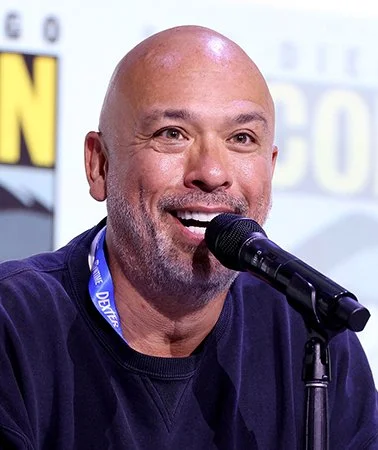
Jo Koy at Comic-Con in San Diego (Photo by Gage Skidmore/Wikipedia)
Jo Koy, born Joseph Glenn Herbert, is the son of a Filipina mother and an American father who served in the U.S. Air Force. His parents separated when he was young, and his mother, a single parent, raised four children.
This is a recurring theme in his routines: his mother could not understand why her son wanted to pursue comedy when he could get a stable, respectable job; become a nurse or a postal worker. Comedy? Why would you do that?
The joke is funny because Filipino immigrants immediately understand the logic: for a parent who has struggled to establish a family in a new country, a career is about security rather than self-expression.
Jo Koy has repeatedly mined this tension for laughs—the immigrant mother's bewilderment that her son would choose the uncertainty of entertainment rather than the conventional route to middle-class security.
The irony is extraordinary. The son encouraged to pursue a “real” career eventually built an enormously successful one by talking about his Filipino mother—the very mother who doubted that the act would amount to anything.
The first generation often pursues security through conventional occupations; the second can transform the cultural experiences of the immigrant household into new forms of value. Jo Koy did precisely that.

Jo Koy’s “Just Being Koy” Show (Photo by Cesar Polvorosa, Jr.)
From Being Different to Making a Difference
Jo Koy has spoken about racism, bullying and the experience of growing up between cultures. As the son of a Filipina mother and an American father, he did not always fit neatly into the racial categories around him.
The first generation learns how to survive in a new society. The second learns how to negotiate between the culture of home and the culture outside it. Sometimes that negotiation is painful: Why does my mother sound different? Why does my family eat different food? Why do we behave differently? Why do other children make fun of my family? Why don't I quite fit in?
Jo Koy eventually discovered another possibility: What if the difference itself could become an asset?
Comedy became his answer.
He began performing stand-up while struggling to establish himself. His early career involved small venues and years of rejection; mainstream gatekeepers did not immediately see the commercial potential in his material.
He has described how Netflix repeatedly rejected his Live From Seattle special, with the material considered too specific. Eventually, he financed the production himself. Netflix picked it up, helping propel him toward the mainstream.
The problem was not a lack of talent. It was getting through the door.
And Jo Koy has made that metaphor part of his philosophy. In In His Elements, filmed in the Philippines, he connected his own difficulty getting through the door with his desire to help other Filipino performers get their opportunity.
Filipino Mom Becomes the Star
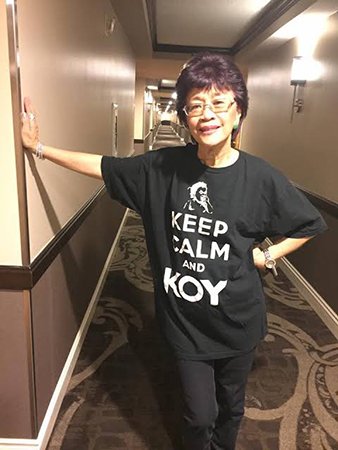
Josie Harrison, Jo Koy’s Mom (Source: Facebook)
Jo Koy's most famous character may not be Jo Koy at all. It is his mother.
His impersonations of his Filipina mother—her accent, anxieties, remedies, authority and Filipino way of dealing with her children—became central to his comedy.
But the humor traveled and found wide acceptance.
Non-Filipinos laugh because the deeper story is universal: mothers worry, embarrass their children and think they know best.
Jo Koy discovered something important: he did not have to erase the Filipino specificity of the story to make it universal. He could make the story more Filipino—and therefore more interesting to everyone else. Some non-Filipinos did not get the Vicks joke, but once they understood it was the ready medical ointment for any ailment by Jo Koy’s mother they found it amusing.
Immigrant communities often feel pressure to assimilate by minimizing their differences. Jo Koy took another route: he translated the difference rather than erasing it.
His mother became not an embarrassment to be hidden but a character to be celebrated. And eventually, the joke was on the old definition of success.
From Filipino audience to Everybody
This is where the audience I saw in Orillia becomes significant.
Jo Koy's early material resonated with Filipino audiences because they recognized themselves in it. Then other Asian Americans, Latinos and immigrants recognized their own family dynamics. Eventually, mainstream audiences discovered they did not have to be Filipino to understand the joke.
Yet as Jo Koy moves increasingly toward the mainstream, the Filipino roots remain visible. In Orillia, for example, he explained the meaning of Mahal Kita— “I love you”—to an audience that was predominantly non-Filipino. The joke worked not because everyone in the room already knew the phrase, but because they were willing to enter his cultural world.
As Jo Koy himself has said, “funny is funny.” This is the trajectory of his career: from ethnic recognition to cultural translation to mainstream acceptance.
His Netflix specials—Live from Seattle, Comin' In Hot, In His Elements and Live from the Los Angeles Forum—helped make that transition visible. The cultural specificity became the doorway to universality.
He has helped normalize Filipino cultural references in American and international popular culture. A Filipino mother is no longer necessarily an exotic character. She can simply be Mom.
Diasporic Capital
But beneath the laughter is a more serious immigrant story.
Jo Koy's experience of racial discrimination and cultural marginalization is part of the background to his comedy. His career demonstrates how humor can become a way of negotiating an identity once treated as peripheral.
This is one of the recurring trajectories of immigrant life: fighting through the margins and eventually turning the experience of marginalization into an advantage.
This is where Jo Koy's career becomes particularly relevant to the idea of Diasporic Capital.
Diasporic communities accumulate forms of capital that are not always visible on conventional balance sheets: linguistic capital, cultural knowledge, family networks, community relationships, shared memories of food, music and humor, and the ability to move between different cultural worlds.
Jo Koy possessed these resources almost instinctively. His Filipino identity connected him to a community; his American upbringing gave him access to mainstream culture; and moving between cultures gave him an ability to translate one world to another.
Eventually, that cultural capital became economic capital. But capital also circulates.
There is another dimension to Jo Koy's story that I find equally important. In In His Elements, filmed in the Philippines, he deliberately showcased Filipino comedians, musicians, DJs, B-boys and other performers. It was not simply a comedy special about the Philippines. It was also an opportunity to put Filipino talent before an international audience.
Diasporic capital becomes more powerful when it circulates. The point is not merely individual success. It is conversion and reinvestment.
Jo Koy has articulated this idea himself: after struggling to get through the door, he wanted to help Filipino performers get their opportunity.
The Filipino imagination
Jo Koy has repeatedly referred to Filipino figures who have crossed into global mainstream culture, Manny Pacquiao in particular.

Manny Pacquiao (Source: Wikipedia)
Pacquiao's emergence as a global boxing superstar mattered because he represented a Filipino succeeding on a global stage while remaining unmistakably Filipino.
Arnel Pineda represents another breakthrough. In Live from the Los Angeles Forum, Jo Koy tells Pineda's story as an example of someone from the Philippines overcoming enormous obstacles to become the lead singer of Journey. He turns Pineda's story into a comic story about fulfilling dreams. Jo Koy reminded the Orilla crowd that the lead singer of Journey is Filipino. Jo Koy recognizes himself in it: one fulfilled his dream as a comedian, the other as a rock star.
Philippines-Mexico Connection
One of the most interesting aspects of Jo Koy's comedy is his recurring attention to the relationship between Filipinos and Mexicans.
In Comin' In Hot, he described Filipinos as the “Mexicans of Asia” and used the joke to explain why Filipinos and Latinos often recognize something familiar in one another. He turned the routine into something of a history lesson, pointing to the centuries of Spanish Empire connection between the Philippines and Mexico. He revisited the theme in Live from the Los Angeles Forum, joking about similarities between Mexican and Filipino culture, language and family life.
This particularly caught my attention because I had explored this connection in my own Positively Filipino article, Finding the Philippines in Mexico, (June 2026). There I examined the historical and cultural relationship between the two societies. [https://www.positivelyfilipino.com/magazine/finding-the-philippines-in-mexico]
Jo Koy approaches the subject through comedy; I approached it through history and political economy. But we arrive at a similar realization: the Philippines has a deeper Latin American connection than many Filipinos recognize. Jo Koy's genius is to make that realization funny.
Family, Obligation and Success
There is also something deeply Filipino about the structure of Jo Koy's story. His comedy repeatedly returns to the idea that individual achievement is never entirely individual.
In many Filipino immigrant families, one member's success is understood as belonging partly to the family. The successful member becomes a source of support: tuition, job referrals, assistance and an expanding social network.
But it can also create something powerful: a distributed form of social capital. Jo Koy's story reflects that larger Filipino ethos of family, community and collective advancement.
There is an irony at the heart of Jo Koy's career. For years, immigrant cultures were expected to make themselves less visible in order to enter the mainstream.
He has demonstrated that Filipino identity does not have to be diluted in order [for it] to travel. It can travel widely in the mainstream because it is authentic.
Jo Koy did almost the opposite. He made the Filipino mother louder, the accent more recognizable, the family more chaotic. He made Filipino habits the material of his comedy, and then he invited everyone else to laugh with him.
The margins became the center. Cultural difference became commercially valuable, and the audience expanded far beyond the community from which the material originated.
Making the Room Bigger
On August 15, in Orillia, I could see just how big the room had become. He has demonstrated that Filipino identity does not have to be diluted in order [for it] to travel. It can travel widely in the mainstream because it is authentic.
And perhaps that is the joke that the old hierarchy never saw coming. The Filipino mother who wanted her son to get a practical job became one of the stars of his comedy.
The Filipino culture that once seemed too “specific” for mainstream entertainment became the foundation of his success. And the Filipino child who struggled to get through the door eventually began opening it for others.
The mother wanted a nurse. She got a comedian. And the comedian gave the Filipino diaspora something even more valuable: a bigger room in which to be Filipino.
Cesar Polvorosa Jr. is a professor of International Business and Economics at a Canadian university whose research and writing examine development, institutions and Filipino diaspora. He authored a book chapter on Filipino entrepreneurship in Canada published by the University of Toronto Press. He was nominated for the Pushcart Prize in Poetry, and his poetry and short stories had been anthologized in Asia and North America. He is an occasional contributor on economics, geopolitics, and international affairs to BusinessWorld, Interaksyon, and Philstar.
More articles from Cesar Polvorosa Jr.