
Bonifacio and the Two Ilustrados
/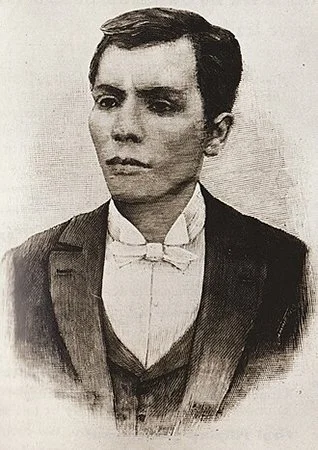
Andres Bonifacio (Source: Wikimedia Commons)
Perhaps another question should be asked: What happened to Bonifacio between two ilustrados whose names would eventually loom larger than his in Philippine history–Jose Rizal and Emilio Aguinaldo?
In a very loose sense of the word, Bonifacio was “betrayed” by both. But they did not betray him in the same way.
Rizal inspired the revolution Bonifacio would lead yet refused to bless it.
Aguinaldo joined the revolution Bonifacio had organized, then displaced him from its leadership.
Between them stood Andres Bonifacio.
Who Awakened Him
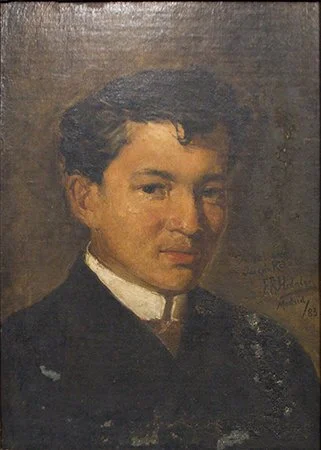
Jose Rizal (From the Collection of Gibi Ver Villaroman and Malou Ver Villaroman, heirs of Saturnina Rizal)
Bonifacio revered Rizal.
Rizal’s Noli Me Tangere and El Filibusterismo exposed the abuses of colonial society and helped awaken the consciousness from which Filipino nationalism grew. Bonifacio and the Katipuneros understood Rizal’s importance. His name became associated with the movement even though Rizal himself was not a member of the Katipunan.
This makes what happened in 1896 more complicated than the simple division many of us learned—or later embraced—between Rizal the reformist and Bonifacio the revolutionary.
When Bonifacio sent Dr. Pio Valenzuela to consult Rizal in Dapitan about the planned uprising, Rizal opposed launching it.
And on December 15, 1896, while awaiting trial and execution, Rizal issued his now famous manifesto disassociating himself from the Revolution. His words about the uprising then underway were unequivocal. He said that he had opposed it from the beginning and declared that he condemned it.
That historical fact cannot simply be wished away.
But another question deserves asking: Did Rizal condemn the revolution itself—or did he condemn this revolution, launched at this particular time and under these particular circumstances?
The distinction matters.
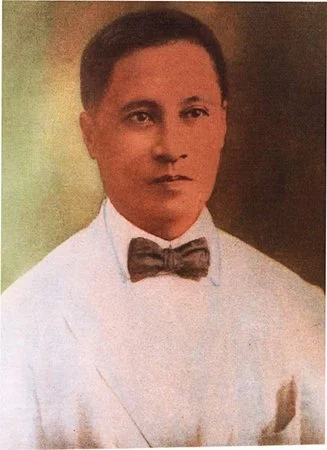
Dr. Pio Valenzuela (Source: Wikipedia)
Rizal’s Other Words
Almost a decade before the Katipunan uprising, Rizal had already contemplated the possibility that peaceful reform might fail.
In an 1887 letter to Ferdinand Blumentritt, Rizal made clear that he did not favor conspiracies he considered premature and dangerous. But neither did he rule out violence forever. If peaceful reform became impossible and Spain left Filipinos no other alternative, he indicated that violent means could become justified.
That is not the position of an absolute pacifist.
Neither does Rizal’s response to Pio Valenzuela in Dapitan necessarily establish that he believed Filipinos should never revolt.
Accounts of that meeting have their own historical complications. But the objections attributed to Rizal centered substantially on preparation. The revolutionaries lacked sufficient arms, resources and support. Rizal believed an uprising under those circumstances could end disastrously.
Seen in this light, the difference between Rizal and Bonifacio becomes more nuanced.
Perhaps their disagreement was not simply: Reform or Revolution? Perhaps it was: Is it time?
Rizal answered no. Bonifacio answered yes.
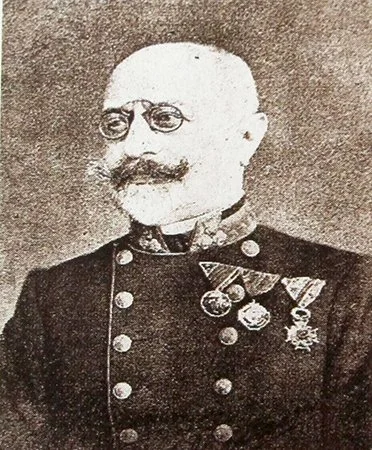
Ferdinand Blumentritt (Source: NCCA/Flckr)
When Will the People Ever Be Ready?
And here lies the fundamental difference between them.
Rizal could see the enormous military power of Spain. He understood what an inadequately prepared uprising could cost. A failed revolution could mean executions, reprisals and the destruction of the very movement seeking liberation.
Bonifacio faced the question from another direction. When would Filipinos ever possess enough weapons? When would Spain allow them sufficient political power? When would the wealthy decide that the time had finally arrived? When would a colonial government announce that its colonized subjects were sufficiently prepared to overthrow it?
For Bonifacio, waiting for all the favorable conditions to exist could mean waiting forever. Colonialism itself prevented many of those conditions from developing.
The Katipunan, therefore, represented a conclusion different from that of the reform movement: If the nation had already been awakened, liberation could no longer depend upon the consent of the colonizer.
This is where earlier interpretations of Rizal requires qualification.
Rizal did condemn the Revolution of 1896 as it was launched. But it does not necessarily follow that Rizal rejected revolution under all circumstances.
His condemnation of the uprising was unambiguous. His position on revolution was not.
Rizal’s ‘Betrayal’
Imagine, nevertheless, the situation from Bonifacio’s side. Here was the intellectual giant whose writings had helped awaken the nation.
Bonifacio had read him. The Katipuneros revered him.
And when the movement approached the point of transforming that awakened consciousness into armed struggle, Bonifacio sought his counsel.
Rizal withheld his blessing. To Bonifacio and the men preparing to risk their lives, it must have been a bitter rejection.
Was it betrayal? Historically, the word is probably too strong.
Rizal did not seize Bonifacio’s organization. He did not order Bonifacio’s arrest. He did not have him tried. He did not have him killed.
Perhaps what Bonifacio received from Rizal was not betrayal at all, but a warning: You are not ready.
Bonifacio’s answer, through action, was equally clear: We may never be ready if we continue waiting.
History never allowed the two men to finish that argument. On December 30, 1896, Rizal was executed at Bagumbayan.
The execution intended to silence him instead transformed him into a martyr. The Revolution continued. And Bonifacio would soon confront another ilustrado.
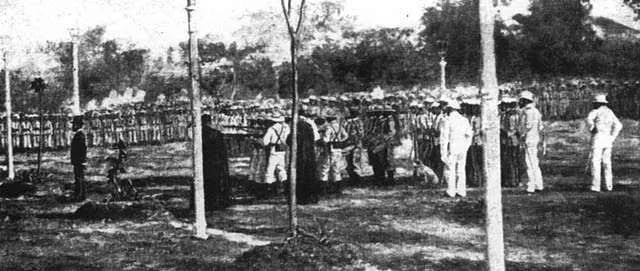
Jose Rizal’s Execution at Bagumbayan (Source: Picryl)
The Man Who Joined Him
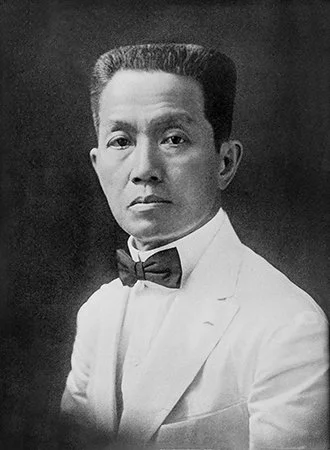
Emilio Aguinaldo (Source: Wikimedia Commons)
Emilio Aguinaldo’s relationship with Bonifacio was fundamentally different. Aguinaldo did what Rizal would not do. He joined the Revolution.
His forces achieved important victories in Cavite, and his stature grew. But with those victories also grew a struggle over the direction and leadership of the revolutionary movement.
The Katipunan was no longer merely a clandestine organization preparing an uprising. Revolution had broken out.
The question arose whether the Katipunan should continue as the revolutionary government or whether a new political structure should replace it.
The conflict culminated at the Tejeros Convention in March 1897. An election was held.
Aguinaldo was elected president while absent from the proceedings. Bonifacio was elected Director of the Interior.
Then came the humiliation. Daniel Tirona challenged Bonifacio’s qualifications for the position, arguing that it should be occupied by a lawyer.
Bonifacio, insulted before the assembly, declared the proceedings null and void. The dispute did not end there.
Bonifacio and his brother Procopio were eventually arrested, tried for treason and sentenced to death.
On May 10, 1897, Andres and Procopio Bonifacio were executed in the mountains of Maragondon.
This was no metaphorical betrayal. The founder of the Katipunan did not die before a Spanish firing squad.
He died at the hands of fellow revolutionaries under the government headed by Aguinaldo.
Two Ilustrados, Two ‘Betrayals’
And so the irony becomes almost unbearable.
Rizal would not endorse Bonifacio’s revolution because he believed the conditions were not right.
Aguinaldo embraced the revolution—and Bonifacio eventually lost control of it.
One denied Bonifacio the blessing he sought. The other acquired the political authority Bonifacio once possessed.
But history should resist making the two equivalent.
Rizal’s “betrayal,” if we insist upon using the word, was intellectual and symbolic. He helped awaken a national consciousness but refused to endorse the decision to translate it into armed revolt when Bonifacio and the Katipunan decided the moment had arrived.
Aguinaldo’s conflict with Bonifacio became political, organizational and ultimately fatal.
There is, however, another difference that cannot be ignored: Class.
The Man With Little To Return To
Rizal was educated, internationally traveled and a physician. He came from a family with land, education and relative economic security.
Aguinaldo came from a prosperous provincial family and had already occupied municipal office before the Revolution.
Bonifacio came from another social world.
Orphaned young, he worked to support his siblings. He educated himself while earning his living. He belonged not to the landed ilustrado elite but to Manila’s emerging working and lower-middle strata.
Here class becomes more than biography. Rizal and Aguinaldo possessed advantages that Bonifacio did not.
Education. Property or family resources. Professional or political standing. Social position. They had, in varying degrees, something to return to.
Bonifacio had far less of that prerogative.
In class terms, the worker who possesses little has fewer comforts to protect—and fewer comforts to which he can retreat when the revolutionary moment becomes dangerous.
His liberation is therefore not merely an intellectual proposition. The existing social order is itself part of what keeps him where he is.
This does not mean wealth automatically produces reformists, or that poverty automatically produces revolutionaries. History provides too many exceptions for such a mechanical conclusion.
But material conditions shape political choices.
To Rizal, waiting could still mean practicing medicine, writing, educating and pursuing political reform.
To Aguinaldo, political compromise could still leave family position, property and social standing.
For Bonifacio, what was there to return to?
The same colonial order under which he had labored while the educated and landed possessed choices unavailable to men of his class.
Perhaps this helps explain why the three men could look upon the same colonial society and calculate risk differently.
Those who possess some comfort can weigh what revolution might take away. Those who possess little must also weigh what continued submission will never give them.
Rizal could say the time was not yet ripe. Bonifacio could ask: If not now, when?
Whose Revolution?
The older nationalist interpretation often placed Rizal and Bonifacio at opposite poles: reform against revolution, ilustrado against masses, assimilation against independence.
There is truth in that distinction. But perhaps not the whole truth.
Rizal awakened a political consciousness whose ultimate consequences he could not control.
Bonifacio took that consciousness beyond literature and reform and organized it into revolution.
Aguinaldo transformed the Revolution again, from the brotherhood of the Katipunan toward a revolutionary government increasingly under another political leadership.
Three men. Three different relationships to the Filipino struggle.
But only one founded the organization that deliberately set out to overthrow Spanish colonial rule. And that man would not live to see independence declared.
Then Came The Americans
There is another irony. Rizal was executed by Spain in December 1896 and became a martyr. Bonifacio was executed by fellow Filipinos five months later. Aguinaldo survived both.
A year after Bonifacio’s death, Aguinaldo proclaimed Philippine independence at Kawit on June 12, 1898.
But the Filipino struggle merely passed from one empire to another. The Americans came.
And under American colonial rule, Rizal’s stature as the exemplary Filipino hero was elevated and institutionalized. This preference was politically convenient.
The American colonial authorities could promote a hero whose public image emphasized education, civic virtue, intellectual resistance and reform rather than armed insurrection.
Bonifacio represented a much more dangerous example for any colonial ruler.
Here was an ordinary Filipino who concluded that reform under foreign domination was no longer sufficient, organized the masses and took up arms to overthrow the colonial government.
Rizal, by contrast, could be presented as the safer model. He had courageously exposed colonial abuses. His writings had awakened Filipino nationalism. Spain had executed him for the threat his ideas represented.
But he had also condemned the uprising of 1896. This does not mean that Rizal does not deserve national veneration. He does.
Nor does it mean that his greatness was invented by the Americans. Filipinos already revered him, and the Katipuneros themselves had honored him before the Americans arrived.
But his elevation above other revolutionary figures also fitted the political requirements of the new colonial order.
The preferred patriot could love his country. He could demand justice. He could educate himself. He could expose abuses. He could seek reform.
But there was one example a colonial government had little reason to encourage: Do not become another Bonifacio.
For what would it mean for Filipinos living under a new colonial master to regard as their foremost national model not the reformist intellectual but the working man who organized a secret society specifically to overthrow foreign rule through revolution?
Bonifacio’s example carried an uncomfortable lesson. When reform fails, organize. When colonial power refuses liberation, resist. And when necessary, revolt.
Who Chooses Our Heroes?
Perhaps, then, the issue should never have been whether Rizal or Bonifacio deserves to be the national hero.
Rizal unquestionably deserves admiration.
He exposed colonial oppression with an intellectual brilliance few Filipinos before him had achieved. His writings helped give a colonized people a consciousness of themselves as a nation. He faced his execution with extraordinary courage.
But Bonifacio represents another stage in that awakening. Rizal showed Filipinos why the colonial order was unjust. Bonifacio decided that understanding injustice was no longer enough.
One helped awaken the nation. The other organized it to revolt.
Aguinaldo then emerged from that revolution and ultimately displaced the man who had founded the movement that began it.
Perhaps that is why the story of the three men remains uncomfortable. It refuses to give us a simple hero and villain.
Rizal’s rejection of Bonifacio’s proposed uprising becomes more understandable when viewed as strategic judgment rather than absolute rejection of revolution.
Aguinaldo’s rise cannot erase his genuine military contribution to the Revolution, but neither can those contributions erase Bonifacio’s fate under the revolutionary government he headed.
And Bonifacio’s class position does not automatically make his political judgment correct. But it does help us understand why he could make a choice the others could hesitate over.
In a very loose sense of the word, Bonifacio was “betrayed” by both. But they did not betray him in the same way.
The Man Who Stopped Waiting
So was Bonifacio betrayed by two ilustrados?
By Aguinaldo, the word carries terrible historical weight.
By Rizal, perhaps “betrayal” tells us more about Bonifacio’s disappointment—and about our tendency to divide reformists from revolutionaries—than it does about Rizal himself.
What cannot be disputed is that Bonifacio sought Rizal’s blessing. He did not receive it. Rizal believed the uprising was premature. Bonifacio proceeded anyway.
Rizal died before a Spanish firing squad. Bonifacio died at the hands of fellow revolutionaries.
Aguinaldo survived to declare an independence that would soon collide with another colonial power.
And the Americans who followed Spain found the image of Rizal far easier to institutionalize than the revolutionary example of Bonifacio.
Perhaps the enduring question, therefore, is not who among them loved the Philippines more.
History cannot measure patriotism so easily.
The more revealing question may be what each man believed Filipinos should do once they understood that they were oppressed.
Rizal awakened them. Bonifacio organized them. Aguinaldo eventually led them.
But Bonifacio was the one who decided that the time for waiting had ended.
And perhaps that is why, every November, Andres Bonifacio still disturbs the comfortable telling of Philippine history.
He does not merely ask us to remember a hero. He asks a far more dangerous question:
When reform is no longer enough, how long should an oppressed people wait?
Rudy D. Liporada was a feature writing instructor in Zambia, Africa before he moved to the US and became a freelance writer/novelist/columnist ("As the Bamboos Sway"). He graduated from the University of the Philippines, majoring in economics.
More articles from Rudy D. Liporada
