
APO Hiking Society, Leah Navarro and Filipino Diasporic Capital
/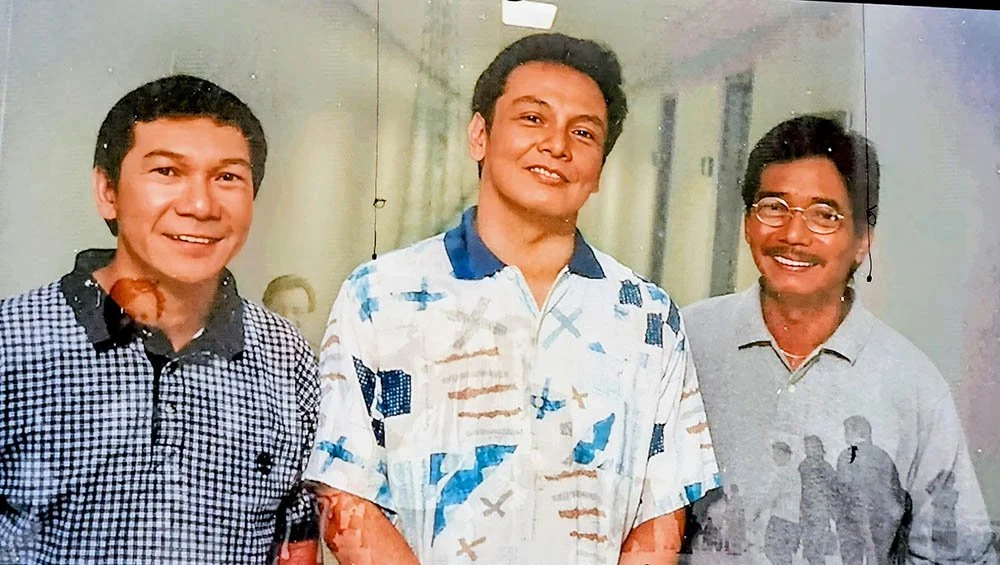
APO Hiking Society in their early years: Boboy Garrovillo, Jim Paredes and the late Danny Javier (who passed away in 2022). Photo credit: Cesar Polvorosa from the Retrospective Video/Slide Show Prior to the Concert last Aug. 29 in Markham
It was the age of cassette tapes, long before Spotify playlists and YouTube made it possible to carry an entire musical universe in a cellphone. My APO cassette connected me to home while I was living in Japan. I listened to it in my studio apartment and, just as importantly, played it for Japanese and other mostly fellow Asian classmates and friends. My close friends developed a liking for APO Hiking Society. I still remember one of them telling me, “Play again the tape of the three guys.”
Music, the universal language, became an informal ambassador.
I did not think of it in those terms then. I was simply a young Filipino graduate student carrying familiar sounds into an unfamiliar environment. But looking back, that cassette was an early example of what I now think of as diasporic capital: the cultural knowledge, memories, relationships and networks that Filipinos carry across borders and use to create connections in their new homes.
Decades later, on August 29 of this year my wife, my sister and I found ourselves in a theater in Markham, Ontario, watching and listening to APO again.
The setting could not have been more different from my graduate-school days in Japan. Instead of a cassette player in my apartment, there was a full concert stage at the People’s Theatre for the Performing Arts. Instead of a handful of Japanese and international friends discovering Filipino music, there was a packed Filipino Canadian audience singing along to songs that had accompanied two generations of Filipinos through courtship, friendship, family life and growing up.
APO returned to Toronto after 22 years. The concert, “Heto nAPO Sila sa Toronto!,” was the culminating event of the inaugural Manlilikha Arts and Music Festival, organized by Likha Filipino Cultural Hub in partnership with Adhika. The festival was not simply a celebration of Filipino culture in Canada as proceeds were directed toward relief and rehabilitation efforts for earthquake-affected communities in Mindanao through Art Relief Mobile Kitchen.
That combination struck me. A concert built around memories of Filipino music was simultaneously creating resources for people impacted by natural disaster. That, too, is diasporic capital.
More than Nostalgia
The APO concert in Markham was a stirring nostalgia trip for many of us. It was a reunion with a Philippines that we carried with us when we left.
For many, APO's music is inseparable from memories of a particular Philippines. Songs such as Panalangin, When I Met You, Show Me a Smile, Ewan, Pumapatak na Naman ang Ulan and Batang- Bata Ka Pa are not simply recordings. They are markers of time. They take us back to school, university, first loves, barkada gatherings, family occasions and the moment of being young in a country going through significant changes.
Distance turns music into a kind of portable homeland. This is why diaspora communities frequently invest so much in concerts, festivals, food, dance, literature and other forms of cultural expression. These activities are sometimes dismissed as nostalgia, as though they were simply attempts by immigrants to recreate the past.
But that misses their economic and social significance. A diaspora does not merely preserve culture. It circulates culture. It demonstrated that the culture Filipinos carry abroad can be an asset—a form of diasporic capital that connects generations, strengthens communities, supports people back in the Philippines and introduces Filipino creativity to the wider world.
And APO provided a particularly powerful infrastructure because its music could bridge generations. The older generation watched in concerts. The younger generation watched on cellphones.
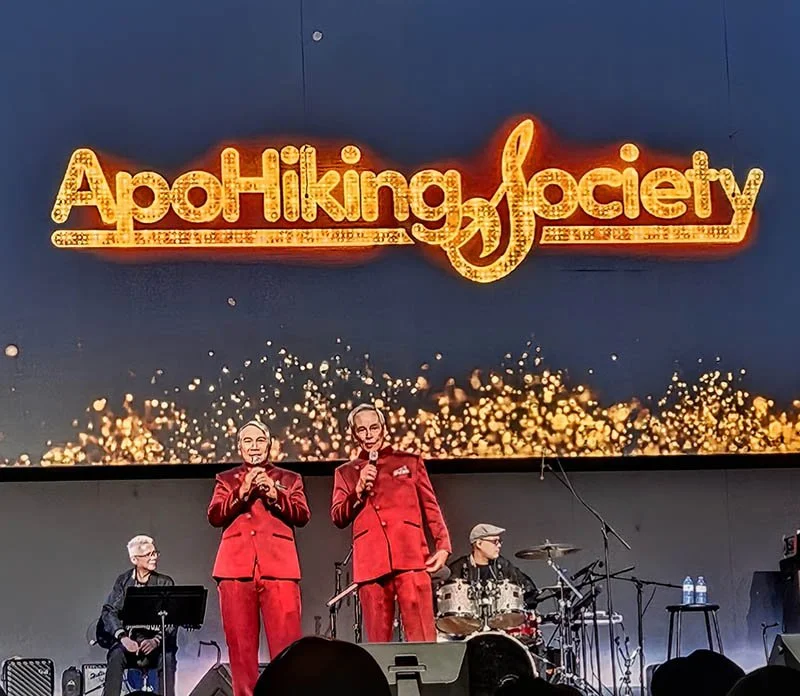
APO Hiking Society performing last Aug. 29 in Markham, Ontario (Photo by Cesar Polvorosa, Jr.)
Demographics
One of the most interesting things about the concert was the demographics. There were many people around my generation who had come to see APO in person. For us, it was almost magical hearing these songs live after so many years.
But there were also younger Filipino Canadians in the audience. They did not necessarily experience APO the way we did. They did not have to wait for a favorite song to appear on the radio or search through record stores for an album. They grew up in an era when music was instantly accessible.
Some were watching the stage through their cellphones, recording the performance and presumably sharing parts of the experience with friends and followers.
My FB friend, APO co-founder Jim Paredes, informed me that APO appeals to a much younger demographic as well. He said in a PM that according to Spotify almost 75 to 80 percent of APO listeners are 40 years and below, while the older generation dominated the concert goers. It is testament to the timeless appeal of APO’s music that younger audiences are attracted to a group whose musical history began decades before they were born.
Both generations were participating in the same cultural moment. That is what makes diasporic capital more interesting than nostalgia. Nostalgia looks backward. Diasporic capital can move backward and forward simultaneously.
It carries the cultural memory of one generation and gives another generation an opportunity to reinterpret it.
Geography of Filipino Music
The presence of Leah Navarro added another dimension to the evening. Navarro is not simply another OPM singer appearing as a special guest. She is part of the musical history that many Filipinos of my generation carried with them overseas. Her career is intertwined with some of the defining music of the Philippines during the period when APO was also becoming a major force in Original Pilipino Music.
Her presence in Toronto also reflected another important feature of diasporic culture: artists themselves become part of the diaspora.
Navarro lived in Toronto for years before returning to the Philippines in the late 1990s. As she declared on the stage, she considered Toronto her “second home” to the cheers of Torontonians, us included.
She was not simply bringing Filipino music to Canada from the Philippines. She was also an artist with her own history of migration and connection to Canada.
Her appearance alongside APO therefore represented something larger than a reunion of Filipino performers. It particularly resonated when she sang her signature songs, Handog ng Pilipino sa Mundo and Isang Mundo, Isang Awit.
A cassette can cross a border. So can a singer. So can a song. So can a memory.
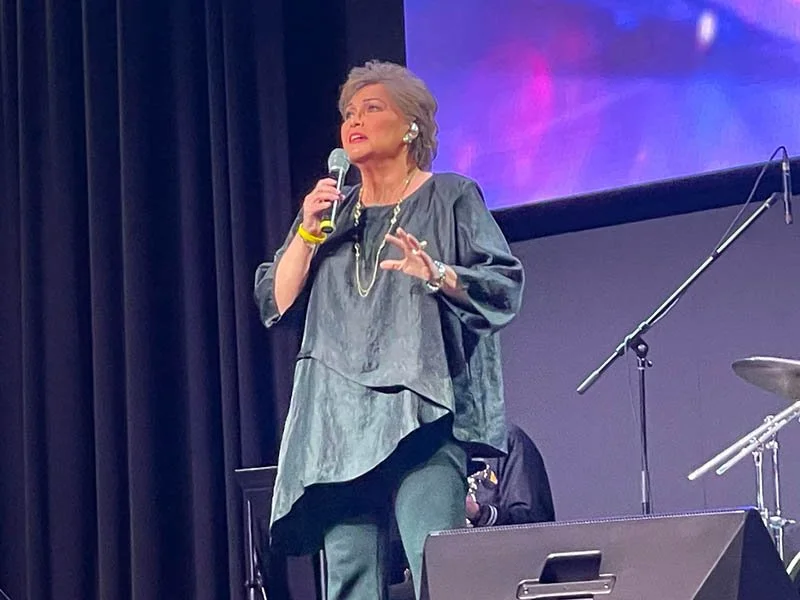
Leah Navarro performing last Aug. 29 in Markham, Ontario (Photo by Agnes Lopez Manasan)
From Filipino Audiences to Other Communities
There is another aspect of diasporic capital that deserves more attention: its ability to introduce Filipino culture to people who are not Filipino.
When I brought my APO cassette to Japan in the 1980s, I was not thinking about cultural diplomacy. But that is effectively what was happening on a very small scale.
My Japanese and other foreign classmates and friends did not have to travel to Manila to encounter Filipino music. They could encounter it through a Filipino graduate student.
This is how diaspora networks often work. Filipinos claim space in different settlement societies and invite other communities to partake. This matters because a country's influence is not determined only by its government, military or corporations.
People carry countries with them. They carry language, food, stories, music, professional expertise, entrepreneurial connections and cultural practices.
Diasporic capital is therefore both cultural and relational. The APO concert showed what happens when some of that capital is mobilized deliberately.
The connections ran in several directions: from one generation to another, from Canada to the Philippines, and potentially from Filipino culture to the wider Canadian community.
Music as Social Infrastructure
Communities accumulate trust, relationships and cultural memory. Those are broadly social capital and specifically, are components of diasporic capital in overseas settings.
That accumulated capacity can be mobilized such as the APO concert. The organizers had to bring together performers, a venue, sponsors and community organizations and attract audiences. People shared the event through their social networks. The festival created opportunities for younger Filipino artists to appear alongside performers whose music has been part of Filipino life for decades.
This is not simply entertainment. It is community-building which has economic consequences. Diasporic capital therefore not only exists in the abstract. It becomes visible when people organize.
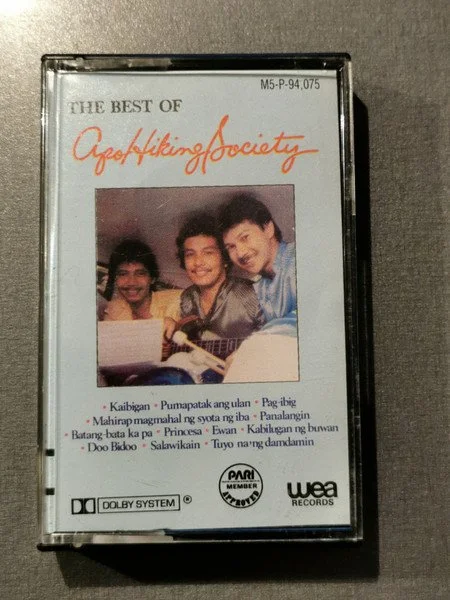
Image of 1982 Best of APO Hiking Society (Cassette). (Source: Discogs.com)
Philippines Carried Abroad
There is also something particularly Filipino about the way music travels through the diaspora. The Philippines has long had a culture of musical participation. Filipinos do not merely listen to songs. We sing them.
We sing at family gatherings, birthdays, parties, reunions and community events. Karaoke has become one of the most recognizable manifestations of this cultural habit, but the impulse goes deeper than karaoke. Music creates participation.
That helps explain why a group like APO can remain meaningful across generations. Their songs provide common reference points. A younger Filipino Canadian may discover an APO song through a parent, an online video, a cover version or a concert. The original context may be unfamiliar, but the song can acquire a new context.
This is how culture survives migration. It does not remain unchanged. It is carried, translated, remixed and sometimes rediscovered.
The cassette I brought to Japan was already doing that. The music acquired new listeners and a different meaning because it was being heard far from Manila.
Forty years later, APO was doing something similar in Markham. Only this time, the transmission was happening on a much larger scale.
Closing the Circle
After the concert, as we were leaving, a chance encounter happened that made the evening feel almost scripted.
I accidentally ran into an old Filipino friend from the same graduate studies program in Japan who also happened to be a fellow UPSCAN (UP Student Catholic Action). We talked about those years, and naturally the conversation turned to the music of our generation.
For a moment, the geography of the past seemed to collapse. I thought about the young man I had been in Japan, carrying an APO greatest-hits cassette from the Philippines.
And then I thought about sitting in a Markham theater decades later with my wife and sister, listening to the same musical tradition surrounded by multi-generation Filipino Canadians.
The circle had closed. But perhaps not, because diasporic capital does not really move in circles.
It moves in networks. It moves from Manila to Tokyo, from Tokyo to Toronto, from parents to children, from artists to audiences and from one community to another. It can begin with something as small as a cassette tape and eventually become a concert, a festival, a fundraising effort or a new generation discovering music that predates them.
That may be APO Hiking Society's most enduring legacy.
Distance turns music into a kind of portable homeland. This is why diaspora communities frequently invest so much in concerts, festivals, food, dance, literature and other forms of cultural expression.
Their music has given Filipinos abroad golden nuggets to remember. But it has also given us a treasure to share. And there is an important difference. Memory preserves the past. Sharing creates the future. It was a reminder that migration does not sever people from where they came from. It gives what they carry with them new places, new audiences and sometimes new purposes.
The music of our generation had traveled a long way—from a cassette in Japan to a concert in Canada. But the more important journey was not the music itself. It was the network of people, memories and relationships that carried it there.
Cesar Polvorosa Jr. is a professor of International Business and Economics at a Canadian university whose research and writing examine development, institutions and Filipino diaspora. He authored a book chapter on Filipino entrepreneurship in Canada published by the University of Toronto Press. He was nominated for the Pushcart Prize in Poetry, and his poetry and short stories had been anthologized in Asia and North America. He is also an occasional contributor on economics, geopolitics, and international affairs to BusinessWorld.