
A Pathbreaker for Ethnic Studies
/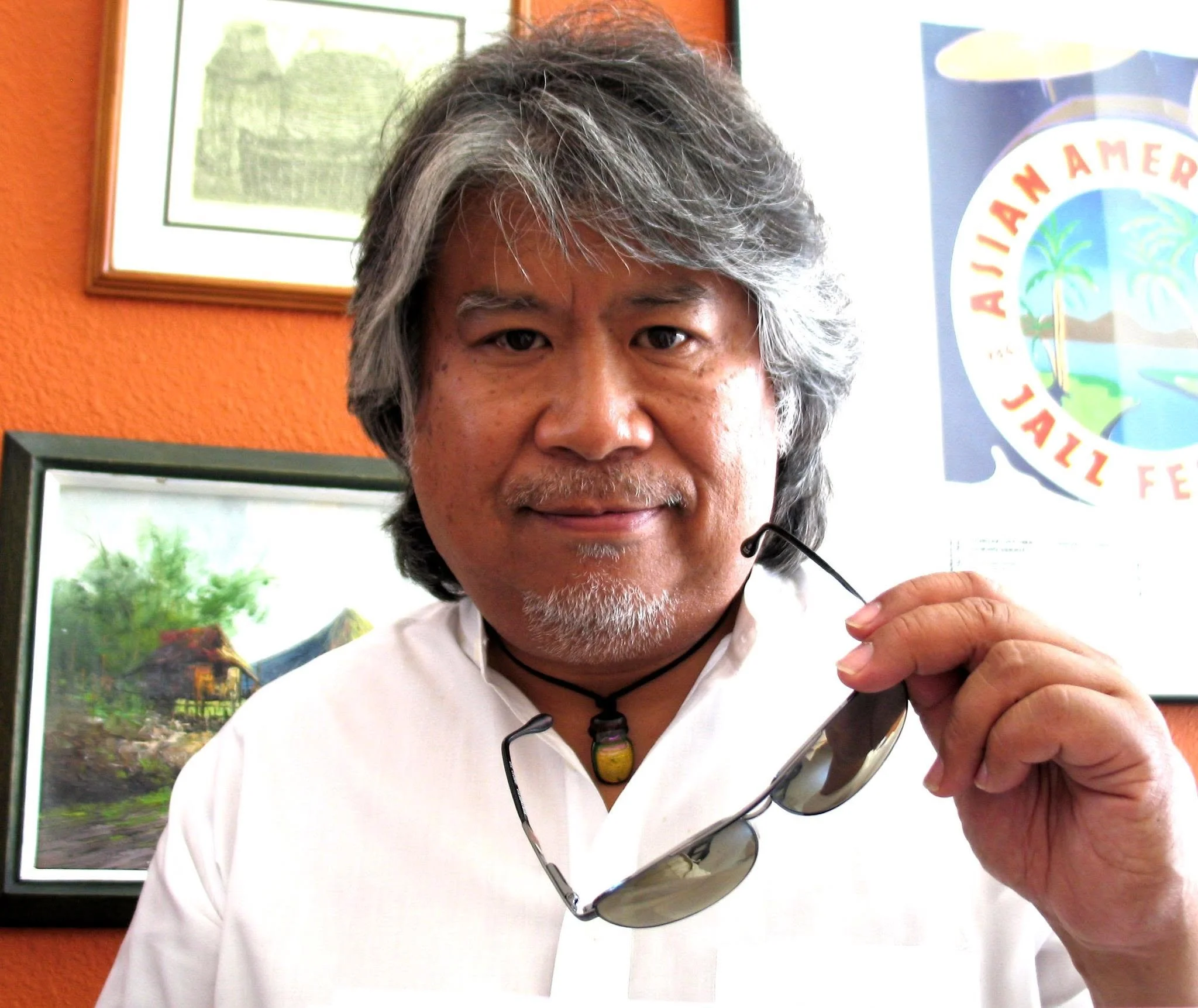
Daniel P. Gonzales (Source: Facebook)
First, he was part of the San Francisco State College movement of 1968–1969, when the Black Student Union and the Third World Liberation Front forced the university to confront the exclusion of Black, Asian American, Latino, and Native American students from admissions, curriculum, faculty hiring, and institutional power.
Second, and just as important, Gonzales was among those who remained after the strike and helped build Asian American Studies into a permanent program of teaching, advising, curriculum development, institutional memory, and community accountability. His contribution was not that of a lone founder. Ethnic Studies at San Francisco State emerged through coalition struggle. Asian American Studies grew from the efforts of students, faculty, community organizers, artists, writers, and neighborhood institutions. Gonzales' importance lies in the bridge he forged among those worlds—student activism, Filipino American organizing, Asian American curriculum, and the long-term institutional survival of the field.
Campus Strike
The 1968–1969 San Francisco State strike grew out of more than campus unrest. It was a response to a university system that treated communities of color as objects of study, if it noticed them at all, rather than as producers of knowledge. San Francisco State's own College of Ethnic Studies history describes the strike as a movement against the "lack of access, misrepresentation, and the overall neglect" of Indigenous peoples and people of color within the university's curriculum and programs. The demands included the creation of departments in American Indian Studies, Asian American Studies, Black Studies, and La Raza Studies within a College of Ethnic Studies. That institutional demand mattered. The students were not asking merely for a course, a lecture series, or symbolic inclusion. They were demanding an academic structure, faculty positions, curricular authority, and a measure of self-determination over how their histories and communities would be taught.
Gonzales entered this history at precisely the point where protest met institution building. A later account in the Golden Gate Xpress reported that he arrived at San Francisco State at the outset of the 1968 student-led strike and remained connected to the university for more than four decades. That detail matters because it places him among the generation that did not regard the strike as a finished event. For many participants, the strike marked a beginning rather than an end. It produced an agreement, but that agreement still had to be translated into classes, departments, governance structures, faculty appointments, advising systems, and community relationships. Gonzales became one of the figures who carried the original demand for relevant education into the ordinary but demanding work of institutional survival.
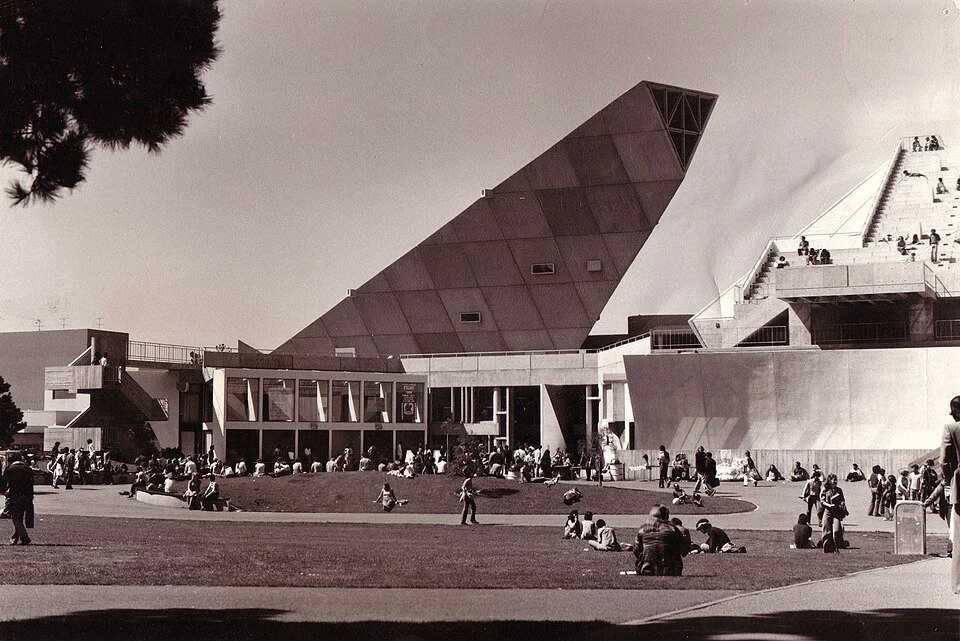
San Francisco State University (Photo by Paffard Keatinge-Clay/Wikimedia Commons)
The Third World Liberation Front created the political framework within which Gonzales' later work became meaningful. The coalition united Asian American, Black, Latino, Native American, and other Third World student organizations around the principle that education had to be tied to self-determination. Asian American Studies did not emerge as an isolated ethnic specialty; it grew out of coalition politics. Malcolm Collier and Daniel Phil Gonzales later wrote that Asian American Studies at San Francisco State was the product of Asian American students, faculty, and community members working together to address "pressing academic and community issues." They emphasized that the founders came from diverse backgrounds and political perspectives but shared a commitment to confronting racial inequity, responding to community needs, and replacing a curriculum that failed to reflect the lives of Asian American families and neighborhoods.
Community-Based Project
That point is essential to understanding Gonzales' role. He did not help build Asian American Studies as a narrow identity program. He helped build it as a community-based intellectual project. At San Francisco State, Asian American Studies addressed immigration, labor, exclusion, family, war, colonialism, media, language, art, and neighborhood survival. Gonzales' later course offerings reflected that breadth. San Francisco State's Asian American Studies faculty biography lists courses he taught in Contemporary Asian Americans, Asian Americans and American Ideals and Institutions, Filipinos in the United States, and Asian Americans and Mass Media. Together, these courses illustrate the scope of the field he helped sustain: contemporary politics, civic ideals, Filipino American history, and representation in mass culture.
His Filipino American role was especially significant. Filipino Americans were central to the formation of Asian American Studies at San Francisco State, yet their place could easily be overshadowed by larger public narratives centered on Chinese American and Japanese American experiences. The Pilipino American Collegiate Endeavor (PACE) became one of the key Filipino American organizations of the strike era. Juanita Tamayo Lott later wrote that PACE was founded in 1968 to tutor and recruit Filipino American youth for college and, in the spring of that year, joined the Black Student Union, the Mexican American Student Confederation, the Latin American Student Organization, Intercollegiate Chinese for Social Action, and the Asian American Political Alliance to form the Third World Liberation Front. In this setting, Filipino American activism was not a side story; it was part of the machinery of coalition.
Gonzales' later work kept that Filipino American presence visible within Asian American Studies. His teaching of Filipina/o American history, advising of PACE, and involvement with Filipino American community institutions made him an important transmitter of the strike generation's lessons to later students. San Francisco State's faculty biography identifies him as PACE's faculty adviser and notes his involvement with the Filipino American National Historical Society, the Manilatown Heritage Foundation, the New America Media Association, and the San Francisco Filipino American Democratic Club. That combination is revealing. Gonzales did not separate the classroom from the community. He understood Asian American Studies as a field that had to remain accountable to neighborhoods, political organizations, ethnic newspapers, artists, elders, youth, and community memory.
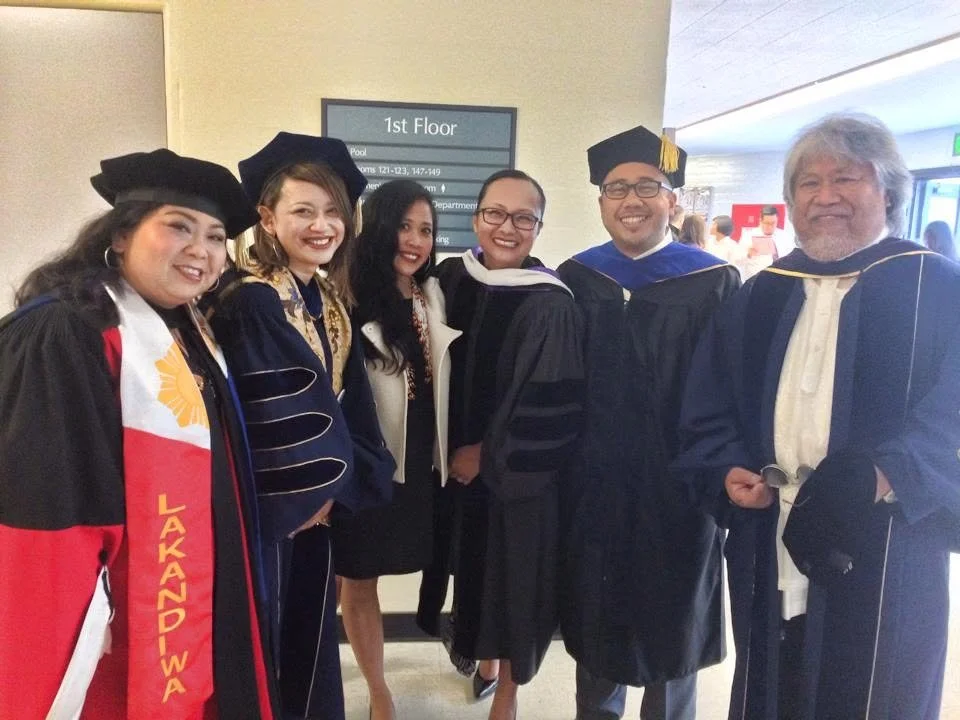
Gonzales (right) with the other Professors of San Francisco State University (L-R) Dawn Buholano Mabalon+, Allyson Tintiangco-Cubales, Irene Faye Duller, Barbara Jane Reyes, Eric Pido. (Source: Facebook)
Ethnic Studies' Survival
This is where Gonzales' role becomes larger than biography. Ethnic Studies survived because people like Gonzales performed the institutional labor that movements often leave unnamed. A strike can force a university to concede, but it cannot by itself create a durable curriculum. Courses must be proposed, justified, staffed, revised, defended, and taught year after year. Students must be advised. Departments must withstand budget pressures, administrative skepticism, ideological attacks, and internal disagreements. Gonzales' career represents that second stage of Ethnic Studies: the long work of building permanence after the dramatic moment of protest had passed. In 2012, he identified establishing Ethnic Studies curricula and helping assemble a collection of stories from founding and later members of Asian American Studies as among his major achievements.
His collaboration with Malcolm Collier is especially important for that reason. Together they wrote about the origins, governance, creation, and survival of Asian American Studies at San Francisco State. Those essays are more than recollections; they form part of the field's documentary infrastructure. In Origins: People, Time, Place, Dreams, Collier and Gonzales warned that the excitement of the strike could obscure the long work that followed. They argued that the strike was only one part of the origins of Asian American Studies and that any new vision succeeds only through later implementation involving "long and arduous effort." That observation captures Gonzales' historical significance. He belonged to the generation that understood self-determination required administration, curriculum development, meetings, teaching loads, and the preservation of institutional memory.
The demand for a School of Ethnic Studies reflected this practical understanding from the outset. According to Collier and Gonzales, the movement's most important demand was the creation of a School of Ethnic Studies for the groups represented in the Third World Liberation Front, with each ethnic organization exercising authority over hiring, retention, administration, and curriculum in its own area of study. The demand flowed directly from the principle of self-determination. It also reflected a sophisticated understanding of university power. Students recognized that without authority over faculty, curriculum, and institutional structure, Ethnic Studies could be reduced to tokenism. Gonzales' later career in Asian American Studies became part of the effort to protect that principle from within the institution.
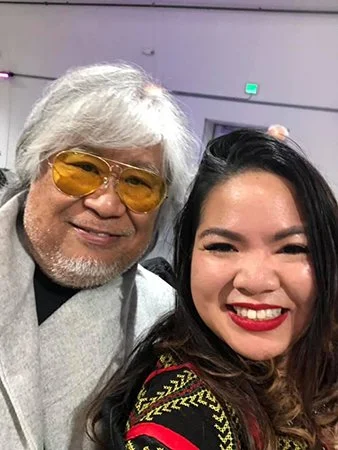
Gonzales with Daly City Mayor Juslyn Manalo (Source: Facebook)
First of Its Kind
The College of Ethnic Studies at San Francisco State became the first of its kind in the United States. The official strike collection states that the strike concluded on March 21, 1969, when representatives of the Third World Liberation Front and the administration reached an agreement. The outcome included the establishment of the College of Ethnic Studies, expanded Educational Opportunity Program admissions, a commitment to hire more faculty of color, and amnesty for many students who had been arrested or suspended. These gains were structural, not merely symbolic gestures toward diversity. They reshaped admissions, hiring, curriculum, and the place of community knowledge within the university.
Gonzales' place in that history was therefore both Asian American and interethnic. He worked within Asian American Studies, but the department existed within the larger College of Ethnic Studies. That mattered because Asian American Studies at San Francisco State was never intended to become a detached ethnic enclave. It was born alongside Black Studies, La Raza Studies, and American Indian Studies. Gonzales inherited that coalition framework. His work in Asian American Studies carried forward the memory of shared struggle among communities of color. This was especially important for Filipino American Studies, which had to account for colonialism, U.S. empire, labor migration, anti-Filipino violence, military service, interracial politics, and the complex position of Filipinos within both Asian America and the broader Third World movement.
The San Francisco State model also shaped the meaning of "Asian American." The term emerged in the late 1960s as a political identity rather than a simple demographic label. It was intended to unite communities often divided by national origin, language, religion, class, and immigration history. At San Francisco State, Asian American Studies developed through that same process of coalition. Chinese American, Japanese American, Filipino American, and other Asian American students and community members did not share identical histories, but they recognized common experiences of exclusion, racialization, war, labor exploitation, and cultural erasure. Gonzales' work helped keep Filipino American history within that broader Asian American framework without sacrificing its distinctiveness.
That balance was one of his major contributions. Filipino American history can be overshadowed when Asian American Studies is organized primarily around Chinese exclusion and Japanese American incarceration. Those subjects are indispensable, but they do not encompass the full scope of Asian American history. Filipino history brings into the field U.S. colonialism in the Philippines, the pensionado generation, manong labor migration, West Coast farm labor, anti-miscegenation laws, taxi dance halls, labor organizing, military service, post-1965 immigration, and transnational family formation. Through his teaching of Filipinos in the United States, Gonzales ensured that the Filipino American experience was not treated as an appendix to Asian American Studies. It belonged at the center of the field's questions about empire, labor, law, masculinity, family, culture, and political belonging.
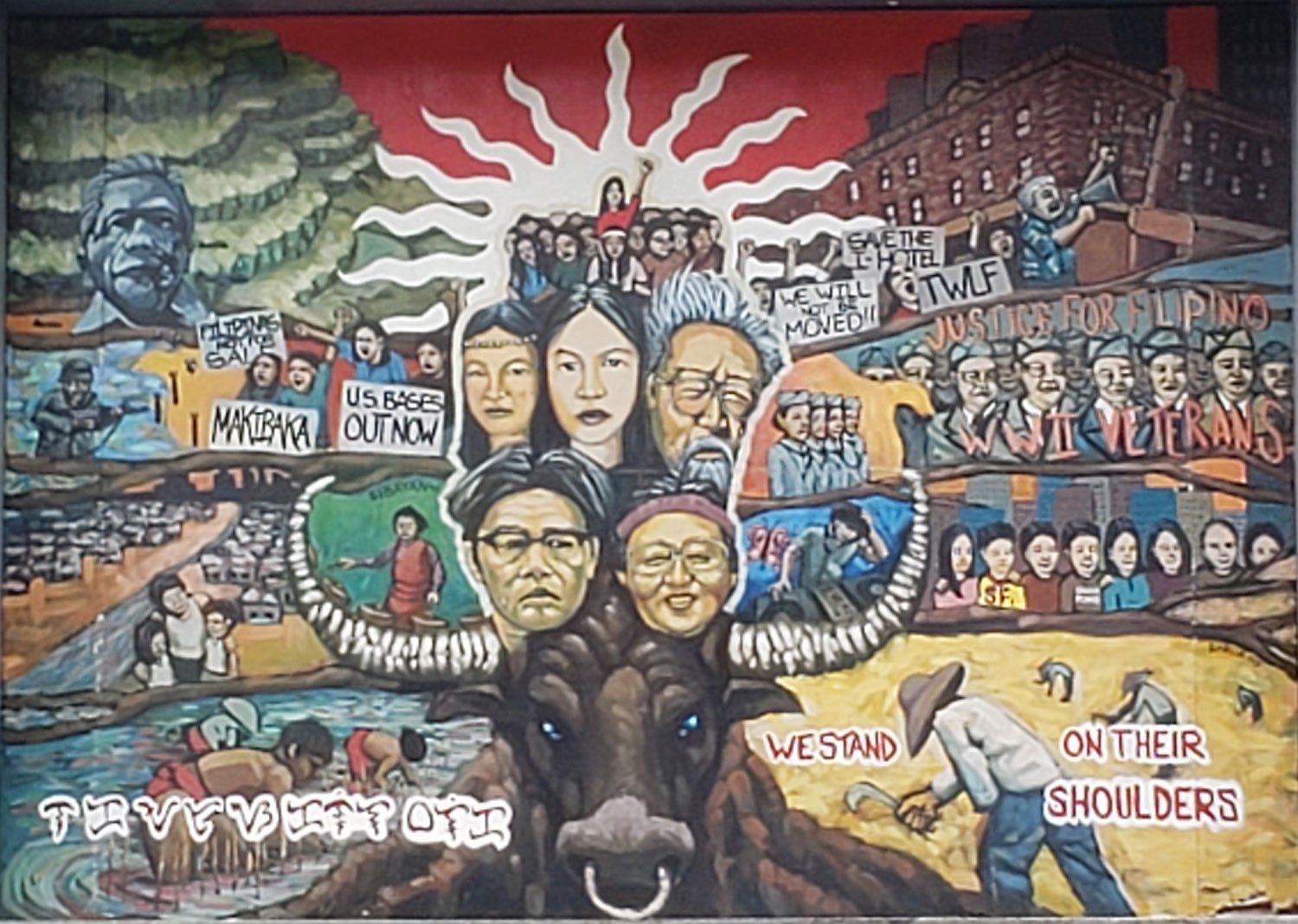
Filipino American Mural at San Francisco State University (Photo by Raymond Virata)
Mentor
Gonzales' role as a mentor was equally important. Ethnic Studies depends on transmission. It is not only a field of books and courses but also one of memory passed from elders to students, activists to researchers, community organizations to classrooms, and one generation of scholars to the next. Juanita Tamayo Lott described Daniel P. Gonzales as someone who taught, mentored, and advocated for hundreds of students over more than four decades, calling him the longest-serving faculty member in the College of Ethnic Studies. That observation points to a form of labor that institutional histories often overlook. Gonzales helped students see themselves in the curriculum and, in turn, helped many become teachers, lawyers, public servants, writers, organizers, and historians.
His mentoring mattered because many students entered Ethnic Studies from families and communities that had been told, directly or indirectly, that their histories were not legitimate subjects of academic inquiry. Asian American students often arrived with fragmented knowledge: family stories, immigrant silences, wartime memories, labor histories, neighborhood lore, and cultural practices absent from textbooks. Gonzales showed them that these fragments constituted historical evidence. A family's migration, the destruction of a neighborhood, a farmworker's testimony, a Filipino veteran's claim, or a community newspaper could all become sources for historical interpretation. This was one of the deepest purposes of Asian American Studies: to transform community memory into disciplined scholarship without stripping it of its moral force.
The artistic and cultural dimensions of Asian American Studies also shaped Gonzales' work. In a later conversation with Jerome Reyes and Mary Valledor, he discussed the importance of artists, teachers, and neighborhood institutions in the formation of Asian American Studies. The discussion linked proposed Asian American Studies courses to artistic practice, neighborhood arts programs, and the broader cultural world of the Bay Area. That connection is significant because Asian American Studies at San Francisco State was never solely a social science project. It also grew out of poetry, theater, murals, photography, music, newspapers, and community arts. Gonzales understood that artists did more than illustrate Asian American experience; they helped create its language, imagery, and political imagination.
That cultural emphasis also explains why Gonzales viewed Asian American Studies as lived experience. According to the Golden Gate Xpress, he observed that poets and writers were among the most influential figures in shaping Asian American Studies because they had lived the experiences they described. The remark reveals an important feature of his intellectual outlook. Gonzales did not regard academic knowledge as superior to community expression. He understood that Asian American Studies drew its authority from people who had experienced exclusion, migration, labor, neighborhood struggle, and cultural creation. The professor's role was not to replace the community's voice but to organize, interpret, and defend the conditions under which that voice could be heard within the university.
Legal Training
His legal training also gave him a distinctive intellectual perspective. San Francisco State lists him as holding a J.D. from Hastings College of the Law and a B.A. in International Relations from San Francisco State College, with a focus on theories of revolution and war. That combination helps explain his sensitivity to power, institutions, governance, and political conflict. Asian American Studies had to examine law because Asian American history in the United States was shaped by it: exclusion acts, alien land laws, naturalization restrictions, anti-miscegenation statutes, wartime incarceration, immigration quotas, deportation, labor regulation, and civil rights struggles. Gonzales' background made him especially well suited to teach Asian American Studies not simply as cultural celebration but as the study of institutions, state power, law, and resistance.[15]
Gonzales' role in creating Ethnic Studies should therefore be described carefully. He was not its sole creator. No one was. The field emerged from collective struggle, especially through the Black Student Union and the Third World Liberation Front, with support from students, faculty, staff, and community members. Gonzales, however, was among those who made that creation durable. He helped transform the demand for Ethnic Studies into curriculum, departments, advising, faculty leadership, community engagement, and a body of historical reflection. His work belongs to the institutionalization phase of the movement—the phase that determined whether the strike would become a permanent academic structure or fade into commemorative memory.
His contribution to Asian American Studies was even more direct. He taught in the department, advised students, sustained Filipino American Studies within the broader Asian American Studies framework, coauthored histories of the program, participated in governance, and preserved the field's origin story. His career demonstrates that Asian American Studies was built not only by celebrated theorists or highly visible public intellectuals but also by faculty who taught survey courses, advised majors and minors, defended curriculum, worked with student organizations, wrote program histories, and maintained community ties. Gonzales' career reminds us that the survival of a field depends as much on institutional builders as on founding manifestos.
Ethnic Studies and Politics
Gonzales' significance also lies in his refusal to separate Ethnic Studies from politics. In a 2018 Asian American Legal Defense and Education Fund article and podcast page, Emil Guillermo described Gonzales as one of the students in the Black, Latino, and Asian coalition at San Francisco State and noted that he later became a tenured professor of Asian American Studies. The same account reported that Gonzales urged scholars to remain engaged with contemporary politics. That insistence was consistent with the founding logic of Ethnic Studies. The field was never intended to be neutral in the sense of being detached from power. It was meant to be rigorous, accountable, community-based, and politically engaged.
Ethnic Studies survived because people like Gonzales performed the institutional labor that movements often leave unnamed.
That position remains important because Ethnic Studies has often been misunderstood as grievance, separatism, or identity politics. Gonzales' career offers a more accurate interpretation. Ethnic Studies arose as a response to institutional absence. It asked why universities could teach Western civilization but not colonialism, immigration exclusion, Indigenous dispossession, the Black freedom struggle, Asian American labor, Latino community formation, or Filipino American history. It asked why students of color encountered themselves only in footnotes. Gonzales helped answer those questions not by abandoning the university but by expanding what the university could teach and contain.
His work also illuminates the difference between founding and sustaining. Founding Ethnic Studies required confrontation. Sustaining it required patience, governance, memory, and pedagogy. The first demanded courage in the streets and on the picket line; the second demanded endurance in offices, classrooms, committees, archives, and community meetings. Gonzales' historical role lies at the intersection of both. He emerged from the strike generation, but his larger legacy rests in the decades that followed. He helped build the institutional machinery that enabled Asian American Studies to sustain itself across generations.
In the end, Daniel P. Gonzales' role in creating Ethnic Studies and Asian American Studies was that of activist, teacher, curriculum builder, mentor, institutional memory keeper, and Filipino American community advocate. He helped make Asian American Studies practical. He gave it courses, students, stories, and continuity. He kept Filipino American history visible within Asian American Studies while preserving the coalition origins of the College of Ethnic Studies. His significance is not that he stood above the movement but that he remained within it long enough to help turn it into an institution. The strike opened the door. Gonzales was one of those who stayed to build the rooms.
Alex S. Fabros, Jr. is a retired Philippine American Military History professor.
More articles from Alex Fabros, Jr.
