
The Good, the Bad, and the Ugly: A Guide to US-Philippine Relations Across Decades
/Historians have often described the U.S.-Philippine relationship as a "compulsory marriage" or, as others have put it, a persistent "love-hate" relationship. Officially called "Special Relations," this bond was frequently marked by conflict, unequal power, and a lack of genuine reciprocity. The U.S. occupation of the Philippines from 1900 to 1946 represented America's first major attempt to export democracy, specifically its electoral system. By that measure, the experiment succeeded. Although the Philippine experience was unique, it has since served as a reference point for later U.S. regime-change strategies.
For more than 125 years, this relationship has formed a complex tapestry woven from profound cultural admiration, dashed hopes, strategic partnerships, fervent nationalism, and the enduring socio-cultural and psychological scars of colonialism. These forces affected Filipinos differently depending on class, gender, and participation in social and political movements, both in the Philippines and throughout the diaspora.
Broadly speaking, decades of American domination—physical, economic, and psychological—deepened the widening divide between the haves and the have-nots inherited from the late 19th century. That inequality found expression in a series of uprisings, including the messianic Kolorum movements and the worker-based Sakdal movement. Together, they reflected the unequal economic relationship with the United States that many scholars describe as neocolonialism: a post-independence condition in which a former colony continues to serve as a source of extractive economic, social, and cultural resources. The legacy of that relationship remains visible well into the 21st century, in policies such as labor exportation, tax-free techno-economic processing zones for foreign corporations, and continuing military dependence on the United States.
The following are ten significant events in our shared history, easily found in any reputable political science textbook. They are government to government situations that spell cooperation and conflict; often tinged with ambiguity and tension, that nevertheless, spill into personal lives. As in most Filipino relationships, a “love-hate” relationship is not strictly binary, but more fluid, amoebic, and sometimes it fuses into something else; at other times, it breaks yet is never irreconcilable.
1. The June 12, 1898 Independence Declaration and the Mock Battle of Manila (1898)
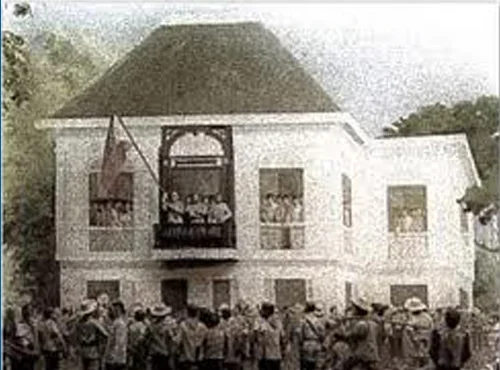
Declaration of Philippine Independence and flag raising ceremony at the Aguinaldo mansion, June 12, 1898.
The Good: In 1896, Andres Bonifacio and his Katipuneros revolted against Spain. Following a fierce and deadly power struggle for leadership of the revolution, Aguinaldo consolidated his authority and won a series of battles, prompting the Spanish to seek a ceasefire. Aguinaldo and his military junta negotiated a truce with the Spanish, securing an indemnity payment and self-exile in Hong Kong. There, Dewey's emissaries recruited him to return to the Philippines and resume the fight against Spain.
Back in Kawit, Cavite Province, Aguinaldo established a revolutionary government and proclaimed Philippine independence from Spain on June 12, 1898. Trusting in America's anti-colonial past, Aguinaldo believed—though without explicit written confirmation from Dewey—that the United States would recognize Philippine independence. He initially viewed the Americans as liberators who would help the Filipinos defeat their Spanish colonial rulers.
The Bad: Although Dewey dispatched observers to witness the Declaration of Independence, they were not present in any official capacity. The United States never formally recognized Philippine independence. Instead, it referred to the Philippine Revolution as an "insurrection" in official documents and portrayed Aguinaldo as an easily misled figure. It was not until the 1990s that the Library of Congress officially recognized the conflict as the Philippine-American War. Ultimately, after forty-five years of American rule, the United States did grant independence to the Filipino people.
While Aguinaldo kept the Spanish confined within Intramuros, Dewey annihilated the Spanish Pacific fleet. Lacking ground troops, Dewey relied on Aguinaldo's forces to pin down the Spanish while awaiting reinforcements. General Merritt's troops arrived in August. Rather than surrender to Aguinaldo, the Spanish secretly struck a deal with the United States. To preserve Spanish "honor," they staged a mock battle inside Intramuros before surrendering the city to American forces. This maneuver completely excluded the Filipino revolutionaries, who had surrounded the city and cut off its food and water supplies.
In the months that followed, Spain, through the Treaty of Paris (December 10, 1898), ceded all of its remaining overseas territories to the United States, except Cuba. The United States paid Spain $20 million for the Philippines.
2. The Philippine-American War (1899–1902, 1913); the Thomasites (1901); the St. Louis World's Fair (1904–07)
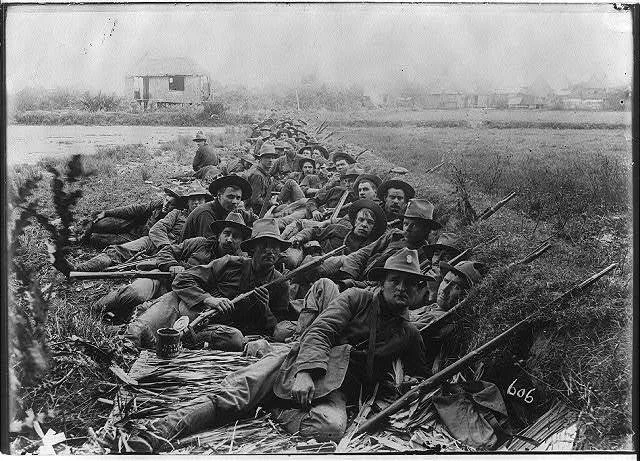
American troops resting in a trench (Source: Wikipedia)
The Bad: What Filipinos viewed as a war for independence, the U.S. officially termed an "insurrection." Official statements sought to win over the native population by referring to them as "little brown brothers," a stark contrast to the Spanish, who used the derogatory term Indio. However, the American popular press portrayed the conflict in deeply racist terms.
The Philippine-American War ended without redistributing the vast church-owned haciendas and extensive estates held by the local elite, despite U.S. condemnation of the injustices of the cacique system, which resembled feudalism. A homesteading program in Mindoro, Palawan, and Mindanao, intended to alleviate agrarian problems in Luzon, instead resulted in settler colonialism. This later proved detrimental to the ancestral land rights of the indigenous peoples in these regions. The U.S. relied on the support of the local elite to facilitate colonial assimilation and cultivate a landowning, educated middle class.
Colonial policies established "protected territories" for indigenous populations in the northern and southern provinces, thereby creating a "Christian" versus "Non-Christian" divide that led to the arbitrary marginalization of indigenous communities. Public school curricula further entrenched discriminatory attitudes by portraying indigenous peoples as backward and uneducated.
The Ugly: Two brutal years of intense fighting resulted in the deaths of more than 4,200 American soldiers and hundreds of thousands of Filipinos, most from disease and famine. In Batangas, reconcentration camps (later echoed in Vietnam through "hamleting") were used to cut off guerrilla support, while scorched-earth tactics were employed in Balangiga, Samar. Resistance persisted until 1913. At Mt. Bud Bagsak in Jolo (1913), American soldiers clashed with Muslim fighters in one of the first encounters of its kind, ending in a massacre that included women and children. This battle also marked the end of the last significant resistance to American occupation.
The U.S.-Philippine War pitted Americans directly against Filipinos. Initially, published correspondence, films, and magazine articles celebrated the Filipino struggle against Spanish rule, but this soon gave way to overt racism. To legitimize a more palatable form of colonialism (despite opposition from figures like Mark Twain), the U.S. framed its colonial project as a mission to "civilize" the Filipinos. To reinforce this narrative, hundreds of Filipinos from several ethnolinguistic communities were brought to the St. Louis World's Fair and presented as a living diorama illustrating their supposed evolution from primitive to civilized. The exhibit featured dog-eating headhunters from the Mountain Province, Muslim Moro groups in elaborate attire carrying bladed weapons, local women portrayed as schoolteachers, and a marching band of native constabulary soldiers. Approximately 20 million Americans attended the fair, and for many, it was their first introduction to Filipinos. After the fair's eight-month run, American promoters continued exhibiting people from the Mountain Province in a manner akin to a human zoo. The prejudices and stereotypes fostered during this period occasionally resurfaced in popular media until the late 1970s.
The Good: Even as fighting raged, the U.S. began implementing its policy of "benevolent assimilation" by sending hundreds of American teachers—the "Thomasites"—throughout the archipelago to establish a free public school system, heretofore a bold experiment in colonialism. Filipino students learned English through primers featuring Abraham Lincoln and George Washington, along with unfamiliar objects such as apples, oranges, and snow. Although initially resisted by the Spanish-educated local elite, the public embraced the novelty of the new educational system. Teaching promoted democratic ideals of equality and opportunity, in contrast to the former religious authoritarianism. Schoolchildren pledged allegiance to the U.S. flag and enthusiastically sang the Star-Spangled Banner in their own words: "Oh Jose, can you see..."
My grandfather, who became an intern to an American schoolteacher, learned his three R's well and eventually became a provincial school superintendent. The public school system laid the foundation for the deep cultural affinity Filipinos still have for the English language and American culture today. Within sixteen years of the occupation, Filipino poetry in English was being recognized and published in American journals, most notably the works of Jose Garcia Villa.
To cultivate a core group of dedicated scholars and professionals, promising students, known as "Pensionados," were selected from the local elite and sent to study at U.S. universities. This initiative significantly expanded educational opportunities, particularly for women, enabling them to pursue professional degrees. Remarkable women such as Honoria Acosta-Sison, who became the Philippines' first Western-trained female physician, studied in the United States, returned home, and profoundly influenced Philippine medicine and education. The successful Pensionados, both men and women, became visible symbols of assimilation. With this experiment, the Americans had indeed found the key to "soft power."
3. The Commonwealth Era (1935–1942); Occupation by Imperial Japan (1942–1945); Bataan
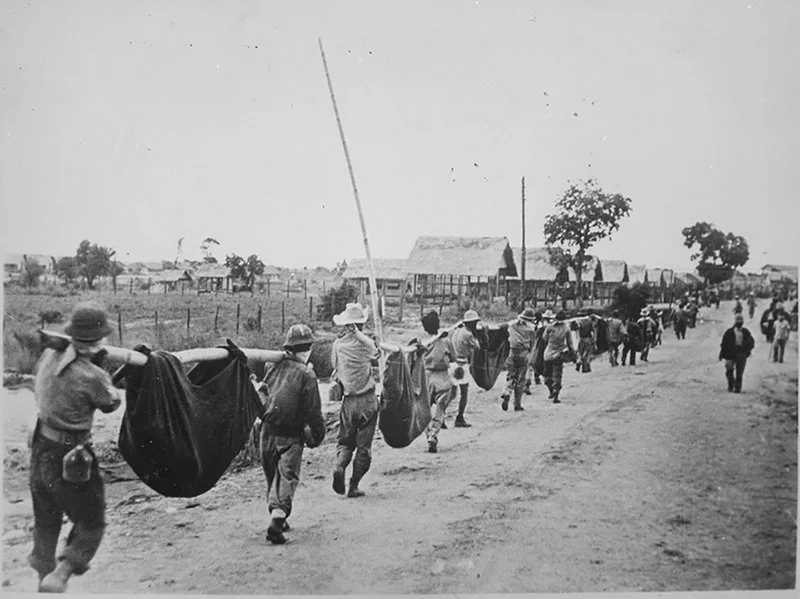
Bataan Death March (Source: National Archives)
The Good: Driven by advocacy from Filipino nationalists and American labor unions, the U.S. enacted the Tydings-McDuffie Act in 1934, leading to the establishment of the Philippine Commonwealth in 1935. The legislation stipulated full Philippine independence following a 10-year transitional period, during which the nation would operate as a Commonwealth. American investment flowed into the Philippines, primarily targeting extractive industries such as gold mining (Benguet), rubber production (Mindanao), coconut oil processing (Southern Tagalog), abaca fiber cultivation (Bicol), and sugarcane farming (Central Luzon). This influx of capital primarily benefited local landowners, who subsequently enhanced their social and political influence, leading to the emergence of sugar magnates and a prosperous professional class. This era of relative economic well-being led many long-time residents to fondly recall it as "peacetime."
The Bad: While women saw greater enrollment in the professions, adopted flapper dresses over traditional attire, favored swing dancing over the fandango, and showed more interest in Hollywood films than zarzuelas, they were still denied equal voting rights. The U.S. Congress established a Philippine Assembly, but despite advocacy from women's groups, only men literate in English could vote. The 1935 Commonwealth Constitution included a provision for women's suffrage, but it required ratification through a women's plebiscite in 1937. (For context, the U.S. itself did not guarantee comprehensive voting rights for all races until the Voting Rights Act of 1965.)
When World War II broke out, American and Filipino soldiers fought fiercely side by side in Bataan and Corregidor against the Imperial Japanese Army, forging a legendary "brotherhood in arms" cemented by the blood and sacrifice of Filipinos during the Bataan Death March, in which approximately 65,000 Filipino and 12,000 American prisoners of war were forced to march more than 61 miles to prison camps.
Women also played vital roles in the resistance. American-born Yay Panlilio-Marking organized a guerrilla spy ring while posing as a "Tokyo Rose" radio broadcaster. Josefa Llanes Escoda, founder of the Girl Scouts of the Philippines and a leading suffragist, provided aid to both American and Filipino prisoners of war. She is believed to have been executed by the Japanese in 1945.
Many Filipinos felt that the U.S. had prioritized the European theater over the Pacific, leaving American and Filipino forces in the Philippines inadequately supplied and defended, making them vulnerable to the swift and devastating Japanese invasion that culminated in the fall of Bataan and the infamous Bataan Death March.
4. WWII Reparations; the Rescinded Veterans Benefits (1946); Parity Rights; Comfort Women
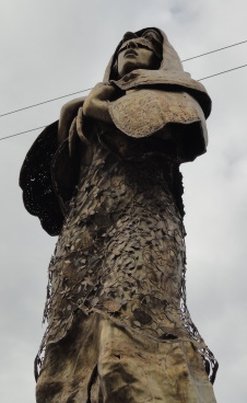
The Manila Comfort Women Memorial Statue (Source: Wikipedia)
The Good:
The U.S. provided hundreds of millions of dollars in badly needed rehabilitation funds to rebuild war-torn Manila, the second most devastated Allied city after Warsaw.
More than 250,000 Filipino soldiers answered President Roosevelt's call to fight under the U.S. flag during World War II, fully expecting the equal treatment and veterans' benefits that had been promised to them.
The Bad:
Shortly after granting the Philippines independence in 1946, the U.S. Congress enacted the Rescission Act. This legislation retroactively stripped Filipino veterans of their recognized service status, denying them the full GI Bill benefits and pensions extended to their American counterparts. This profound injustice fueled more than six decades of activism before it was partially rectified. For many veterans, however, justice came too late, as they had already succumbed to illness and old age.
The clamor from women's rights groups demanding reparations for the Japanese Imperial Army's use of "comfort women" (sex slaves) in occupied countries—including Korea, China, and the Philippines—was ignored when the U.S. set aside the issue of reparations under the 1951 San Francisco Treaty with Japan. Women's groups continue to demand reparations and an official acknowledgment of responsibility from the Japanese government.
The Ugly: The Bell Trade Act and Development Aid with Strings Attached.
The aid came with a massive catch for a country devastated by war. Manila, after all, ranked only behind Warsaw as the most heavily destroyed Allied capital. The Bell Trade Act required the newly independent Philippines to amend its Constitution to grant American citizens "parity rights"—equal access to exploit the country's natural resources and operate public utilities. To many Filipinos, this created the perception that Philippine independence was conditional and economically subordinate to the United States. The agreement also included a provision granting the U.S. 99-year leases on the military bases at Subic and Clark.
While parity rights gave American businesses favorable access to the Philippine economy (at a time when few Filipinos possessed the capital to establish businesses in the United States), the extraterritorial privileges enjoyed within the U.S. military bases at Subic and Clark made a mockery of Philippine sovereignty. U.S. servicemen who committed crimes in the Philippines could not be tried in Philippine courts, held in Philippine jails, or extradited to face justice in the United States. For decades, the continued presence of the U.S. military bases remained a flashpoint in Philippine-American relations.
Much of the postwar assistance came in the form of war-surplus materiel, including the jeep—which evolved into the iconic Philippine jeepney—and decommissioned naval vessels used to rebuild inter-island shipping. Direct U.S. aid has been estimated at about $5 billion. Japan, by comparison, ultimately received roughly $300 billion in aid and economic assistance. The former enemy received substantially greater support as part of Washington's Cold War strategy to rebuild Japan as a stable ally and counterweight to Communist China.
5. Supporting the Marcos Dictatorship (1972–1986)
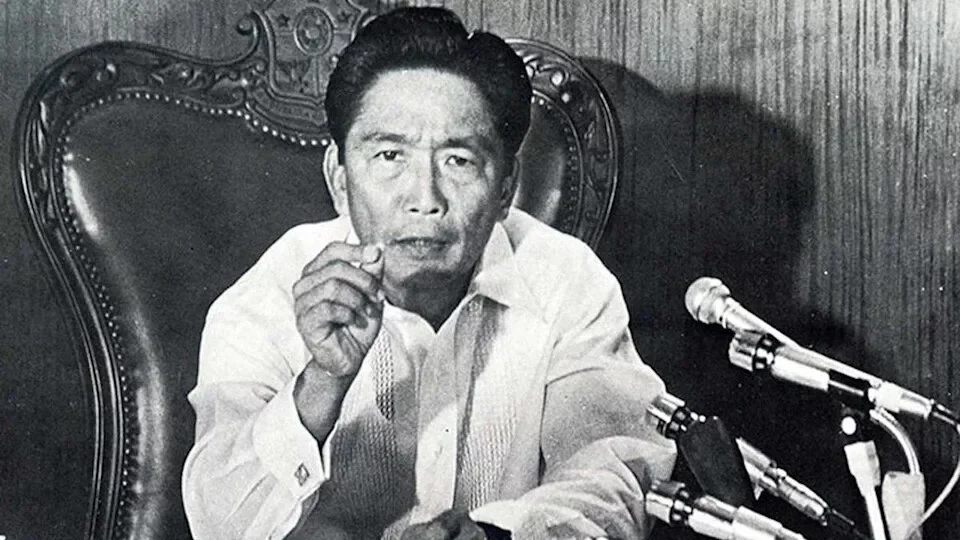
President Ferdinand Marcos, Sr. (Source: Wikipedia)
The Good: For more than a decade, Washington provided billions of dollars in military and economic assistance to the administration of President Ferdinand E. Marcos Sr. During the martial law era, U.S. Vice President George H.W. Bush famously praised Marcos for his "adherence to democratic principles," reflecting Washington's continued support despite growing concerns about authoritarian rule. U.S. military bases at Clark Air Base and Subic Bay Naval Base also served as major Rest and Recreation (R&R) hubs during the Vietnam War, injecting millions of dollars into the local economy. This relationship helped project an image of prosperity and international importance for the Philippines during much of the period.
The Bad: For years, the United States largely overlooked widespread human rights abuses, political repression, and the deterioration of democratic institutions under Marcos. As the Philippine economy became increasingly burdened by foreign debt, corruption, and crony capitalism, living standards declined for many Filipinos. Driven by Cold War strategic priorities, Washington continued supporting the dictatorship to safeguard its military bases and regional security interests. (The U.S. eventually shifted its position, facilitating Marcos and his family's departure into exile in Hawaii during the 1986 People Power Revolution.)
The Ugly: The era also entrenched the exploitation of many Filipinas around the U.S. bases. Cities such as Olongapo and Angeles developed extensive entertainment and red-light districts that catered to American servicemen. Tens of thousands of women worked in bars and clubs, often under exploitative conditions fueled by poverty and unequal power relationships. The military presence contributed to a system in which the bodies of Filipina women were commodified for the entertainment industry surrounding the bases. The period also left behind hundreds—and likely thousands—of Amerasian children, many of whom were abandoned by their American fathers and received little or no financial support or legal recognition.
6. The Eviction of U.S. Military Bases (1991)
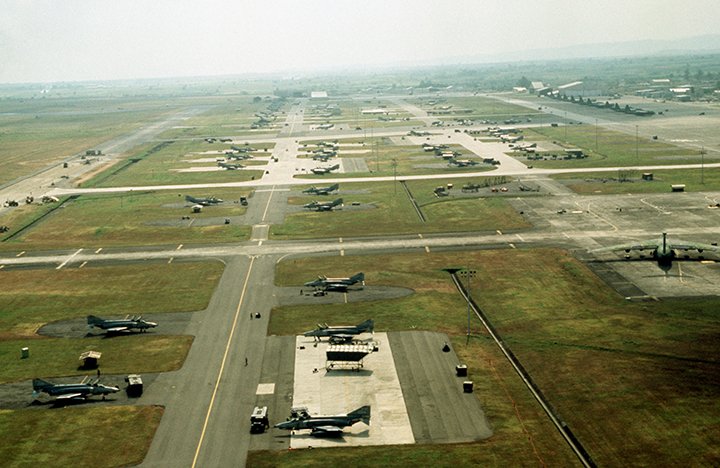
Clark Air Base (Source: Wikipedia)
The Good: Driven by a wave of post-martial law nationalism, especially among militant women's groups, the Philippine Senate voted narrowly in 1991 to reject the extension of the U.S. military bases agreement, effectively evicting the United States from massive installations such as Subic Bay and Clark Air Base. Until their closure, the bases were effectively sovereign territories where Philippine law had no jurisdiction.
The government developed the former bases—whose infrastructure remained largely intact—into an economic hub for Central Luzon. The conversion of these facilities was largely responsible for the continued growth of Olongapo City. Today, the former base properties comprise the Subic Bay Freeport Zone, which includes an international airport, a major shipping port, a high-end residential community, and export processing zones.
Despite the diplomatic breakup, the two nations signed the Visiting Forces Agreement (VFA) in 1998, recognizing that they still needed each other to counter regional security threats, particularly from China in the Western Pacific, and to respond to natural disasters.
The Bad: The closure of Subic Naval Base and Clark Air Base caused a sharp drop in local revenues and the loss of thousands of jobs tied directly or indirectly to the bases. As the region's main economic engine disappeared, businesses that provided food, construction, manufacturing, and other services went into decline. The eruption of Mt. Pinatubo in the nearby province compounded the area's economic woes, adding another layer of devastation.
The Ugly: Countless children were born during the nearly 50 years of interaction between U.S. servicemen and local women, as well as during troop transits to and from Vietnam and South Korea. The withdrawal of the bases often meant the immediate loss of financial support from American fathers, leaving many families without assistance for basic needs such as housing, food, medical care, and education.
In Olongapo City alone, an estimated 8,600 Amerasian children were left behind. In 1992, the year the bases closed, mothers of these American children filed a class-action lawsuit through the San Francisco law firm Cotchett, Illston & Pitre, seeking parental support. There were also calls for U.S. recognition of the children's claims to American citizenship.
7. The Visiting Forces Agreement & Sovereignty Clashes (2005 & 2014)
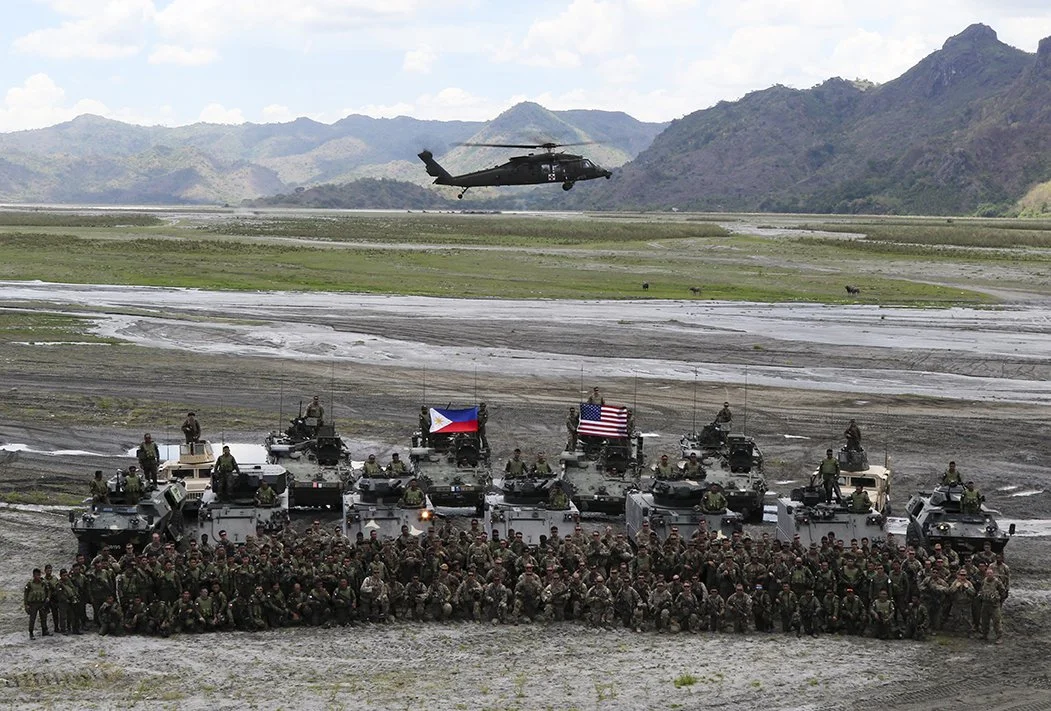
U.S. and Philippine Armed Forces during the Balikatan Exercises (Source: Wikipedia)
The Good: Under President Benigno Aquino III, the U.S. and Philippine militaries continued to hold massive annual Balikatan ("Shoulder-to-Shoulder") exercises, improving the Philippines' defense capabilities. Under the legal framework of the Visiting Forces Agreement (VFA), the security pact allowed U.S. troops to rotate into the Philippines for large-scale joint military exercises. For the Philippine military bureaucracy, traditionally reliant on U.S. training, logistics, and hardware, the VFA was a critical lifeline.
The Bad: During the presidencies of Gloria Macapagal Arroyo and Benigno Aquino III, high-profile criminal cases involving U.S. servicemen—specifically the 2005 Subic rape case ("Subic Boys") and the 2014 killing of trans woman Jennifer Laude by a U.S. Marine—ignited furious protests over sovereignty, as the U.S. invoked the VFA to retain custody of the accused servicemen rather than turning them over to Philippine jails.
The Ugly: The impact of the 2005 Subic rape case went far beyond the crime itself. The question of sovereign rights—specifically, which government should have custody over accused criminal offenders—became a lightning rod for nationalists, reviving a debate that had simmered since the 1991 closure of the U.S. bases and continued across several presidencies, even drawing in Supreme Court justices nearing retirement. The accused U.S. Marine was tried and convicted by a Philippine court but was remanded to the custody of the U.S. Embassy rather than a local prison. He was later acquitted in 2009. In reviewing the VFA, the Supreme Court ruled that the diplomatic arrangements governing his custody were invalid. The ensuing tug-of-war over jurisdiction and sovereignty once again raised the specter of the return of U.S. military bases. Worse, there was widespread speculation that the controversy could affect President Gloria Macapagal Arroyo's pending meeting with President George W. Bush, where military aid was expected to be a key agenda item.
8. Rodrigo Duterte Era's Anti-Western Posture
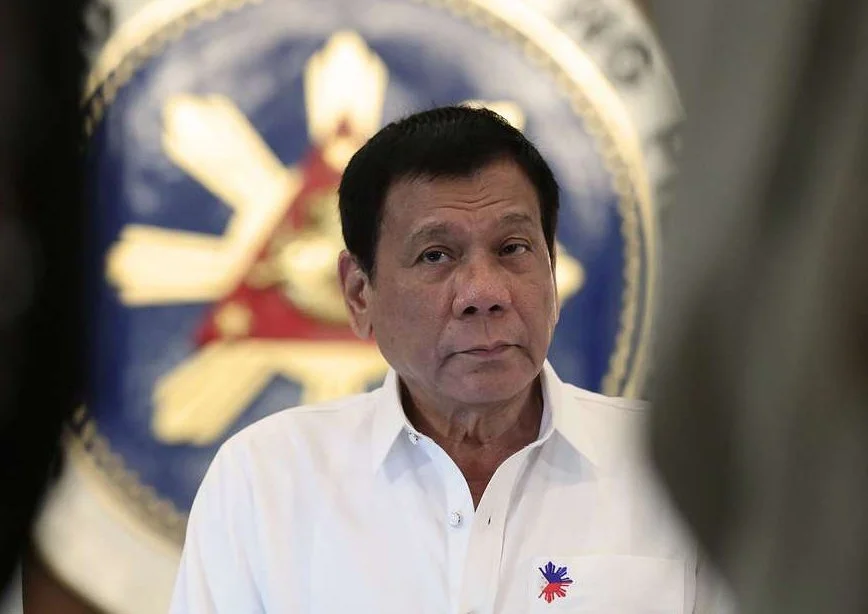
President Rodrigo Duterte (Source: Picryl)
The Good: Nationalists supported Duterte's anti-Western rhetoric, which marked a departure from the pro-American stance of previous presidents. His use of the Filipino language in official speeches was another notable departure and won admiration from many ordinary Filipinos. Duterte's relations with the United States (2016–2022) were inconsistent. He positioned himself as anti-Western and attempted to realign the Philippines with China and Russia while fiercely criticizing America's colonial past in the Philippines.
The Bad: Duterte routinely insulted President Barack Obama and weaponized the Visiting Forces Agreement (VFA), repeatedly threatening to scrap it in an effort to secure more advanced military hardware, greater allocations of COVID-19 vaccines, and a more equitable partnership with the United States. Meanwhile, the U.S. government, citing human rights concerns over Duterte's drug war, suspended certain arms sales to the Philippine National Police. Beneath Duterte's anti-U.S. rhetoric, however, institutional ties between the two countries remained strong, supported by a Philippine public that continued to be overwhelmingly pro-American. China's continuing assertion of its claims over Philippine maritime territories in the Western Pacific also undermined Duterte's strategic pivot toward Beijing.
The Ugly: Crimes—alleged and otherwise—committed by U.S. servicemen repeatedly tested the limits of the VFA. In 2015, in a case involving the killing of transgender woman Jennifer Laude, U.S. Marine Joseph Scott Pemberton was convicted of homicide and imprisoned at Camp Aguinaldo. Duterte later granted Pemberton an absolute pardon, reportedly to avoid jeopardizing the Balikatan military exercises, which the United States had threatened to cancel, and to gain leverage in securing access to Western COVID-19 vaccines. Anti-VFA groups condemned what they viewed as the "special treatment" accorded to U.S. troops and cited the case as further evidence of the Philippine government's continued acceptance of unequal, neocolonial arrangements with the United States.
9. The Modern Geopolitical Pivot (2022–Present)
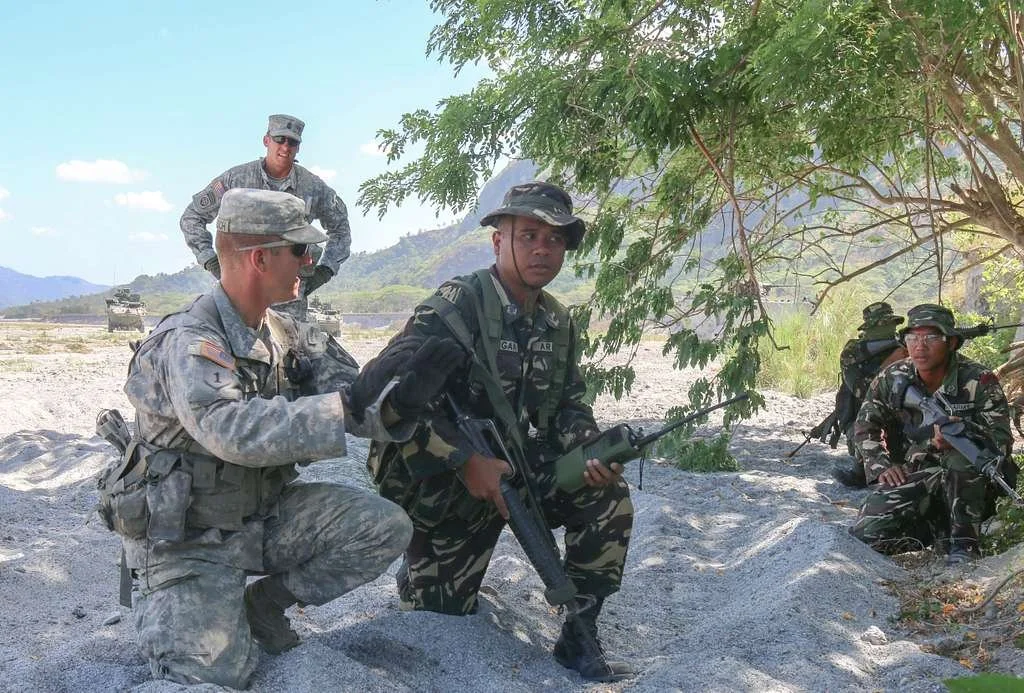
U.S. and Philippine soldiers training together (Source: Picryl)
The Good: Under the current administration of Ferdinand Marcos Jr., the U.S.-Philippine relationship has experienced a dramatic resurgence. While the Visiting Forces Agreement (VFA) provides the legal framework governing the status and protections of U.S. troops in the Philippines, the expanded Enhanced Defense Cooperation Agreement (EDCA) has given the United States operational access to several additional strategic military sites aimed at deterring aggression in the South China Sea.
The Bad: While the alliance is arguably at its strongest in decades, the VFA and the expanded EDCA have sparked fierce domestic debate, reviving old memories of U.S. military bases on Philippine soil and the social ills associated with them. Many Filipino activists, politicians, and citizens worry that turning the Philippines into a forward operating platform for the U.S. military could draw the country into a catastrophic superpower conflict between Washington and Beijing.
The Ugly: The Philippines, together with its Southeast Asian neighbors, sits astride the maritime artery through which much of the world's trade flows between Asia and Europe. A U.S.-China conflict—for example, over Taiwan—would have severe economic and security consequences for the Philippines.
10. Emerging ASEAN Economies: Indonesia, Malaysia, Thailand, the Philippines, and Vietnam
These countries are projected to grow their collective nominal GDP by 56 percent between 2022 and 2028, potentially overtaking Japan as the world's fourth-largest economic bloc by 2030. The prospects for regional growth that is less dependent on U.S. and Chinese supply chains appear favorable under conditions of peace in the region. To help make this possible and strengthen the Philippines' defense standing in the region, the United States will need to elevate the Philippines above its current "second-tier" alliance status while fostering greater defense interdependence with Japan and Australia. Although no permanent U.S. bases exist in the Philippines, vigilance must be exercised to ensure the country does not become a launch pad in the event of a U.S.-China confrontation over Taiwan.
Officially called "Special Relations," this bond was frequently marked by conflict, unequal power, and a lack of genuine reciprocity.
Epilogue
Over 125 years of U.S.-Philippine relations—a relationship forged in war, from the Philippine-American War of 1899 through World War II, the Korean and Vietnam Wars during the Cold War, and now what many describe as Cold War II—it behooves both Filipinos and Americans to remain mindful of this shared history and to build institutions through which both countries treat and respond to one another with genuine reciprocity and mutual respect, less influenced by the politics and personalities of individual presidents.
Dr. Michael M Gonzalez after decades of classroom teaching in Philippine and American colleges, retired in 2022. He is looking forward to devoting more time to his nonprofit activies with the Hinabi Project, the NVM & Narita Gonzalez Writers’ Workshop, the Kaisipan.org as an outreach to the culture and arts communities. Outside of that, he is an avid student of fiction and nonfiction writing; and the classic guitar, and indigenous music.
More articles from Michael Gonzalez
