
The Misguidance of Chantal Anicoche
/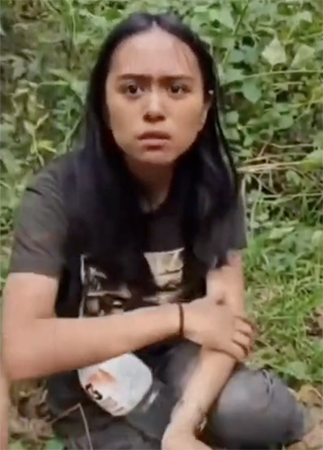
Chantal Anicoche when found by the army (Source: 203rd Infantry Brigade/Coffee, Curiosities & More Youtube)
And this was precisely what happened to Anicoche.
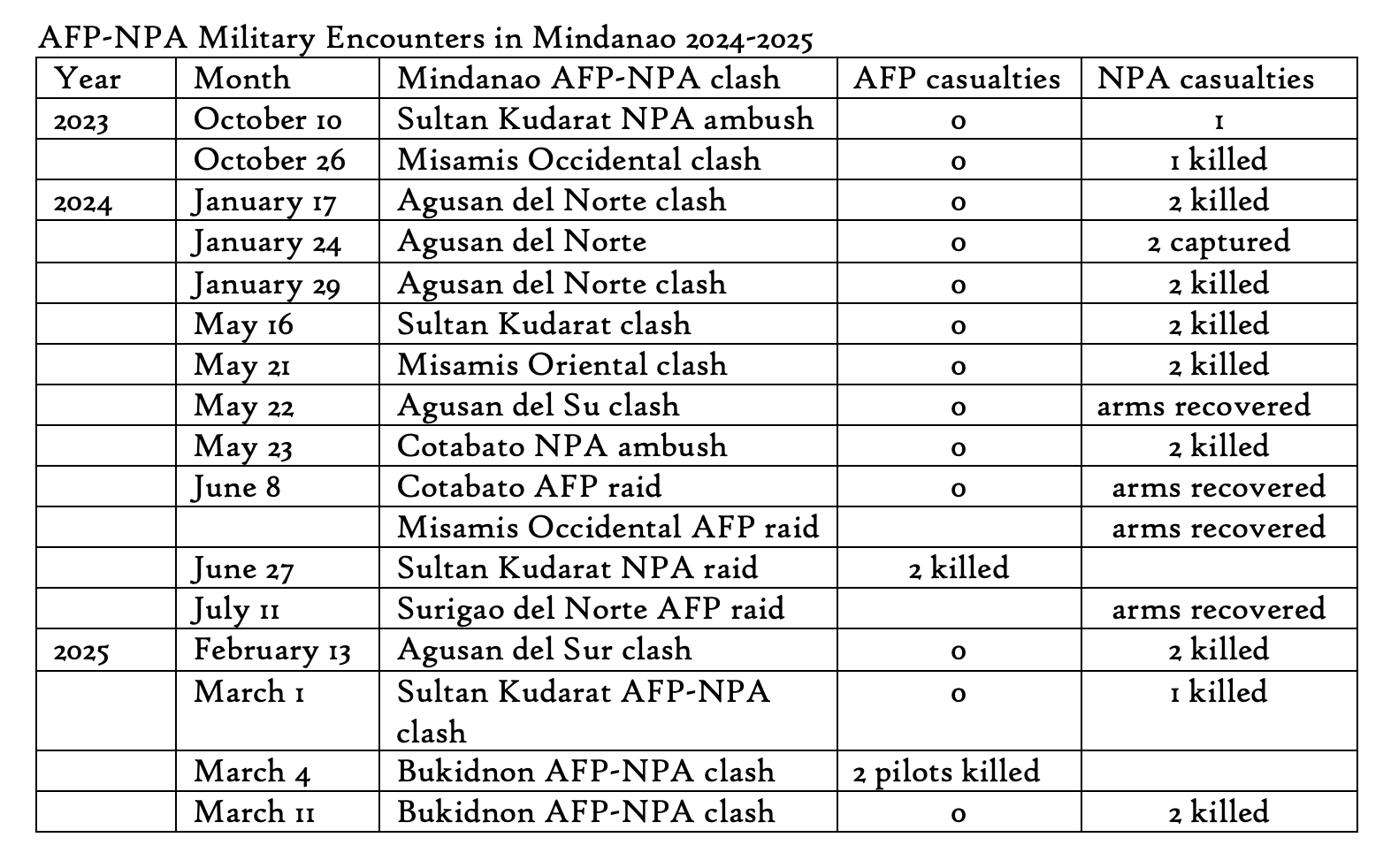
Over the last two decades, the Communist Party of the Philippines’ (CPP) guerrilla army has steadily lost influence in much of the countryside. In Mindanao, it has been gradually pushed out of its traditional guerrilla bases – the Caraga region, the central highlands of Bukidnon, and around the Mt. Apo area. There are still some encounters in Misamis Oriental and Agusan del Norte, but these have become very infrequent and resulted in NPA casualties and loss of weaponry (See table).
Government confidence had grown ever since. On March 11 and 17, 2024, for example, the Department of Interior and Local Government (DILG) declared Misamis Occidental and Surigao del Norte as “insurgency-free.” The AFP also announced in July that the entire Region 9 (Zamboanga del Norte, Zamboanga del Sur, and Zamboanga Sibugay) had totally rid itself of the NPA. Sources in Mindanao say the NPA has moved to the edges of Sultan Kudarat and South Cotabato, with its safety in the former province guaranteed by Moro Islamic Liberation Front (MILF) units in the area.
The disappearance and dwindling of the guerrilla fronts were the outcome of several factors. First, the Armed Forces of the Philippines has vastly improved its fighting capacity, largely thanks to American assistance. Night-vision goggles had made it easier to locate NPA squads, and drones were cheaper to launch missiles into NPA camps.
The second reason was the pandemic. COVID was the NPA’s bane. Unable to enter the village they claim as their “mass bases,” the guerrillas had to remain in the jungle, only to have their body heat exposed to drone surveillance. It was also said that it was a drone attack that ended the lives of former CPP chairman Benito Tiamzon and his wife, Wilma, in the mangrove swamps of Samar in August 2022. The military’s adept tracking of cell phone messages and calls purportedly revealed Jorge “Ka Oris” Madlos's movements, leading to his death in an encounter in Impasugong, Bukidnon.
The NPA has near-perfected the art of making improvised explosive devices (IED) and – listening to the YouTube video of the soldiers who discovered Ms. Anicoche – these are weapons the AFP and police appear to be most wary about. But the IED’s seem to have a limited effect. The number of the wounded had risen, but dead soldiers or police officers had been kept to a minimum. At the other end, AFP/police-NPA encounters often led to rebels being killed. This is at least the pattern one notices in the statistics provided by the Vera Files-UP Third World Studies Dahas Project.
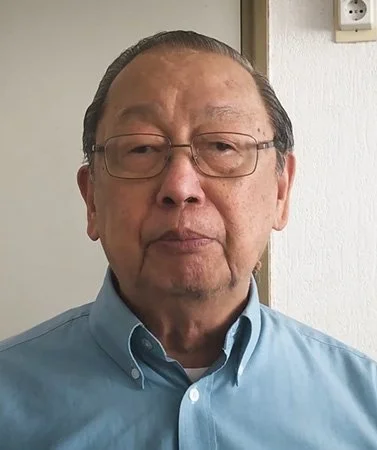
Jose Maria Sison (Source: Wikipedia)
These tactical problems, however, forebode darker clouds ahead for the protracted people’s war. In 1991, Jose Maria Sison was able to wrest back the CPP leadership, put an end to internal strife over revolutionary strategy, and “reaffirm” its Maoist foundations. But the subsequent forced resignation, expulsion, and assassination of his rivals and the Sisonites’ wholesale condemnation of their supposed “deviationism,” also lost the Party its second generation of leaders, who built the organization brick by brick, using a set of creative skills they learned from school and in their daily experiences.
We are talking here of the likes of Rodolfo Salas (Kumander Bilog) who took over the helms of the Party after Sison’s capture and guided it to its unprecedented national expansion, aided by the likes of Rafael Baylosis as alleged general-secretary, Ricardo Reyes, alleged head of the youth sector, Filemon Lagman (who oversaw the successful rebuilding of the CPP’s Manila-Rizal regional committee); Edgar Jopson (who replaced Lagman briefly and then moved to Mindanao to help consolidate the party organizations in the region); Arturo Tabara (who built the Party’s Visayas Commission) and Ike de los Reyes (led the armed city partisan group Alex Boncayao Brigade). After Antonio Liao left Mindanao, and despite Jopson's death, Benjamin de Vera and Rolando Kintanar were able to turn the Mindanao Commission and the NPA in the island into a formidable force, earning them a seat in Bilog’s leadership by the 1980s.
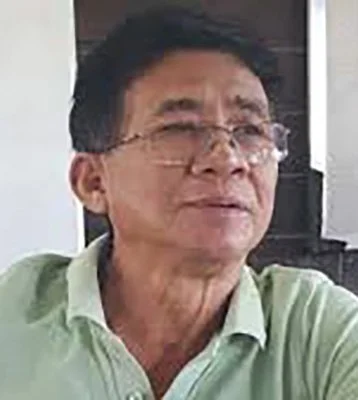
Rodolfo Salas aka Kumander Bilog (Source: Rappler)
The old guards remained (Antonio Zumel, Jose Luneta, among many others). Still, in the post-Sison era, it was their first recruits–exceptional organizational men and women–who were running the show.
Combined, their experiences (both successes but equally important, their slippages – some fatal like the killing of Jopson) were the mother lode of the CPP’s history under martial law, dwarfing those of its founders. The mistake they made was in their confidence, and perhaps arrogance; the Party builders also dared defy the Great Leader, leading to the post-Marcos fissure. When Sison won the infighting, what they’d contributed to “revolutionary praxis” was tossed into the dung heap and declared deviationist and revisionist. The more assertive ones and sure threats – Kintanar, Lagman, and Tabara had to be killed.
So it was back to the Maoist protracted struggle where an NPA was to slowly and painstakingly turn itself from small squads to a powerful regular army that would surround Metropolitan Manila and scale the walls of Malacañang. But how to get from Step 1 to Step 10 without “learning” how the renegades did it? And at a time when autocratic power has devolved to the local level, now in the hands of ruthless family dynasties?
This is not to say that the Party has not made any political gains of late. The anti-corruption cases and the brutality of Rodrigo Duterte have charmed the young and reanimated the CPP’s legal organizations. Sison’s Philippine Society and Revolution remains a big draw to new “natdem” activists.
Chantal Anicoche was lucky she survived the encounter, but she is now propaganda material to be exploited by both sides.
The irony is that it is in the parliamentary struggle that the CPP is doing well, its elected representatives doing well on the legislative floor and on television. But in Amado Guerrero’s world, parliamentary struggle will always be ancillary to the armed struggle, its primary role being like that of the universities – to politicize and organize. It cannot be the central area of struggle, lest one commits the sin of political deviationism.
The ultimate goal is still to reanimate the countryside resistance and steel recruits in the struggle by bringing them to, as it were, the sites of battle. But without a stable guerrilla army to welcome those seeking to raise their militant commitment, many of these newly committed are more of a burden than a much-needed addition to NPA manpower.
And there are the likes of Chantal Anicoche, Filipino Americans attracted to the revolution from afar, thanks to national democratic groups in the United States. The problem that follows dismal portraits of Philippine poverty and politics in seminars given by Anicoche, et. al. is the romanticized version of the “people’s struggle,” as if all is well and good with the revolution when it is not. What’s essential is to fire up the commitment.
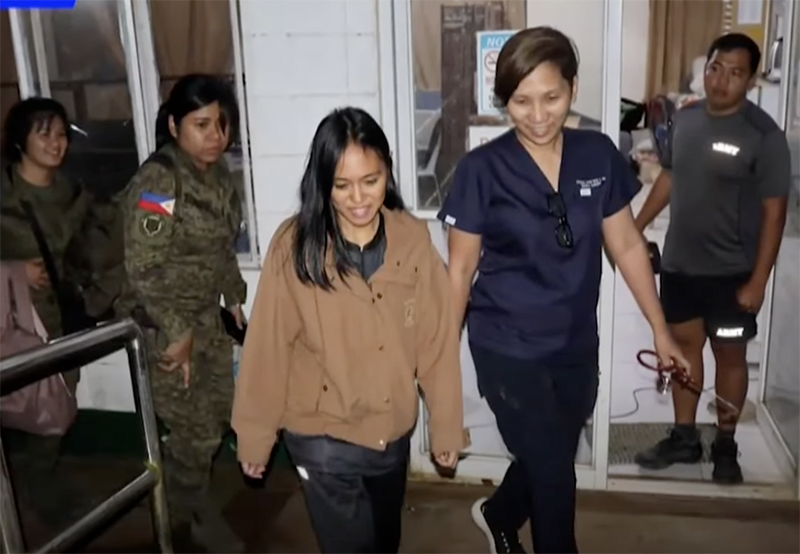
Anicoche being checked out at the Philippine Army’s 2nd Infantry Division Hospital (Source: PTV)
Their decision to touch grass in the guerrilla zones made, but alas, without the facility in the language of the street -- Filipino or whatever vernacular is spoken in the region they were heading to -- and armed only with their vow “to serve the people,” these Fil-Ams entered the real world of guerrilla warfare.
Chantal Anicoche was lucky she survived the encounter, but she is now propaganda material to be exploited by both sides. The American embassy has visited but not said a word. One is sure, however, that her life will change once she heads back home, to a country now run by a nefandous mediocracy that is into conspiracies, especially those peddled by Leftists.
Here’s what happened to Chantal: https://www.thebanner.com/community/local-news/chantal-anicoche-philippines-PNQYWLBTGVDDLB3DLAUHV6MI4E/

Patricio N. Abinales once edited The Revolution Falters: The Left in Philippine Politics after 1986 (1996) and wrote Fellow Traveller: Essays on Filipino Communism (2001).
More articles from Patricio Abinales
