

PH in 2025: Calls for Urgent Reforms Amid Corruption Scandal and and Economic Woes
/The split prompted vigorous efforts by the Marcos Jr. administration to maintain political stability, sustain the economy, strengthen social cohesion, and enhance foreign policy initiatives to defend national sovereignty and territorial integrity.
Supreme Court Nixes Impeachment vs. Vice President
A clear sign that the UniTeam break-up had reached a point of no return was the filing of four separate impeachment complaints against Vice President Sara Duterte between December 2024 and February 2025. Three were filed or endorsed by private citizens in December 2024, and a fourth was transmitted to the Senate on February 5, 2025, after a resolution approved by more than one-third of the House of Representatives.
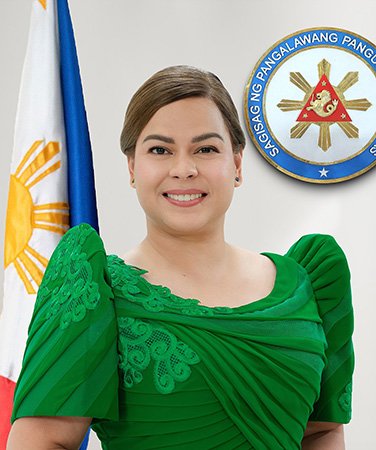
Vice President Sara Duterte (Source: Wikipedia)
The complaints alleged misuse of public funds (including intelligence funds), unexplained or ill-gotten wealth, betrayal of public trust, and serious verbal threats—most prominently that she had threatened to have President Marcos Jr., the First Lady, and the House Speaker killed, statements she later characterized as not serious.
On February 5, 2025, the House transmitted the resolution/articles to the Senate. The Senate briefly convened as an impeachment court but, in June 2025, remanded the articles back to the House for further action. Duterte then filed petitions to the Supreme Court seeking to nullify the process.
On July 25, 2025, the Supreme Court en banc declared the Articles of Impeachment unconstitutional, ruling that the Senate could not acquire jurisdiction. The Court concluded that the February 2025 impeachment action was barred by Article XI, Section 3(5) of the Constitution, which prevents impeachment proceedings against the same official more than once within a one-year period. The Court treated the three December 2024 complaints as properly commenced but “terminated or dismissed” when the House adjourned, making a new impeachment within a year impermissible. The practical effect: any new impeachment could only be filed starting February 6, 2026.
The Court emphasized that impeachment is not purely political and must adhere to due process protections under the Bill of Rights, outlining procedural requirements the House must satisfy before transmitting articles to the Senate.
Ex-President Rodrigo Duterte Faces ICC for Crimes Against Humanity
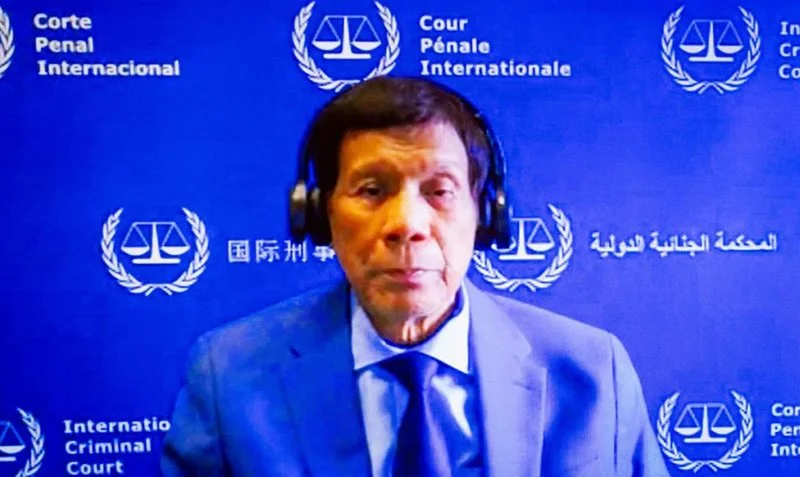
President Rodrigo Duterte at the International Criminal Court (ICC) (Source: ICC)
The International Criminal Court (ICC) in The Hague, Netherlands, which prosecutes genocide, war crimes, crimes against humanity, and crimes of aggression, opened a formal investigation into the Philippine situation in 2021. The investigation examined killings between November 1, 2011, and March 16, 2019, including actions during Duterte’s tenure as Mayor of Davao City and as President. The ICC prosecutor found reasonable grounds to believe Duterte was individually responsible for crimes against humanity (murder) under Article 7 of the Rome Statute.
On March 7, 2025, the ICC Pre-Trial Chamber I issued an arrest warrant for Duterte, initially secret, made public on March 11. The warrant alleged he oversaw policies resulting in widespread killings during the anti-drug campaign, involving police officers and armed “death squads,” targeting civilian populations without due process.
Though the Philippines withdrew from the ICC in 2019, jurisdiction over alleged crimes committed while the country was a State Party remained. On March 11, Duterte was arrested at Manila’s Ninoy Aquino International Airport by the Philippine National Police, with Interpol Manila assistance, and placed under ICC custody. Later that night, he was flown to The Hague on a government-chartered aircraft.
On March 12, Duterte was detained at the ICC facility in The Hague, and on March 14, he made his initial court appearance via video link, where his identity was verified and charges read.
Midterm Elections
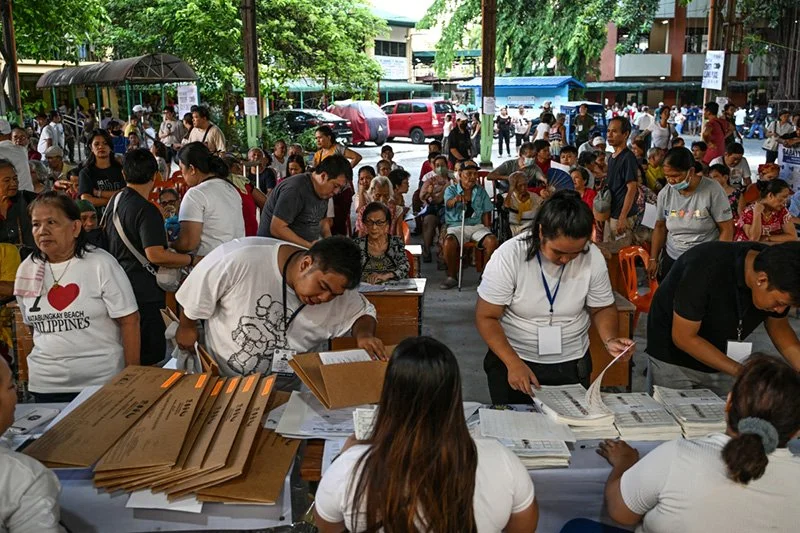
Election volunteers at 2025 Philippine Midterm Elections (Source: Asia Society/Photo by Jam Sta. Rosa)
The midterm campaign began in March amid reports of political violence, intimidation, and vote-buying, particularly at the local level. By April, the Commission on Elections intensified security in hot spots, placing some municipalities under special control.
The nationwide midterm elections on May 12, 2025, contested all House seats, half the Senate, and local posts. Administration-aligned parties performed strongly in some areas, but electoral violence, vote-buying, and local disputes persisted.
The results reshaped the 20th Congress. Newly elected legislators assumed office on June 30 and focused on the 2026 budget and investigations into high-profile projects. The elections reflected voter concerns over governance, service delivery, corruption, and issues such as employment, healthcare, and education. They also influenced the Marcos Jr. administration’s ability to pass legislative priorities.
Unbridled Corruption in Flood Control Projects

President Bongbong Marcos inspecting a ghost river wall project in Bulacan (Source: Philstar)
In his fourth State of the Nation Address in July, President Marcos Jr. revealed massive corruption in flood control projects, including kickbacks, ghost projects, shoddy construction, and collusion among officials, lawmakers, contractors, and engineers. Independent estimates suggest up to PHP 1.089 trillion in climate-tagged funds may have been siphoned off since 2023, including significant portions of flood control budgets.
Many completed projects proved defective, prompting public and legislative backlash. Investigations documented bid-rigging, cornering of contracts, and systematic contract splitting to evade oversight. The issue dates back to at least 2016, with ghost projects alone costing over PHP 180 billion.
Government Probe of Corruption Scandal
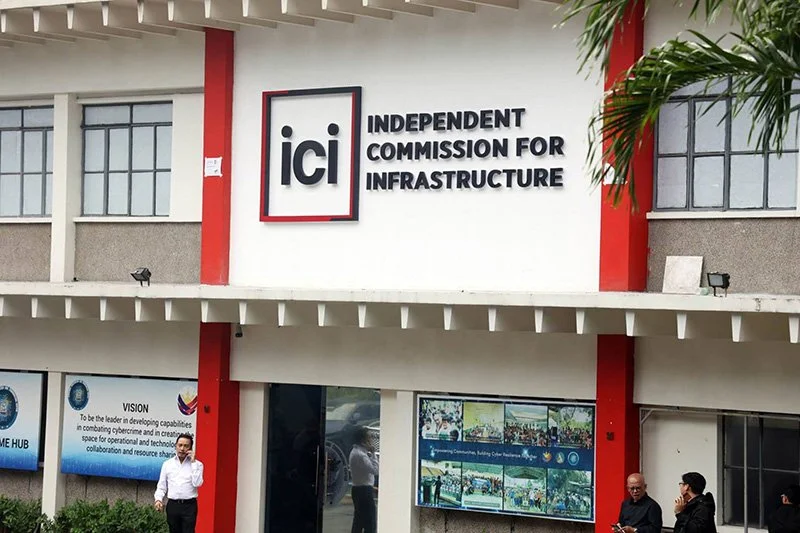
The Independent Commission for Infrastructure (ICI) (Source: Inquirer.net/Photo by Niño Jesus Orbeta)
The government established the Independent Commission for Infrastructure (ICI) to inspect nationwide projects, working with military and police to identify ghost projects. The Anti-Money Laundering Council froze assets linked to the scandal, while the DPWH filed criminal complaints. The Senate Blue Ribbon Committee launched a formal investigation, calling for public participation and budget scrutiny.
Some implicated individuals have begun restituting funds under witness-protection agreements, and prosecutors continue pursuing cases. Reforms to project approval and procurement are being considered. However, by December, the ICI’s effectiveness was hindered by resignations, prompting calls for a permanent Independent Commission Against Infrastructure Corruption with powers to prosecute offenders.
Public Outrage vs. Corruption
Public protests erupted, with tens of thousands marching in Manila and other cities demanding accountability and resignations. Civil society and church leaders denounced the moral and economic impact of the scandal. Social media and youth activism shaped discourse, potentially influencing future elections and policy advocacy. The scandal will continue shaping politics through 2026 and the 2028 presidential cycle, with credibility of prosecutions and reforms determining political consequences.
Economic Downturn
The World Bank’s December update noted slower growth in 2025 due to domestic shocks, weaker investment, and soft global demand, with modest recovery expected in 2026–2027 if reforms advance. Mid-year and Q3 data showed 4 percent growth, the weakest non-pandemic quarterly growth since 2011.
IMF and ADB revisions pointed to disinflation but lower growth forecasts, constraining fiscal flexibility for the 2026 budget. Delays in infrastructure spending linked to corruption investigations contributed to slower growth and weakened investor confidence. Long-term economic upgrading, investment in infrastructure, and industrial reforms are essential to sustain inclusive growth, job creation, and competitiveness.
Public protests erupted, with tens of thousands marching in Manila and other cities demanding accountability and resignations.
Natural Calamities in 2025
As public dissatisfaction with corruption and service delivery increased demands for transparency and accountability, the country faced multiple climate-related disasters, including typhoons, floods, and earthquakes, affecting millions and highlighting the need for disaster risk reduction and climate adaptation strategies.
The Philippines experienced 23 tropical cyclones in 2025, affecting over 20 million Filipinos, according to Pagasa and NDRRMC. Major earthquakes in Central Visayas and Davao Oriental in September and October caused widespread damage and affected hundreds of thousands of families. Relief efforts included P493.4 million from the NDRRMC and P50.52 million from the European Union for emergency assistance.
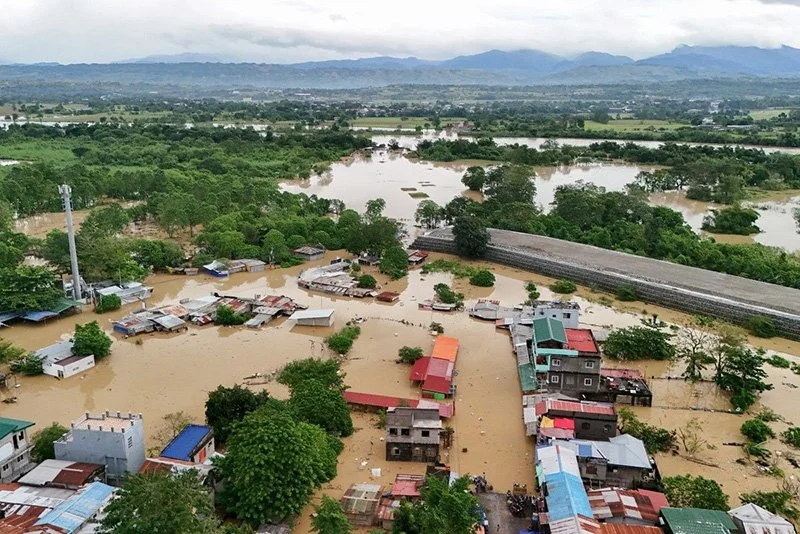
Cebu hit by Typhoon Tino (Source: Philstar/AFP)
West Philippine Sea Tensions
Territorial disputes with China continued, with incidents involving the Chinese Coast Guard prompting diplomatic protests. Maritime security and defense modernization, including procurement of new frigates and patrol vessels, became central policy concerns.
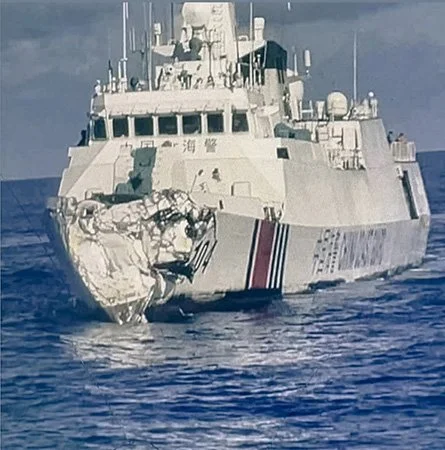
Chinese ships collide while chasing a Philippine Coast Guard ship (Source: Philippine Coast Guard/South China Morning Post)
ASEAN Chairmanship
As ASEAN chair in 2026, the Philippines faces the challenge of balancing regional leadership with national maritime defense, shaping Manila’s diplomatic credibility and strategic posture ahead of the 2028 presidential cycle.
What’s Ahead: 2026 and Beyond
Across political, economic, social, and foreign policy domains, 2025 highlighted the gap between reform aspirations and governance realities. Key priorities moving forward include:
1. Institutional reform: Strengthening transparency, accountability, and governance.
2. Economic resilience: Addressing growth drag via investment reforms, infrastructure execution, and climate adaptation.
3. Social cohesion: Aligning policy outcomes with societal expectations, especially for youth, marginalized groups, and disaster-affected populations.
4. Strategic foreign policy: Enhancing defense partnerships, maritime diplomacy, and engagement with major powers amid U.S.-China competition.
If managed coherently, these challenges could catalyze reforms and sustained growth in the Philippines in the years ahead.
Ernesto M. Hilario studied Political Science at the University of the Philippines and has worked for various government agencies, NGOs and mainstream media since 1978. He writes a regular column for the Manila Standard broadsheet and also works as a freelance writer-editor.
More articles from Ernesto M. Hilario
