
Filipino Protest Songs Rage Across Generations
/Cultural historians have attributed it to propagandist and later general of the First Philippine Republic, José Alejandrino. This was no surprise, as Alejandrino was part of a group of young Filipinos in Europe called the ilustrados, who resisted the colonial administration in the Philippines during the late Spanish period. Not to mention that he was with José Rizal in Ghent, Belgium, when the latter was finishing the novel El Filibusterismo.
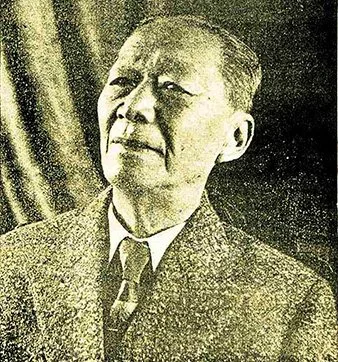
Jose Alejandrino (Source: Alchetron)
Bayan Ko was not only outlawed during the American colonial period but was also barred following the declaration of Martial Law in 1972. The lines “Bayan ko, binihag ka, nasadlak sa dusa (My country, you were shackled)” and “aking adhika, makita kang sakdal laya (My quest is to see you truly free)” were deemed seditious and subversive. It gained prominence as a protest song before the ouster of the Marcos dictatorship. From 1983 to 1986, a typical sight was protesters singing Bayan Ko with raised fists while waving the Philippine flag. For the older generation—the martial law babies – it was their patriotic song.
In the Philippines, songs are artifacts of resistance. The Filipino national anthem, Lupang Hinirang (Beloved Land), was originally a revolutionary march during the Philippine Revolution. Songs are sometimes symbols of hope or sources of endless aspiration for change. Some were written to make sense of societal experiences and events. Yet every generation has its own way of expressing hope and searching for meaning.
During last year’s September 21 and November 30 nationwide anti-corruption protests, I observed how the much-younger generation preferred new songs of protest and resistance. These songs were not only played in public but were also used on social media platforms as a way of manifesting resentment and spreading awareness.
Released in 2021, Kapangyarihan by folk-pop band Ben&Ben and P-pop group SB19 became a protest anthem centered on questioning those in power. For instance, the line “Wag niyong kalimutan na hawak-hawak namin ang inyong trono (Don’t forget that we hold up your throne)” reminds those in government that their kapangyarihan (power) comes from the people. The lines “nagsisilbi ka dapat, nagsisilbi ka dapat (you should be of service)” call for accountability. SB19’s intense rap parts add candor to the song’s message. The line “ibon na malayang lumipad, ’di mo na makukulong (You can no longer cage the bird that is free to fly)” is even a nod to Bayan Ko.
Another song is Dekada ’70 by Zild. Part of his third studio album, Medisina, it was written following the election of President Bongbong Marcos in 2022, which many viewed as a Marcos restoration. The song’s title was obviously inspired by the masterful 1983 novel of Lualhati Bautista (Chito Roño later directed a film of the same title starring Vilma Santos, Christopher de Leon, and Piolo Pascual). Dedicated to Zild’s own generation, the song is a reminder of the grim period of martial rule characterized by rampant human rights violations, suppression of freedom of speech, and false nostalgia. In Zild’s Dekada ’70, these transgressions still happen. The famous line “Umiiikot lang ang panahon, ang bagong dekada ’70 (Time just keeps on circling, the new Dekada ’70)” underscores this point. The reverb guitars and Zild’s dreamy way of singing make the verses sentimental but also dark.
These new protest songs, however, are not limited to rock music. Hip-hop collective Morobeats, headed by Mindanaoan producer DJ Medmessiah and rapper JMara, took the September 21 protests by storm with their latest single Anak Ka Ng Pu! (You’re an SOB). Performed live during the Luneta rally, the song captures the anger and disappointment of the Filipino people over the recent flood control corruption scandals. They even described it on their Instagram account as the “official soundtrack of the Philippine revolution march” to oust all corrupt officials. During the November 30 rally, the hip-hop collective joined the protesters in EDSA, rapidly firing rap lines: “Yaman ng taas, galing lahat sa ibaba (The wealth of those above comes from those below).”
New protest songs, however, are not limited to rock music. Hip-hop collective Morobeats, headed by Mindanaoan producer DJ Medmessiah and rapper JMara, took the September 21 protests by storm.
Perhaps patriotic songs like Bayan Ko are now historical relics. The younger generation is no longer inspired by the idealism and romanticism of Rizal’s novels or Andres Bonifacio’s revolutionary kabayanihan (heroism). And it is true that every Filipino generation has its own way of expressing its sentiments about the Philippine nation-state. One thing remains the same—from the 1896 Philippine Revolution to the EDSA “People Power” Revolution to the Baha sa Luneta/Trillion Peso March protests: our shared aspiration for a better Philippine/Filipino nation.

Luis Zuriel P. Domingo is an Assistant Professor of History at UP Baguio. He has written a few guest essays about (intellectual and pop) culture and history for Rappler and other platforms.
