
Filipino Americans Sound Off on the Toboso Tragedy
/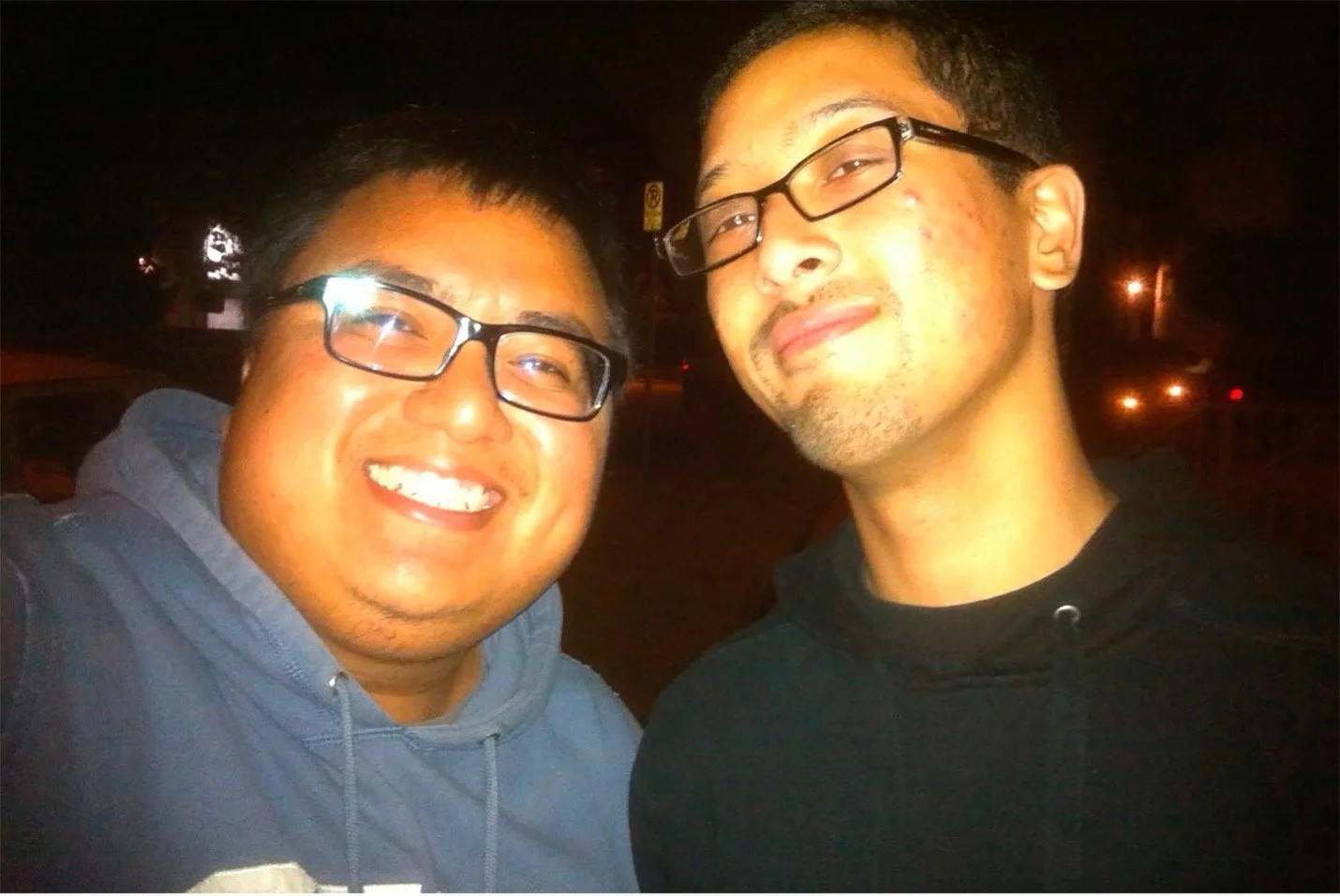
Aldrich Limpin Sabac (left) and Lyle Prijoles (right) during their college years at San Francisco State University, where they both double-majored in Asian American Studies. Prijoles was a talented spoken word poet, and Sabac, to this day, still carries in his phone a recording of Prijoles’s poem (Photo courtesy of Aldrich Limpin Sabac)
The armed confrontation occurred while the Army was conducting operations in search of NPA members operating in the Toboso area; in particular they were looking to apprehend the area commander of the NPA.
By the end of Wednesday’s armed confrontation, news reports state that 19 people lost their lives, including six civilians: UP Diliman student council leader Alyssa Alano and another UP student Maureen Keil Santuyo, journalist RJ Nicole Ledesma who reported on human rights and local stories from Bacolod, and community researcher Errol Wendel who was conducting research on “sugar plantation workers.”
Also among the six civilian casualties were two Filipino Americans: Lyle Prijoles, a 40-year-old resident from the San Francisco Bay Area and Kai Dana-Rene Sorem, a 26-year-old resident from the Seattle metropolitan area. They were both community activists in their respective Filipino American communities, who felt that it was important to also come to the Philippines and help poor Filipino communities.
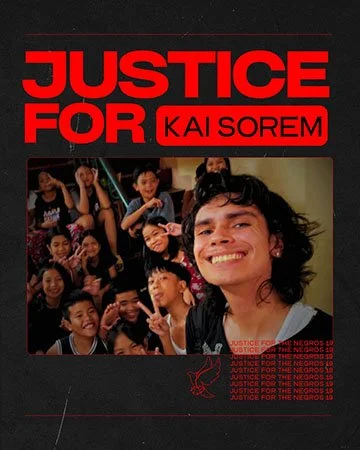
Flyer for Kai Sorem (Source: International Coalition for Human Rights in the Philippines/facebook)
One member of the Philippine Army suffered wounds to both arms in the attack and was treated at a Bacolod hospital.
The Army’s official statement is that all 19 casualties were not innocent civilians but were “combatants.” The Army also claimed that the Toboso encounter was a “legitimate military operation.”
In contrast, the NPA stated that the six slain civilians were not NPA members. They do acknowledge that ten of the combatants were members of the NPA, including Roger "Ka Tapang" Fabillar, the local commander of the NPA and the target of the Philippine Army military operation.
The Commission on Human Rights in the Philippines notes that these conflicting reports call for a thorough independent investigation, which they started.
Reactions and Perspectives
It is within this context that I asked the opinions of Filipino Americans in the San Francisco Bay Area and the Seattle metropolitan area.
“The massacre was a horrific travesty,” said Teresita Cataag Bautista, a well-known East Bay, San Francisco Bay Area activist. “What a shameful waste of human lives. The deaths of Lyle Prijoles and Kai Sorem are particularly heinous and shocking to Filipinos in the U.S.”
Bautista, who recently turned 80 years old, is a graduate of UC Berkeley and San Francisco State University (SFSU) and spent her life advocating for social justice and human rights. Like many Filipino Americans who lean left politically, she places responsibility on the Army: “The AFP must be held accountable for the deaths of innocent civilians.”
Adrich Limpin Sabac, a close college friend of Prijoles, also does not believe that Lyle was armed during the Toboso encounter. Sabac is an administrator in the Stockton Unified School District in charge of Ethnic Studies classes, an innovative program advocated for by educational and community leaders. Through these classes, students can learn about the history of Filipinos in America and other ethnic groups.
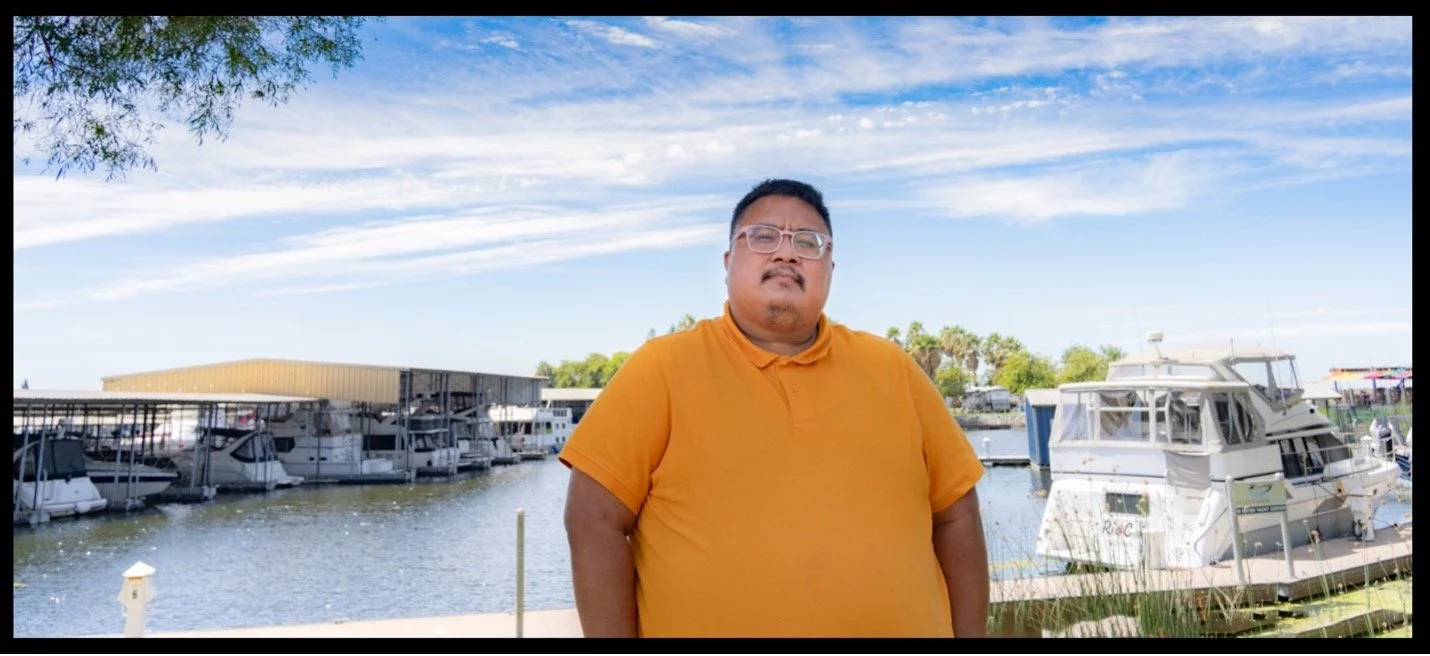
Adrich Limpin Sabac is an administrator in the Stockton Unified School District in charge of Ethnic Studies classes. Sabac also has an MA from UCLA and is currently in the PhD program at the University of the Pacific. A close friend of Lyle Prijoles, they were both double-majors in Asian American Studies at San Francisco State University (Photo by James Sobredo, Stockton, CA: Marina)
“I didn’t believe it,” Sabac explained when asked about whether Prijoles was armed in the Toboso encounter. “Not at all. He was never that kind of person. I could never see him bearing arms and being an aggressor of any kind. That was not him. He wrote poetry. He did photography, he was a storyteller. Those were his weapons. He was not the kind of person who would take up arms.”
Sabac was glad to see that there was a subsequent investigation by an independent legal group that visited Toboso and interviewed residents in the encounter area. From that investigation and interviews, it is reported that Prijoles and Sorem were unarmed civilians who helped farmers till the land. They came to Toboso, primarily, to learn about the social and economic issues local farmers faced and to assist the farmers.
Fact-Finding
One of those independent fact-finding investigators who went to Toboso was Troy Osaki, a 33-year-old Filipino-Japanese American lawyer from Seattle and a member of the National Lawyers Guild. He traveled to Toboso, Negros, the following month after the fateful day.
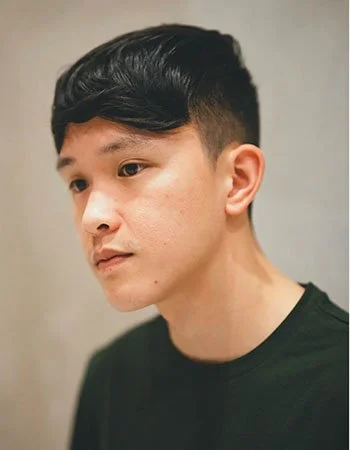
Troy Osaki is an award-winning poet of Filipino and Japanese ancestry in Seattle. A lawyer and member of the National Lawyers Guild, he traveled as part of a 100-member independent fact-finding mission to Toboso, one month after the tragedy. He met Lyle Prijoles in the Philippines in 2017 at a community emersion program and they have been friends and colleagues ever since. Osaki wrote about his fact-finding mission in Seattle’s International Examiner (Photo courtesy of Troy Osaki).
Osaki knew both Lyle Prijoles and Kai Sorem. In a detailed article published in the Seattle International Examiner, Osaki recalled in our interview boarding a plane for the Philippines as part of 100-member fact-finding mission that went to Toboso, Negros, to conduct an independent investigation on the events of 19 April.
Osaki was born in Seattle to Filipino and Japanese parents. He earned an ethnic studies BA degree from the University of Washington and went on to finish a JD from Seattle University.
Osaki is a great-grandson of a Buddhist minister whose family immigrated to Hawaii from Japan as plantation workers in the late-1800s. On his Filipino side, his Filipino grandfather left Bataan and immigrated to America at age 18.
His Japanese American family was incarcerated in World War II due to Executive Order 9066. The Japanese community in America (70% of whom were born in America) were seen by the U.S. government as a possible threat to American security, were consequently rounded by police and federal troops, and sent to internment camps. It was from this trauma that caused Osaki to study law and advocate for immigration rights and poor people’s rights.
In his article, Osaki remembered meeting Kai at a community meeting. He remembered she had a “bright tattoo of saxophone keys on her left forearm.” Then she led and conducted community members in singing Bigas Hindi Bala (Rice Not Bullets), a song she just learned in Cebu in her previous visit. Kai graduated with a music degree from Central Washington University.
Music, art and poetry were constant themes used to describe the two Filipino American who lost their lives in Toboso.
Many of the Filipino Americans interviewed for this article noted that Prijoles was a talented poet and a spoken word artist. Osaki is also an award-winning poet, spoken word artist and a critically acclaimed poet.
Immersion Program
They first met in the Philippines in 2017 as part of a community immersion program. Prijoles was the team leader for that program. Osaki was integrated into a peasant farmer community in Tarlac, “That trip was really formative for me.”
Osaki went to the Philippines to “understand why Filipinos leave in the first place and then had to face harsh conditions here in America.”
Osaki explained in our interview, “The experience of Filipinos here in the States is connected back to the home country and why we (sic.) had to leave the Philippines in the first place. I went back to learn what those problems were, just like Lyle.”
Like Prijoles, Sorem, and Osaki, Sabac is also a community activist who dedicated his life serving the Filipino American community. He a was born in Stockton, California, a working-class farming community that was the first and largest Filipino American community in America.
Sabac met Lyle Prijoles when they were students at SFSU, where they double majored in Asian American Studies. Sabac remembered Lyle as a very intelligent “nerd,” a talented poet and photographer. To this day, Sabac carries in his phone a professional quality recording of Prijoles’ “Nerd Poem,” a poem about his teenage years and being unpopular with women.
“He was such a funny guy.” Sabac said, with a smile and glint of joy in his eye. “Lyle was a nerd in every sense of the word. He was into Star Wars, and he was a big reader. He cared very deeply about people, especially impoverished people in the Philippines.”
‘Not Naïve’
The Filipino Americans interviewed who knew Prijoles reject the idea that he was naïve and easily persuaded and was brainwashed to join an armed movement.
“I find that extremely offensive,” Sabac said, who is the same age as Prijoles. Sabac has an MA from UCLA and is currently working on his PhD at the University of the Pacific.
After pausing, Sabac continued, “Lyle is one of the brightest, sharpest, critical people I know, who could have used his talents and gifts to be in whatever industry and make profit. Instead, he chose to live a life in service to community and serve people who are experiencing the most extreme form of poverty.”
Professor Eugene Gambol, who is department co-chair of Ethnic Studies at Delta College in Stockton, noted that, as an undergraduate, Prijoles was intellectually far more advanced for his years.
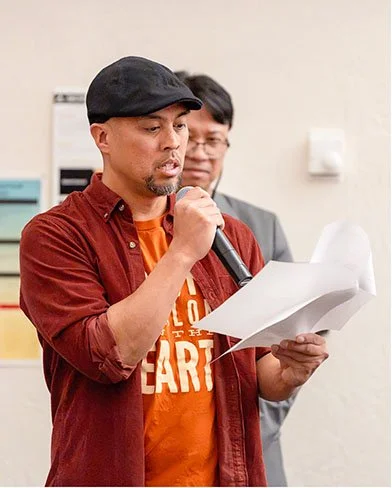
Professor Eugene Gambol is the department co-chair of Ethnic Studies at Delta College in Stockton, the first and largest Filipino American community in the mainland United States in the 1920s to the 1960s. He met Lyle Prijoles in Sacramento in 2003 at an event organized by Professor Consorcia Apostol-Rocamora, a very well-known Tagalog instructor at Sacramento City College. A few years later, when Gambol was an MA student at SFSU, he was surprised that the teaching assistant for the Filipino American class was Priojoles, who was an undergraduate at that time (Photo by James Sobredo, Delta College, Stockton, CA, November 2023).
Gambol first met Prijoles in 2003 in Sacramento at an event organized by Professor Consorcia Apostol-Rocamora, a very well-known Tagalog instructor at Sacramento City College.
Later at graduate school in San Francisco State University, Gambol was surprised that Prijoles, who was an undergraduate, was a teaching assistant for a Filipino American Studies class, which was taught by Professor Daniel Phil Gonzales, a well-known Filipino American professor and part of The Third World Liberation Front in SFSU that went on strike and gave birth to Ethnic Studies classes in America.
“I was the graduate student. He was the smart undergrad!” Gambol recalled fondly.
‘Not Duped’
Thus, Professor Gambol also rejects the idea that Prijoles was duped into joining the armed movement. After a long and pause, Gambol explained, “That’s a narrative that often is used to describe human rights workers. They don’t think for themselves or that they are brainwashed… They get red-tagged. Or they say they are communists.”
Gambol concludes by saying, “I believe he was there for human rights advocacy work. That is why he was there.”
Osaki, who was in Toboso as part of fact-finding investigative mission, holds very strong views about Prijoles and Sorem and the type of work they were doing: “I was able to visit the community that Lyle and Kai were in… What people were saying was they knew both Kai and Lyle. And every time they saw them, they were trying to help. They were trying to participate in any kind of farming. Or they were trying to learn about the problems the community was facing. And no one reported seeing them with any kind of firearms or holding any guns.”
Memory and Legacy
Professor Gambol will always remember Prijoles’s demeanor, which is “how to relate to people on a humanistic level.” Gambol explained, “He knew the pulse of what the youth were suffering here in the Bay Area and in the Philippines. He gave voice to the next generation.”
Ironically, Gambol sees Prijoles’s life as a continuation of Rizal revolutionary views and the fight for justice. [8:00]
But it will be the memories of Lyle Prijoles the person that will remain in Gambol’s mind.
Among the six civilian casualties were two Filipino Americans: Lyle Prijoles, from the San Francisco Bay Area and Kai Dana-Rene Sorem, from the Seattle metropolitan area.
“Everyone is going to say he is a nerd and that he’s smart,” Gambol laughs, as memories of Prijoles come mind. “He was a goofy intellectual, but behind all that he had the heart and passion to connect to people.”
Sabac also remembers the precious funny moments he had with Prijoles. Sabac is an introvert while Prijoles had so many friends and enjoyed socializing: “I will never forget that when I did not feel like going out, he would just show up and say, “I’m here!” He just ignored me attempting to be introverted. He was a friend you could always count on.”
When he was an MA student at UCLA, Sabac remembers their last dinner in Los Angeles, “Lyle just called and said, ‘I’m going to be there in 5 minutes!’ … I will never forget him, and I will never stop telling his story.
Osaki spent a large part of his life working with Prijoles. He explained that Prijoles was best friends with Brandon Lee, a Chinese American journalist from SFSU who took Filipino American classes and fell in love with the Philippines and its people. Lee ended up being shot for his advocacy work in Ifugao Province and became paralyzed from the waist down. Because of his friendship with Lee, Prijoles knew the reality and risks of doing human rights work in the Philippines.
Despite this, Prijoles wanted to be in the Philippines long term and to continue working with helping poor communities.
Osaki recalled what Prijoles’s sister said, “Whatever Lyle ended up doing, he would have always ended up back in the Philippines because that is where his heart is at.”
The Filipino Americans interviewed who knew Lyle Prijoles and Kai Sorem personally are still grieving and are doing the best they can to cope with their loss. They hope that a policy solution can be found so that this tragedy will not happen again. For now, however, they hold on to the precious memories of their friendship and times together. (Reference sources available upon request.)
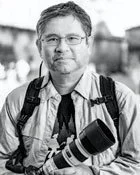
James Sobredo, PhD, is professor emeritus of Ethnic Studies at Sacramento State University. He splits his time living in the San Francisco Bay Area and Manila.
More articles from James Sobredo
