
Aglipayan Church: Thriving in Ballesteros, Cagayan
/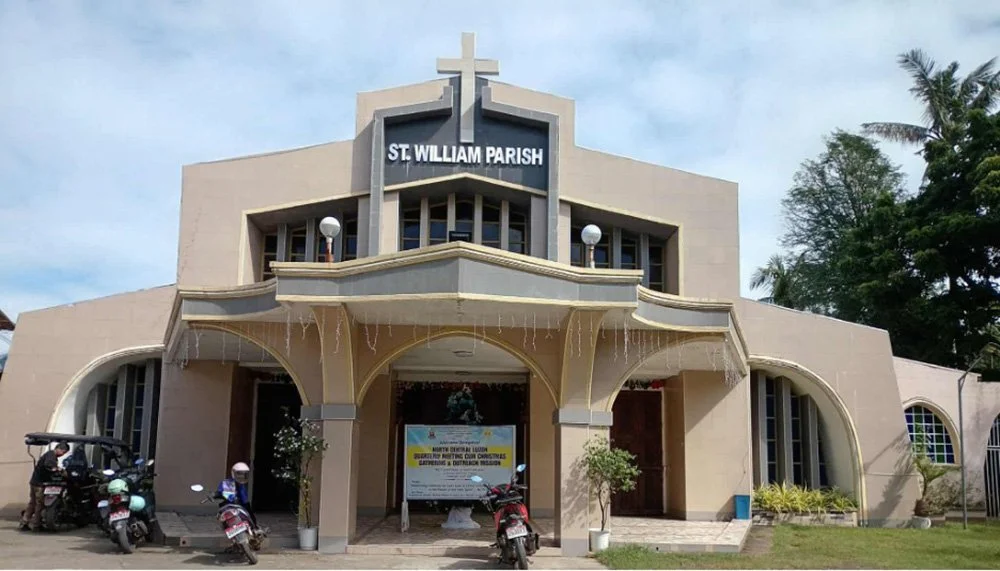
St. William Parish in Ballesteros, Cagayan, stands as a powerful emblem of the Iglesia Filipina Independiente’s commitment to Filipino-led faith and self-governance. (Photo courtesy of Felipa Upano Onza)
The municipality of Ballesteros is situated along the northern coast of Cagayan, approximately 684 kilometers north of Manila and about 12 kilometers west of Aparri. Before becoming an independent town, Ballesteros was known as Barrio Santa Cruz under the municipality of Abulug. Its early inhabitants were primarily farmers and fishers who lived modest lives shaped by agriculture, the West Philippine Sea, kinship, and shared traditions. It was within this humble rural setting that the IFI took root and became one of the earliest expressions of Filipino religious independence in Northern Cagayan. According to Felipa Upano Onza, a long-time parishioner and community leader and teacher, who was interviewed for this account, “The people of Ballesteros welcomed the IFI because it spoke not only to their faith but also to their pride as Filipinos.”
Historical records that survived the destruction of World War II indicate that the IFI in Ballesteros was established in 1904, only two years after the formal founding of the national church. This early establishment demonstrates how swiftly the IFI’s message of spiritual autonomy and national dignity reached beyond urban centers into remote provincial communities. Onza recalled that early worship services were held in modest homes and open spaces before a permanent structure was built. “At first, people gathered wherever there was room,” she said. “What mattered was that we were praying together in our own church, a church for Filipinos.” These early gatherings reflected the grassroots nature of the IFI, grounded not in colonial authority but in community initiative and shared conviction.
The close connection between faith and nationalism remains visibly expressed inside the church building today. The Philippine flag is displayed on the right side of the altar, while the IFI banner is placed on the opposite side. After Sunday Masses and major religious celebrations, the congregation sings the Philippine National Anthem — a unique practice that reflects the church’s origins in the Filipino struggle for self-determination. As Onza observed, “These symbols remind worshippers that loving God and loving country go together in our church.” Such practices distinguish the IFI from other Christian traditions in the Philippines and preserve its historical identity as both a spiritual and patriotic institution.
The first IFI church in Ballesteros was originally located in an area closer to Abulug, reflecting the town’s early status as a barrio. When Ballesteros was formally established as a municipality in 1912, the church was transferred to the town center, where it remains today. This parish church is dedicated to Saint William (San Guillermo in Ilocano) and serves as the central place of worship for the IFI community. The original site of the first church did not disappear from religious life; instead, it became another IFI parish with Saint Isidore (San Isidro) as its patron saint. These two churches stand as enduring witnesses to the growth and continuity of the IFI in Ballesteros, reflecting the church’s ability to adapt to political change while maintaining its spiritual mission.
One of the most significant challenges in reconstructing the history of IFI Ballesteros is the scarcity of written documents. Only a limited number of handwritten records survived the passage of time and the destruction caused by war. As a result, much of the church’s history has been preserved through oral tradition, passed down from elders to younger generations. Onza emphasized, “Many of our stories live only in memory. If we do not tell them, they will disappear.” These oral narratives continue to shape the parish’s identity and inform its present-day ministry, serving as living links between past and present.
From its establishment in 1904 to the present, approximately thirty clergy and bishops have served the IFI in Ballesteros, several of whom left a profound mark on the spiritual and social life of the parish. The first priest assigned to Ballesteros was Rev. Fr. Marcos Flor, who served from 1904 to 1906 and again from 1910 to 1941. His more than three decades of service reflect both his dedication and the trust placed in him by the community. Though few written records of his ministry remain, oral accounts suggest that he played a crucial role in consolidating the parish during its formative years. Onza recalled, “He was remembered as a steady shepherd who kept the church strong during difficult times.”
Rev. Fr. Anatolio Habon (1961–1965) strengthened church organizations, particularly the Women’s Organization of the Philippine Independent Church (WOPIC), and established Sunday School classes for children. Rev. Fr. Jesus Mariano Sr. (1966–1970) further expanded the church’s educational mission by opening a learning center for preschool children and teaching in the college department of what was then Quezon Academy, now Quezon Colleges of the North. These initiatives demonstrated the IFI’s enduring commitment to education as a means of spiritual formation and social empowerment.
A towering figure in the modern history of IFI Ballesteros was Rt. Rev. Onofre Edrozo, who served both as parish priest and later as Diocesan Bishop and Rector from 1974 to 1997. Known for his intellectual depth and musical talent, he personally organized and trained the Youth Choir, encouraging young people to take active roles in worship and leadership. He was also responsible for bringing Rev. Fr. Elpidio Pastor to Ballesteros, ensuring continuity in parish leadership. Onza described him as “a priest who believed strongly in youth formation and in excellence in worship.”
The contemporary era of IFI Ballesteros is most closely associated with Rev. Msgr. Elpidio Pastor, who has served the parish since 1991. His leadership ushered in major transformation in both physical infrastructure and spiritual life. The church building and its surroundings were significantly improved, and a new belfry was constructed. He also succeeded in winning back many members who had transferred to other factions during times of ecclesiastical division, strengthening unity within the original IFI community. Under his guidance, the three major sectoral organizations — WOPIC, YIFI (Youth of the IFI), and LIFI (Laymen of the IFI) — grew in number, vitality, and outreach.
One of Msgr. Pastor’s most lasting contributions has been his encouragement of young people in Ballesteros to pursue theological studies at the Aglipay Central Theological Seminary (ACTS). Several of these students have since been ordained and now serve as priests in Cagayan and Ilocos Norte, with others still in formation. Onza noted, “Many of our young priests today were once altar servers or choir members here. The church became their calling.” His initiatives also led to the establishment of Ti Naimbag A Pastor Learning Center Inc., the acquisition of land for an IFI cemetery open to all religious groups, and the continuation of the annual Christmas Bonanza for the Aetas — a tradition observed every December 28 for more than 33 years. These works reflect the IFI’s enduring commitment to inclusive service and social responsibility.
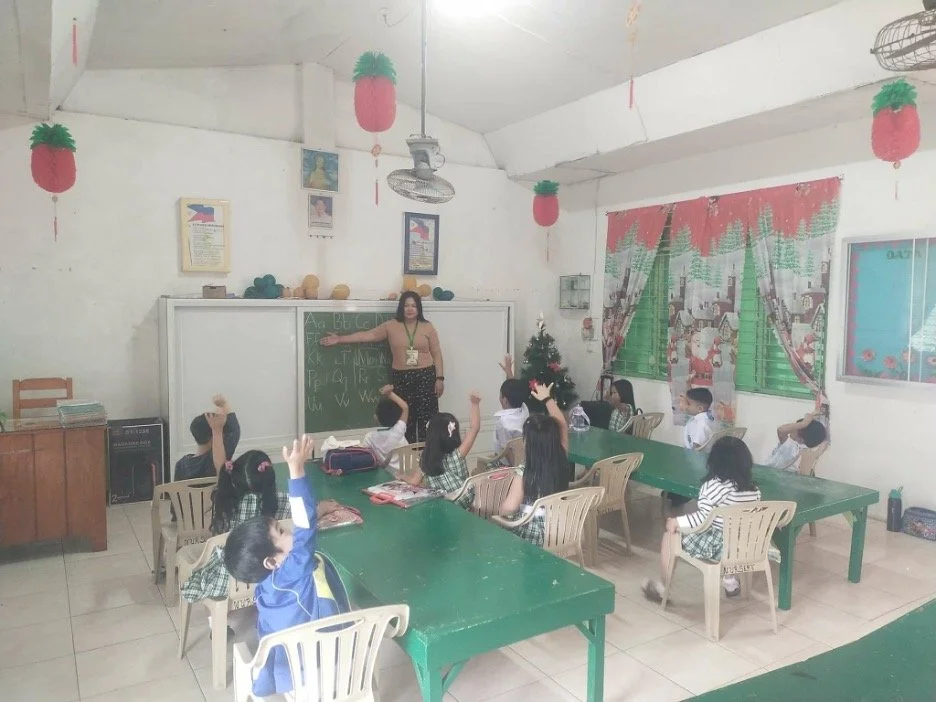
Ti Naimbag A Pastor Learning Center, Inc., provides a structured, play-based instruction based on the Department of Education curriculum designed for preschoolers. (Photo courtesy of Felipa Upano Onza)
The two offshoot denominations—the Independent Church for Filipino Christians (ICFC) and the Philippine Independent Church (PIC)—maintain an active foothold in Ballesteros, yet the IFI congregation there continues to stand as the largest and most influential among them. It now has three parish churches, two missions, and four outstations across different barangays of the municipality. The IFI is regularly invited to participate in town and civic activities requiring religious representation, and many residents continue to view the IFI as a unified presence rather than as divided groups. The parish is also active in national and international ecumenical organizations, including the National Council of Churches in the Philippines and the World Council of Churches, enabling members to participate in conferences, dialogues, and exchange programs beyond the country.
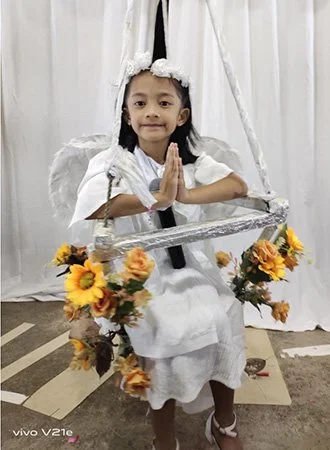
Macy Campañano appears as the lead angel in the Easter Salubong, the dawn ceremony that dramatizes the meeting of the Risen Christ and the sorrowing Virgin Mary. (Photo courtesy of Merlita Usita Campañano)
Ballesteros’s influence reaches far beyond its ecclesiastical roots, most powerfully reflected in the achievements of its visionary son, Dr. Rey E. de la Cruz—Palanca‑laureled playwright and author of the beloved quadrilingual children’s book, Ballesteros on My Mind: My Hometown in the Philippines, as well as screenwriter of the highly decorated animated short, Ballesteros on My Mind – The Film. His writing draws deeply from local history, memory, and identity, echoing the everyday experiences of Ballesteros residents. Among his most influential interventions in religious and cultural discourse is Aglipayano, the full‑length play he completed as his 1982 master’s thesis in communication and theater at the University of Illinois Chicago. The work stages the birth of the Iglesia Filipina Independiente within the ritual frame of the Salubong (Tagalog) or Domingo Sabet (Ilocano), the dawn encounter between the Risen Christ and the sorrowing Virgin Mary. In keeping with his provocative and truth‑seeking Theater Without Apology, Dr. de la Cruz parallels Father Aglipay’s break from Rome with the ritual’s movement from mourning to renewal. Aglipayano ultimately illuminates how the IFI’s legacy reaches far beyond church walls, shaping Philippine theater, literature, and the broader cultural imagination.
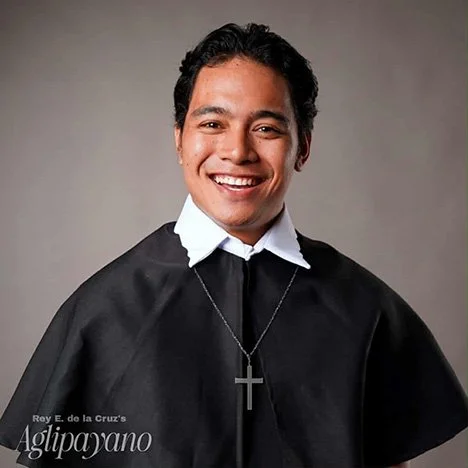
Asean Gabat, a native of Piat in Cagayan, takes on the lead role in Dramanila Theater Production’s Aglipayano, a play centered on the founding of the Iglesia Filipina Independiente. Written by Rey E. de la Cruz. Directed by Paul Jake Paule. (Photo by Josiah Edmund M. Delima)
The establishment of the Iglesia Filipina Independiente in Ballesteros in 1904 reflects a unique blending of faith, nationalism, and community initiative. From a small farming barrio to a thriving parish network, the IFI in Ballesteros has endured through war, division, and social change. Guided by dedicated clergy, sustained by institutional commitment, and preserved through the living memories of its people — including the oral testimony of Felipa Upano Onza and the cultural contributions of figures such as Dr. Rey E. dela Cruz — the church continues to honor the vision of Father Gregorio Aglipay and Isabelo de los Reyes. Rooted firmly in its past yet responsive to the needs of the present, the IFI in Ballesteros remains a vibrant expression of Filipino faith, identity, and service to community.
The establishment of the Iglesia Filipina Independiente in Ballesteros in 1904 reflects a unique blending of faith, nationalism, and community initiative.
The IFI's story in Ballesteros is one of resilience and devotion, reflecting the broader narrative of the Philippine Independent Church as a beacon of Filipino autonomy and spiritual independence. As the church looks toward the future, it does so with a deep sense of heritage and a commitment to serving both its members and the wider community, embodying the enduring spirit of the IFI's founding principles.
The author extends his sincere gratitude to Dexjordi Lyle Sison for his assistance with the photos.
Leodivico Padua Masuli writes from Quezon City, where he is a security officer. His imagination and creativity were nurtured while growing up on a farm in Libertad, Abulug, Cagayan. He loves nature and enjoys watching documentaries.
More articles from Leodivico Padua Masuli
